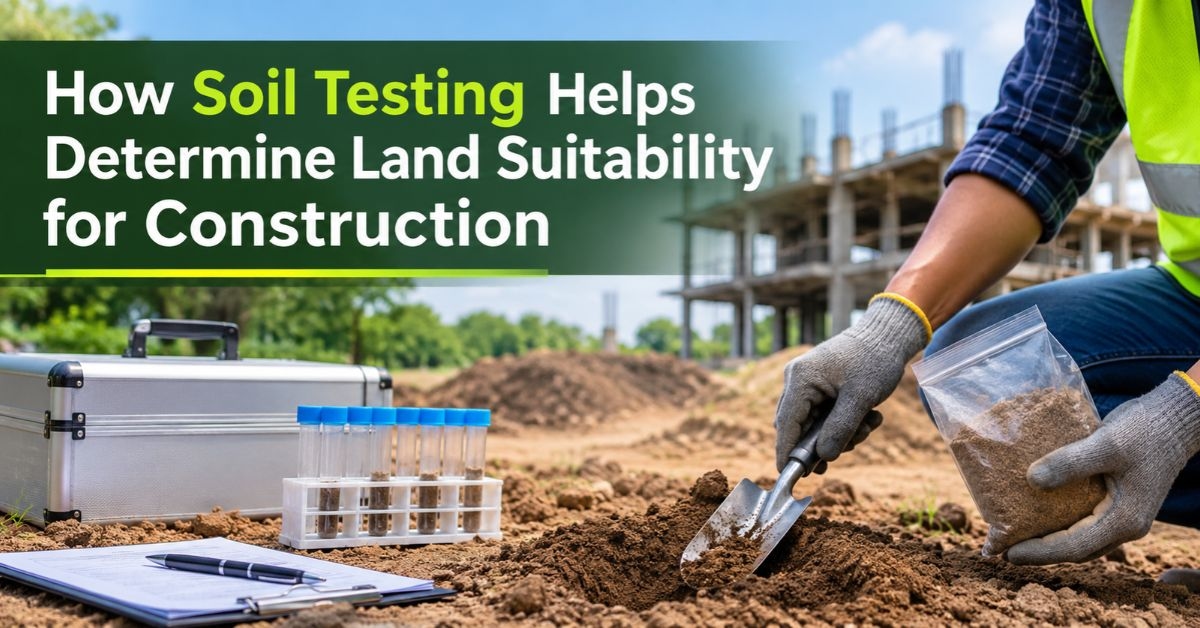
Choosing the right land is one of the most important steps before starting a construction project. While location, road access, plot dimensions, and surrounding development often receive attention, the condition of the soil is equally important. Buyers exploring Land for Sale in Maraimalai Nagar should understand that the ground beneath a property directly influences the safety, stability, and durability of a building. Soil testing provides valuable information about the land's physical characteristics and helps determine whether it can support the proposed construction.
Understanding What Soil Testing Reveals
Soil testing is a technical process used to examine the physical and engineering properties of the ground. It helps identify the soil type, density, moisture content, strength, and ability to carry structural loads. These details allow engineers to understand how the land may respond when a building is constructed on it.
Different locations can have different soil conditions, even when the plots are situated close to each other. One property may have firm soil, while another may contain loose sand, clay, or mixed soil layers. Visual inspection alone cannot provide accurate information about these differences.
A professional soil investigation helps identify potential ground-related concerns before construction begins. It also provides engineers with reliable information for selecting suitable foundation designs and planning the construction process.
Identifying Soil Types and Their Construction Characteristics
The type of soil present on a property has a considerable influence on its construction suitability. Some soils provide good support for buildings, while others require additional engineering considerations.
Sandy soil generally allows water to drain relatively quickly. However, loose sandy layers may have limited load-bearing capacity and can shift under pressure if they are not properly assessed. Clay soil behaves differently because it retains moisture and may expand or shrink depending on seasonal conditions. Such movement can affect foundations if the building is not designed appropriately.
Silty soil may retain water and lose strength when saturated. Rocky or gravelly ground can provide strong support in suitable conditions, although its composition and depth must still be examined.
Understanding these characteristics helps construction professionals determine whether the existing ground can support the proposed structure or whether additional preparation is necessary.
Measuring Soil Bearing Capacity Before Construction
One of the main objectives of soil testing is to determine the soil's bearing capacity. This refers to the amount of pressure the ground can safely withstand without experiencing excessive settlement or failure.
Every building transfers its weight to the soil through its foundation. A small residential house and a multi-storey apartment building create different load requirements. Therefore, the foundation design must match the strength and characteristics of the ground.
Engineers use suitable field investigation methods, including Standard Penetration Tests (SPT) and other geotechnical procedures, to evaluate subsurface conditions. The results help estimate the soil's resistance and identify the appropriate foundation depth and design.
Ignoring bearing capacity can lead to structural problems such as uneven settlement, foundation movement, and cracks in walls. Testing before construction helps reduce these risks and supports better engineering decisions.
Evaluating Groundwater Levels and Drainage Conditions
Water conditions beneath and around a property can significantly affect construction. High groundwater levels may influence excavation, foundation work, and the long-term performance of certain building structures.
Soil investigations help identify groundwater depth and provide information about the relationship between the soil and moisture. This is particularly important in locations where seasonal rainfall causes changes in underground water conditions.
Drainage is another factor that should not be overlooked. Land with poor natural drainage may experience water accumulation during heavy rainfall. Over time, excessive moisture can affect soil stability and create difficulties during construction.
Engineers consider these findings when planning foundation protection, site grading, surface drainage, and waterproofing measures. Proper drainage planning also helps prevent water from collecting around the building after construction.
Detecting Hidden Soil Problems and Construction Risks
A plot may appear suitable for construction from the surface but contain underlying conditions that require attention. Soil testing helps identify problems that may not be visible during a regular site visit.
For example, loose fill material, buried organic matter, weak soil layers, and uneven ground conditions can affect foundation performance. Some sites may also contain previous excavation areas or filled sections that need additional investigation.
If these conditions remain unidentified, they can create unexpected expenses and construction delays. Weak soil may require compaction, replacement, ground improvement, or specially designed foundations.
A detailed geotechnical report gives engineers a clearer understanding of the risks involved. It also helps property owners discuss the necessary preparation work with contractors before finalising construction budgets.
Choosing the Right Foundation Based on Soil Test Results
Foundation selection should never be based only on building size or common construction practices. It must consider the actual soil conditions identified during the investigation.
For ground with adequate bearing capacity, engineers may recommend conventional shallow foundations such as isolated footings or combined footings. When stronger soil layers are located deeper underground, a deep foundation system may be considered depending on the structural requirements.
Soil test results also help determine suitable foundation dimensions, excavation requirements, and other technical specifications. This makes the construction process more organised because the engineering team can plan the work according to actual site conditions.
Property owners should ensure that soil investigations are completed before finalising foundation designs. Making these decisions early can reduce the possibility of expensive modifications during construction.
Why Soil Testing Matters Before Purchasing Land
Soil testing is not only useful after purchasing a property. It can also help buyers make informed decisions before committing to a construction project. A site that looks attractive because of its location or price may still require considerable ground preparation.
Buyers should review the property's physical condition, previous land usage, drainage pattern, surrounding development, and available soil investigation details. If the land has been filled or altered, additional checks may be necessary to understand its present condition.
It is also important to consult qualified geotechnical engineers rather than relying on informal opinions about soil quality. Their findings provide a technical basis for estimating construction requirements and identifying possible challenges.
When comparing different properties, buyers should consider both the purchase cost and the potential expenses involved in preparing the land for construction.
Conclusion
Soil testing plays an essential role in determining whether a property is suitable for construction. It helps identify soil composition, bearing capacity, groundwater conditions, and hidden ground-related risks before building work begins. These findings support safer foundation planning, better cost estimation, and long-term structural stability. Before making a property decision, buyers considering Plots in Singaperumal Koil should also give importance to professional soil investigation to ensure the land is suitable for their intended construction plans.