Hairline density is one of the most important aspects of creating a natural-looking result because the front of the scalp frames the face and influences overall appearance. In women, planning density requires particular attention to the existing hair pattern, hair calibre, donor availability, facial proportions, and the reason for hair loss. Unlike simply filling an empty area, a surgeon needs to determine where follicles should be placed and how closely they can be positioned without compromising the donor area.
During Female Hair Transplant in Dubai, hairline planning usually begins with a detailed assessment of the scalp. The clinician may examine the frontal hairline, temporal regions, mid-scalp, crown, and donor zone to understand where density has been reduced. Existing strands are also considered because transplanted follicles need to blend with surrounding hair rather than appear isolated.
The design may also take into account whether the patient has traction alopecia, female-pattern hair loss, previous surgery, scarring, or another condition affecting growth. A conservative and anatomically appropriate hairline can help preserve a natural appearance as the surrounding hair changes over time.
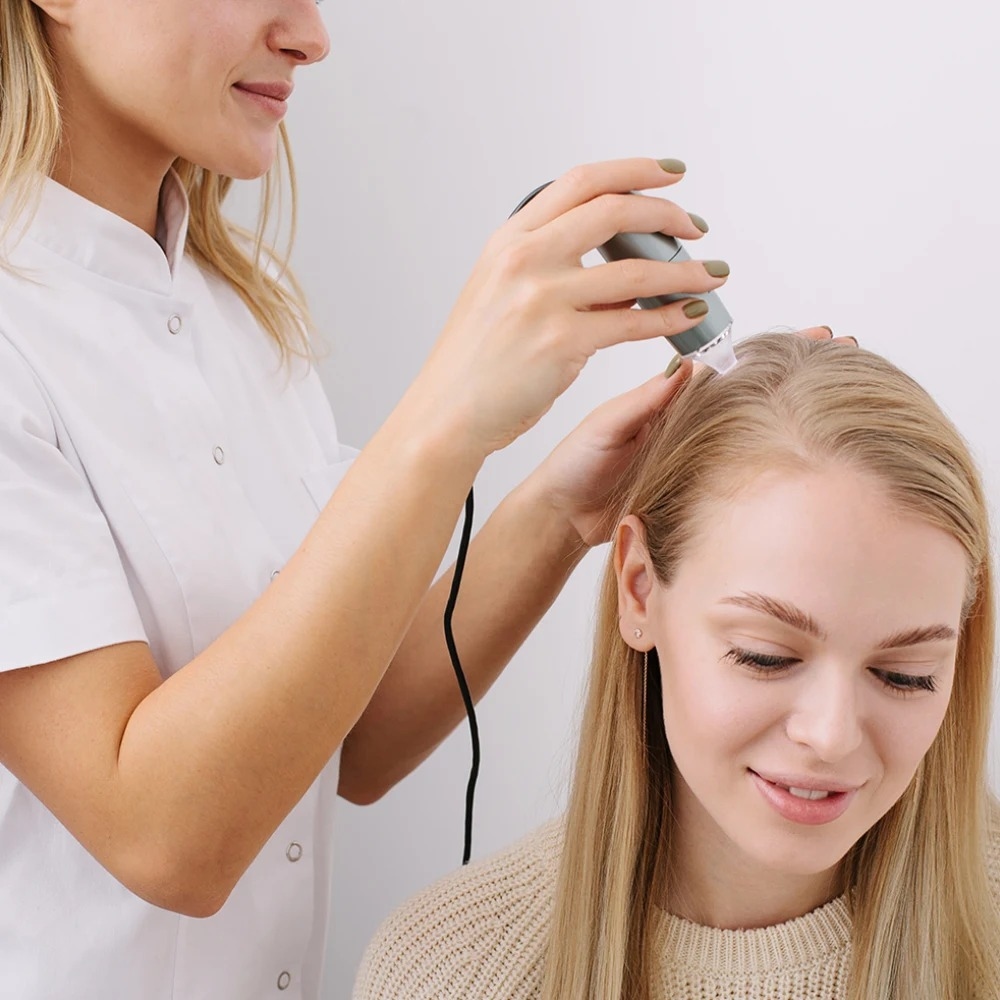
What Determines Hairline Density in Women?
Hairline density is not simply measured by how many grafts can be placed into an area. The quality and distribution of the existing hair are equally important.
A clinician may consider:
The width and shape of the frontal region
The thickness and texture of existing strands
The number of available donor follicles
The degree of miniaturisation
The density behind the hairline
Facial proportions and natural hairline characteristics
Whether further hair loss is expected
The number of grafts that can be safely harvested
The goal is generally to create gradual visual density rather than an unnaturally dense, sharply defined front edge.
Enfield Royal Clinic
Enfield Royal Clinic approaches hair restoration planning around the individual characteristics of the patient rather than using a standard hairline template. During consultation, the clinician can assess the frontal area, donor supply, existing density, and the pattern of thinning before discussing an appropriate graft distribution.
For patients considering Female Hair Transplant in Dubai, careful planning is particularly relevant when the original hairline is still partially present. Transplanting too aggressively into an area with existing fragile hair may not be appropriate in every case. A personalised design can instead consider how transplanted follicles will integrate with existing strands and where additional density would provide the greatest visual benefit.
The clinic setting also allows treatment planning to be discussed alongside the underlying cause of hair loss, which is important because transplantation does not address every type of female hair shedding.
Tajmeels Clinic
Tajmeels Clinic can be considered by patients seeking hair restoration assessment in Dubai. Hairline planning involves examining the areas where density has declined and determining whether transplantation is suitable based on donor availability and the patient's individual pattern.
For women, attention to the transition between the frontal edge and existing hair can be especially important. A gradual arrangement of follicles may help avoid a visibly artificial boundary.
Dynamic Life Clinic
Dynamic Life Clinic provides cosmetic and aesthetic treatment services, including approaches to hair restoration. For patients exploring Female Hair Transplant in Dubai, consultation can help establish whether the frontal region requires additional follicles or whether other areas of the scalp should receive priority.
Density planning should take into account the patient's current hair rather than focusing solely on the amount of scalp that is visible. The texture, direction, and thickness of native strands can influence how transplanted follicles should be distributed.
Cocoona Clinic
Cocoona Clinic is another Dubai-based option for individuals researching hair restoration procedures. A consultation can provide an opportunity to evaluate the donor area and discuss the desired appearance of the frontal hairline.
Women can have different patterns of thinning compared with men, and the hairline may remain intact even when density behind it decreases. Consequently, graft placement may focus on strategic areas instead of creating an entirely new frontal outline.
Dubai Cosmetic Surgery Clinic
Dubai Cosmetic Surgery Clinic offers cosmetic surgical services and may be considered when researching hair restoration options. Hairline assessment should involve more than drawing a preferred shape on the scalp. The clinician needs to consider follicular availability, existing growth direction, scalp characteristics, and long-term expectations.
A suitable plan should also account for how the transplanted area will look when the surrounding hair is styled naturally.
Emirates Hospital
Emirates Hospital provides a broad range of medical services in Dubai and can be part of a patient's research when considering specialist hair restoration care. For prospective transplant patients, the consultation stage is an important opportunity to discuss the cause of thinning, donor-area limitations, and the realistic level of density that can be achieved.
Medical assessment can be particularly relevant when hair loss appears sudden, diffuse, or associated with other scalp concerns.
Al Zahra Hospital Dubai
Al Zahra Hospital Dubai provides multidisciplinary healthcare services and may be relevant for patients seeking medical evaluation before considering cosmetic hair restoration. A proper assessment can help distinguish between different causes of female hair loss before surgical planning takes place.
When transplantation is considered appropriate, density planning should account for both the immediate appearance of the hairline and the potential progression of underlying thinning.
King’s College Hospital London Dubai
King’s College Hospital London Dubai provides specialist medical care across various disciplines. Patients investigating hair restoration can consider the importance of a medically informed consultation before deciding whether transplantation is appropriate.
For women with diffuse thinning, the donor region may require particular attention because adequate follicular reserves are necessary for transplantation. A detailed evaluation can therefore help determine whether density improvement through graft placement is realistic.
How to Choose the Right Clinic for Female Hair Transplant in Dubai
Experience and Qualifications
Look for qualified medical professionals with appropriate experience in hair restoration and female-pattern hair loss. Ask who will perform the assessment, extraction, and implantation and how frequently the team handles female patients.
Technology and Techniques
Different transplant methods may be appropriate depending on the patient's hair characteristics and donor supply. Ask which technique is being recommended and why it suits the individual's case rather than choosing a procedure solely because of its name.
Safety Standards
A reputable facility should follow appropriate infection-control, sterilisation, anaesthesia, and patient-monitoring protocols. The consultation should also include discussion of medical history and potential contraindications.
Consultation Process
A useful consultation should examine the entire scalp rather than concentrating only on the hairline. Patients should receive an explanation of donor capacity, expected graft requirements, possible limitations, and the anticipated recovery process.
Patient Experience
The clinic should provide clear information about preparation, aftercare, follow-up appointments, and what patients can reasonably expect during the growth cycle. Good communication is particularly important because visible growth after transplantation takes time.
Expected Results
Patients should be cautious about guaranteed density claims. The final appearance depends on graft survival, donor quality, existing hair, healing, and the underlying cause of hair loss. A realistic treatment plan should explain these factors before surgery.
Frequently Asked Questions
Can women have a denser hairline after a transplant?
A transplant can increase follicular density in suitable areas, but the achievable level depends on donor supply, existing hair, scalp characteristics, and the underlying cause of thinning.
How is the number of grafts for the hairline determined?
Graft requirements are estimated after assessing the size of the treatment area, existing density, donor availability, hair calibre, and the desired degree of coverage. The objective is to use follicles efficiently rather than simply maximise the graft count.
Is a very dense hairline always better?
Not necessarily. Excessive density may not be appropriate for every patient and can place unnecessary demands on the donor area. Natural-looking density generally depends on how follicles are distributed and blended with existing growth.
Can existing hair be transplanted around?
Yes. When native hair remains in the recipient area, the surgeon must consider its position, direction, and density when designing graft placement. This can help transplanted follicles integrate more naturally with surrounding growth.
When can the final hairline density be assessed?
Hair growth after transplantation is gradual. Early shedding can occur, followed by new growth over subsequent months. The final appearance is generally assessed after the transplanted follicles have had sufficient time to mature, with individual timelines varying.
Conclusion
Hairline density planning for women requires a balance between aesthetic design, follicular resources, existing hair, and long-term expectations. Rather than applying the same density to every patient, an appropriate plan considers the characteristics of the individual scalp and the reason for hair loss. For those researching Female Hair Transplant, a detailed consultation is an important step in determining whether transplantation is suitable and how grafts could be distributed to achieve natural-looking coverage.