
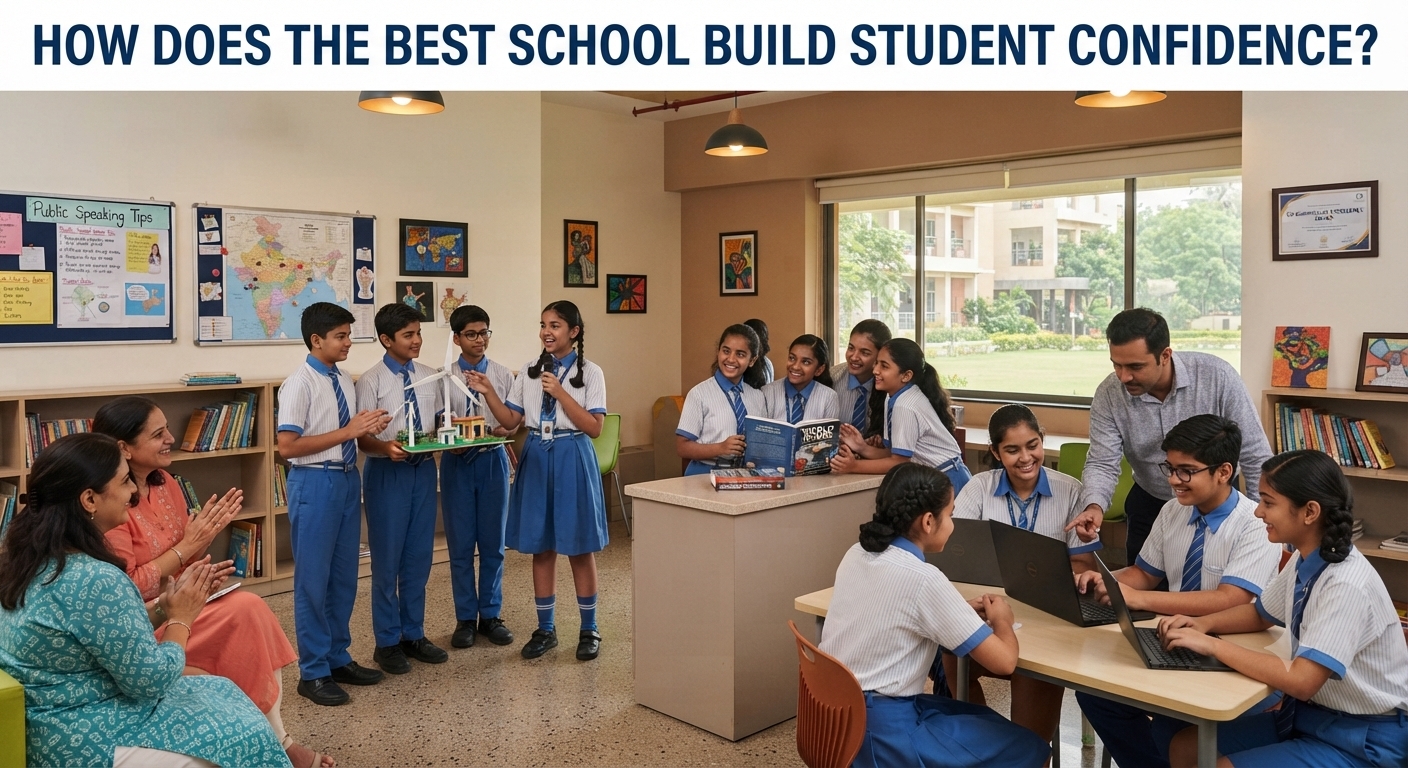
Confidence is an important part of a child's overall development. It helps students express their thoughts, participate in activities, face challenges, and make decisions independently. Schools play an important role in developing this quality because children spend a significant amount of time learning and interacting with teachers and classmates. A positive school environment can help students recognise their abilities and become more confident in different situations.
Why Is Student Confidence Important?
Student confidence allows children to believe in their abilities and approach new experiences with a positive attitude. Confident students are generally more comfortable asking questions, sharing ideas, participating in discussions, and learning from mistakes.
Parents looking for the best school in Jaipur should consider how the school supports students beyond academic performance. Teachers, classroom activities, extracurricular programmes, and a supportive environment can all contribute to building confidence in children.
1. Encouraging Classroom Participation
Classroom participation gives students regular opportunities to express their thoughts and communicate with others. When teachers encourage children to answer questions, share opinions, and take part in discussions, students gradually become more comfortable speaking in front of others.
Teachers can use simple activities such as:
Asking students to explain a lesson in their own words.
Organising group discussions.
Encouraging students to ask questions.
Giving opportunities for short presentations.
Conducting classroom quizzes.
These activities help children overcome hesitation and develop confidence in expressing themselves.
2. Providing Opportunities for Public Speaking
Public speaking is a useful skill that can improve communication and self-confidence. Some students may feel nervous when speaking in front of a group, but regular practice can help them become more comfortable.
Schools can organise speech competitions, storytelling sessions, debates, morning assemblies, and presentations. These activities allow students to practise speaking clearly and organising their thoughts.
Teachers should provide constructive feedback and encourage improvement rather than making students feel embarrassed about mistakes.
3. Appreciating Students' Efforts
Appreciation can motivate children to continue learning and trying new things. Recognising a student's effort, improvement, creativity, or participation can make them feel valued.
Schools can appreciate students through certificates, classroom recognition, achievement boards, and positive feedback.
However, appreciation should not be limited to students who achieve the highest marks. Children who show improvement, help classmates, participate actively, or demonstrate good behaviour should also receive encouragement.
This approach helps students understand that progress and effort are important parts of learning.
4. Encouraging Participation in Sports
Sports and physical activities help children develop confidence in their abilities. They also teach teamwork, discipline, patience, and how to handle both success and failure.
Activities such as football, cricket, basketball, athletics, badminton, and other games give students opportunities to challenge themselves and work with others.
Participating in sports competitions can also help children become more comfortable performing in front of an audience. Even when they do not win, they learn to accept results and keep improving.
5. Supporting Creative Activities
Every child has different interests and abilities. Some students enjoy drawing, while others may be interested in music, dance, writing, drama, or craft activities.
Schools can help students discover their interests by providing opportunities to participate in creative programmes.
For example, art competitions, music performances, cultural events, drama activities, and exhibitions allow children to express themselves in different ways.
When students get opportunities to showcase their creativity, they gradually develop a stronger belief in their abilities.
6. Creating a Friendly Learning Environment
A supportive school environment helps students feel comfortable and respected. Children should be able to share their opinions, ask questions, and discuss difficulties without fear of being judged.
Teachers should treat students fairly and encourage positive relationships among classmates. Bullying, unnecessary comparisons, and negative comments can affect a child's confidence.
A friendly classroom environment promotes cooperation, mutual respect, and healthy communication. It also helps students develop social skills and feel more connected to their school.
7. Helping Students Learn from Mistakes
Making mistakes is a natural part of learning. However, some children may become afraid of trying new things because they worry about giving incorrect answers or receiving poor marks.
Schools can build confidence by teaching students that mistakes provide opportunities to improve. Teachers should explain incorrect answers patiently and guide students towards the right approach.
When children are allowed to learn without unnecessary pressure, they become more willing to take part in activities, solve problems, and explore new ideas.
8. Giving Students Leadership Responsibilities
Leadership opportunities help children become responsible and independent. Schools can assign different responsibilities according to students' age and abilities.
Examples include:
Class monitors
House captains
Team leaders
Event coordinators
Group project leaders
Student council representatives
These responsibilities teach students how to communicate, make decisions, cooperate with others, and manage tasks. They also help children develop confidence in their ability to take initiative.
9. Providing Individual Attention and Guidance
Not every child develops confidence at the same pace. Some students may be comfortable speaking in groups, while others may need more encouragement and individual attention.
Teachers should try to understand each student's strengths, interests, and learning difficulties. Personal guidance can help children work on areas where they lack confidence.
Regular interaction between teachers and students also makes it easier to identify concerns and provide appropriate support.
10. Building a Positive Relationship with Parents
Parents and teachers both contribute to a child's confidence. Regular communication between them helps ensure that children receive consistent encouragement at school and at home.
Parent-teacher meetings can help families understand a child's progress, behaviour, participation, and areas that need improvement.
Parents can support their children by appreciating their efforts, listening to their concerns, encouraging independence, and avoiding unnecessary comparisons with other children.
Conclusion
A school builds student confidence through classroom participation, public speaking, sports, creative activities, leadership opportunities, and positive teacher support. Children develop confidence when they feel respected, encouraged, and comfortable learning from their mistakes. Parents choosing the best Cbse school in Jaipur should look for an environment that values individual abilities, encourages participation, and supports students in becoming independent, responsible, and confident individuals.