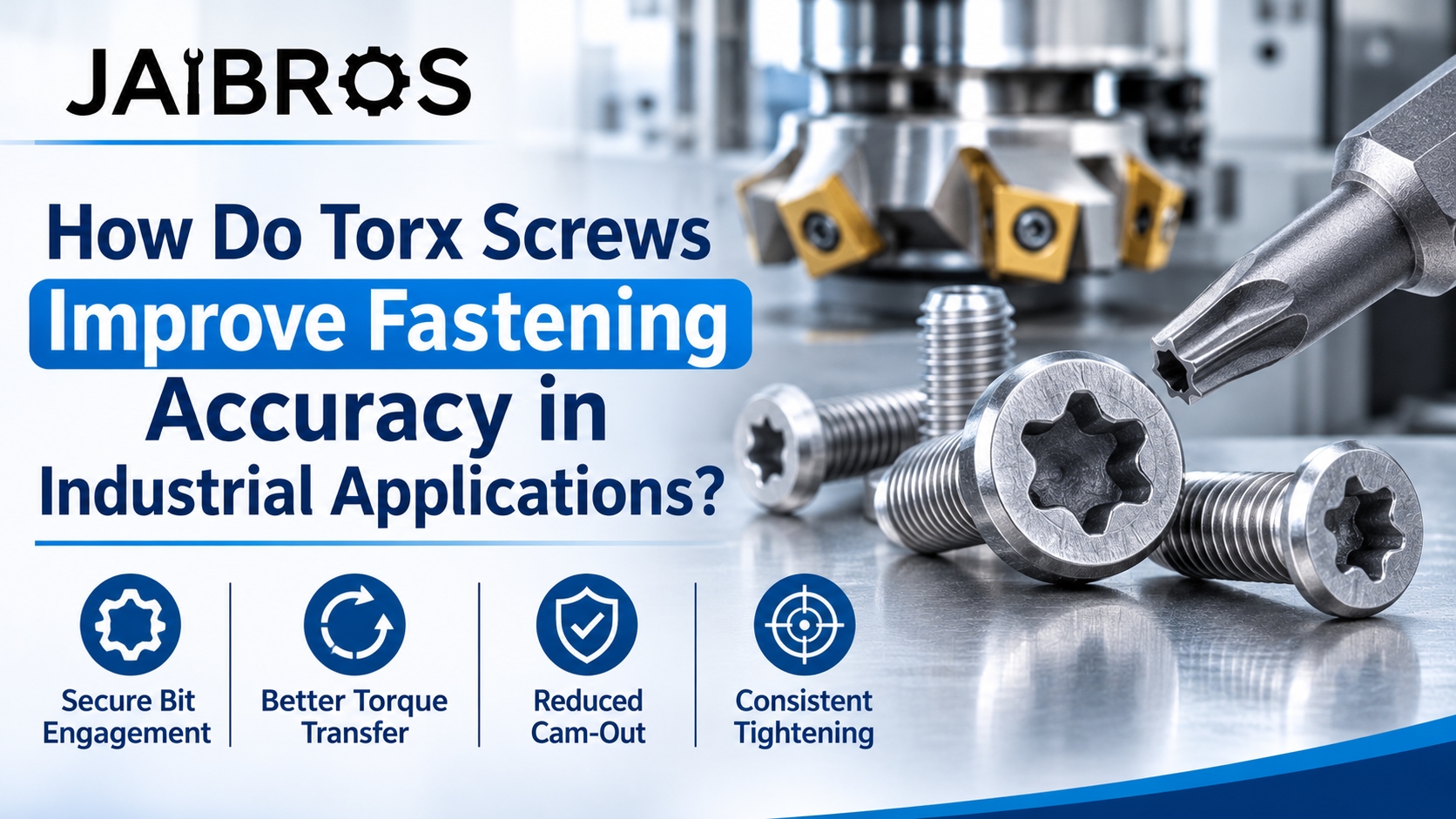
In industrial machining, even a small fastening error can affect tool performance, machining accuracy and production quality. Cutting tools and tool holders require secure fastening to maintain stability during machining operations. The design of the screw head plays an important role in achieving reliable tightening and reducing the chances of tool damage.
A Torx screw uses a star-shaped drive design that provides better contact between the screwdriver and the screw head. This design helps improve torque transfer, reduce slipping and support consistent fastening. These advantages make Torx fasteners useful in precision machining, industrial equipment and various mechanical assemblies.
1. What Makes the Torx Drive Design Different?
The main difference between Torx and traditional screw designs is the shape of the drive. A Torx head has a six-point star-shaped pattern that matches a specially designed driver.
Unlike flat-head and Phillips drives, this design provides multiple contact points between the tool and the screw. The improved contact helps distribute the applied force more evenly during tightening.
This reduces the possibility of the driver slipping out of the head when the correct size and suitable tightening method are used. It also helps operators achieve more controlled fastening during repetitive industrial operations.
2. Better Torque Transfer During Tightening
Torque is the rotational force applied to tighten a fastener. In industrial applications, applying the correct torque is important because insufficient tightening can allow components to loosen, while excessive tightening can damage threads or connected parts.
The star-shaped design of Torx head screws provides effective engagement with the matching driver. This allows torque to be transferred more efficiently during tightening.
Better torque transfer helps operators maintain consistent fastening practices. It is particularly useful when securing cutting inserts, tool components and mechanical parts that require reliable clamping.
However, the correct torque value must always follow the equipment or component manufacturer's specifications.
3. Reduced Driver Slippage and Screw Head Damage
Driver slippage is a common problem when using an incorrectly sized screwdriver or applying excessive force. When the driver does not fit properly, it may slip and damage the screw head.
A properly matched Torx driver reduces this risk because its star-shaped profile provides multiple contact points. This improves engagement and helps maintain control during tightening and loosening.
In precision machining, damaged fastener heads can create maintenance difficulties and increase component replacement time.
Using the correct Torx screwdriver set and matching drive size helps reduce these problems and supports smoother maintenance operations.
4. Improved Fastening Accuracy in CNC Machining
CNC machining operations require stable cutting conditions and securely mounted tool components. Loose or incorrectly fastened components can affect machining consistency and may contribute to vibration or insert movement.
In indexable cutting tools, small fastening components help secure carbide inserts inside their designated pockets. A correctly selected fastener helps maintain the intended seating and clamping arrangement.
Industrial Torx fasteners are commonly used in applications such as:
Milling cutters and indexable milling tools.
Boring bars and boring tool assemblies.
Turning tool components.
Carbide insert clamping systems.
Precision mechanical assemblies.
The correct fastener size, thread specification and tightening torque are essential for reliable performance.
5. Better Reliability for Repeated Assembly and Maintenance
Industrial tools often require regular insert changes, inspection and maintenance. During these activities, screws may be tightened and loosened multiple times.
A suitable Torx screw can support repeated maintenance by providing reliable driver engagement and reducing the risk of damaging the drive recess when used correctly.
This is especially important in production environments where maintenance time can affect machine availability.
However, repeated use can still cause wear. Operators should inspect the screw head and threads regularly and replace damaged fasteners when necessary.
6. Importance of Selecting the Correct Screw Size
Choosing the correct fastener is just as important as selecting the right drive design. Different industrial applications require different screw diameters, lengths and drive sizes.
Before selecting a fastener, consider the following factors:
Diameter: The screw diameter should match the threaded hole and component requirements.
Length: The length must provide sufficient thread engagement without interfering with other parts.
Drive size: Select the correct T-size driver, such as T6, T8, T15 or T20, according to the screw specification.
Material and hardness: The fastener material should suit the application's mechanical and environmental conditions.
Thread compatibility: Check the thread type and pitch to ensure proper fitting.
For industrial cutting tools, high-precision fasteners are particularly important because incorrect dimensions can affect insert seating and clamping performance.
7. Torx Screws vs Other Screw Drive Types
Different screw drive designs are suitable for different fastening requirements. Understanding their differences helps operators select the appropriate option.
Phillips screws: Have a cross-shaped recess and are widely used in general assembly. They may be more susceptible to driver cam-out under certain conditions.
Slotted screws: Have a single straight slot and are simple to use but can be less stable during high-torque fastening.
Hex socket screws: Use a hexagonal recess and provide reliable engagement with the correct Allen key.
Torx head screws: Use a six-point star-shaped recess designed for effective torque transfer and reduced driver slippage.
The most suitable design depends on the application, required torque, available clearance and maintenance requirements.
Conclusion
Fastening accuracy is an important part of maintaining reliable industrial equipment and precision machining operations. The star-shaped drive design provides better driver engagement, effective torque transfer and reduced slipping when the correct tools are used.
Selecting the right fastener size, material and tightening method helps protect components and maintain consistent assembly quality. Understanding these factors allows operators to make better fastening decisions and improve maintenance practices.
For users exploring precision fastening components and industrial cutting tool accessories, Jaibros provides a range of options to explore. Visit Jaibros to discover products suitable for different machining and tooling requirements.
Frequently Asked Questions (FAQs)
1. What is the main advantage of a Torx screw?
The main advantage is its star-shaped drive design, which provides multiple contact points between the driver and the screw head. This helps improve torque transfer and reduce driver slippage when the correct size is used. It is useful in applications where controlled fastening and reliable component assembly are important.
2. Why are Torx head screws used in industrial applications?
Torx head screws are used in industrial applications because they provide reliable driver engagement and support consistent tightening. They are commonly found in machining tools, mechanical assemblies, indexable cutters and other equipment where secure fastening is necessary. Their performance still depends on correct sizing, suitable materials and proper tightening procedures.
3. What is the difference between a Torx screwdriver set and a regular screwdriver set?
A Torx screwdriver set contains drivers with six-point star-shaped tips designed to fit Torx recesses. A regular screwdriver set may contain flat-head, Phillips or other drive types. Each driver must match the corresponding screw profile and size to achieve proper engagement and avoid damaging the screw head.
4. Are Torx wood screws suitable for industrial machinery?
Torx wood screws are primarily designed for fastening applications involving wood and related materials. Industrial machinery generally requires fasteners selected according to specific thread, material, strength and dimensional requirements. A wood screw should not be substituted for a machine fastener unless the application specifically permits it.
5. How can I prevent damage when tightening Torx fasteners?
Always select the correct driver size and ensure that it sits completely inside the screw recess. Keep the driver properly aligned with the screw axis and apply controlled force. Follow the specified torque values when available. Avoid using worn drivers or damaged fasteners, as they can increase the risk of slipping and damage.