Herbal cosmetics have become an area of interest for businesses exploring personal care products containing botanical ingredients. These products may include facial cleansers, moisturizers, hair oils, shampoos, body lotions, and other cosmetic preparations. Their development requires attention to ingredient quality, formulation compatibility, product stability, and applicable cosmetic regulations.
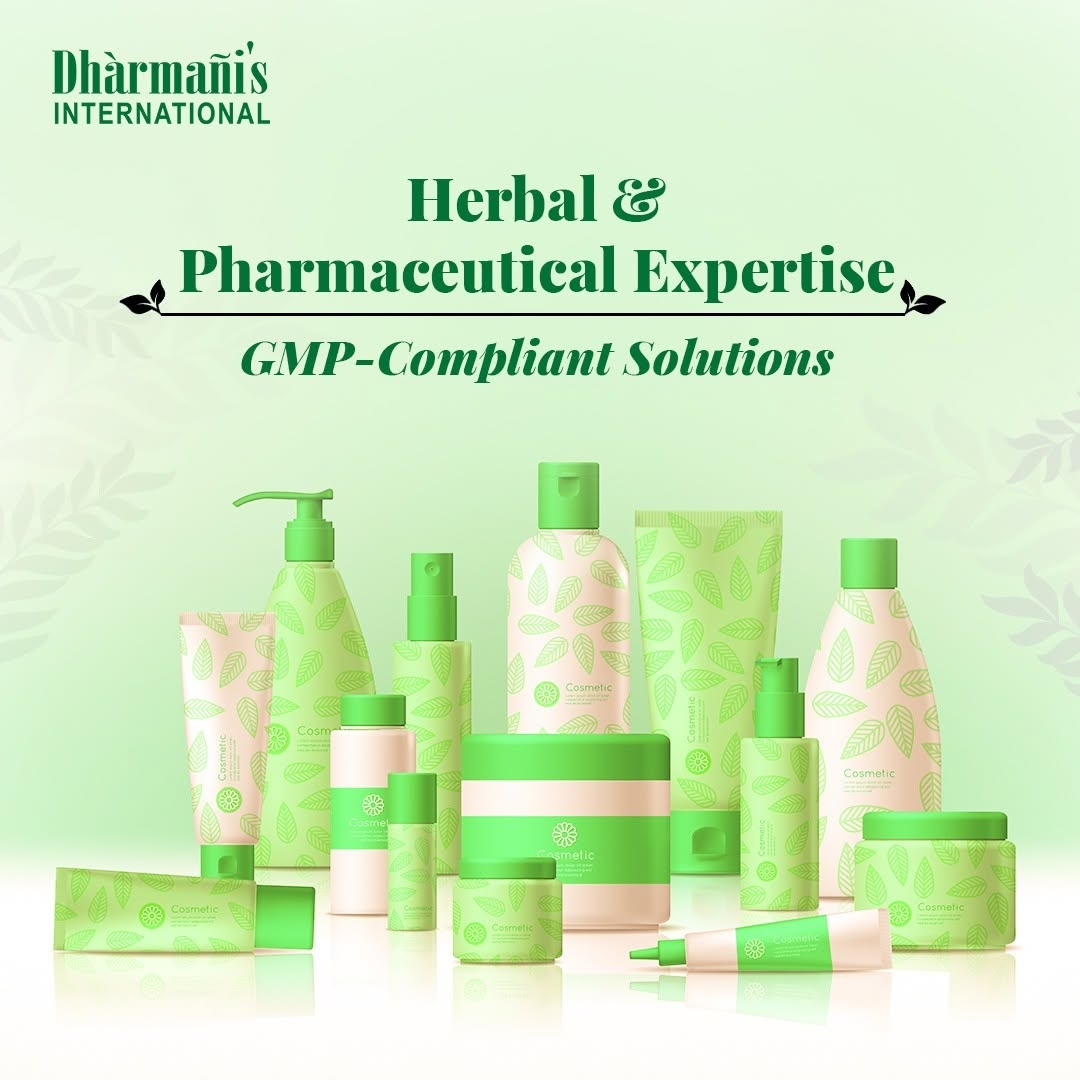
Although botanical ingredients can offer useful formulation properties, the term “herbal” does not automatically mean that a product is safer, more effective, or suitable for every consumer. Product quality depends on the complete formulation, ingredient concentrations, manufacturing conditions, and appropriate testing.
Herbal cosmetics manufacturers help businesses develop and produce products according to defined specifications. Dharmanis International describes manufacturing services involving herbal products, personal care, formulation development, quality checks, and production support.
What Do Herbal Cosmetics Manufacturers Do?
Manufacturers may support several stages of a cosmetic product's lifecycle, from initial formulation to finished-product packaging. The exact services depend on the agreement and the manufacturer's technical capabilities.
Typical activities include:
Reviewing product concepts and customer requirements.
Selecting and assessing suitable botanical ingredients.
Developing or adapting cosmetic formulations.
Preparing samples for evaluation.
Conducting relevant quality and stability tests.
Planning commercial production.
Supporting packaging and labelling.
Maintaining manufacturing and batch documentation.
A well-defined process helps ensure that the product meets agreed specifications before it reaches the market.
Key Steps in Herbal Cosmetic Development
1. Identify the Product Category
The development process begins by deciding which type of product is required. A hair oil, face cream, shampoo, cleanser, and herbal gel have different formulation and processing requirements.
Businesses should define the product's intended use, target audience, desired texture, fragrance preferences, packaging format, and price range. These details help guide the selection of suitable ingredients and manufacturing methods.
The intended market also matters because regulatory requirements and permitted product claims may differ across jurisdictions.
2. Select and Verify Botanical Ingredients
Botanical ingredients can vary depending on the plant species, growing conditions, harvesting practices, processing methods, and storage.
A responsible sourcing and verification process may include:
Confirming the botanical identity.
Reviewing supplier documentation.
Assessing purity and relevant contaminants.
Checking storage and handling requirements.
Evaluating ingredient specifications.
Maintaining traceability records.
Extracts, oils, powders, and other botanical materials may behave differently in a finished formula. Their selection should be based on their intended function, compatibility, and suitability for the product.
3. Develop the Formulation
Formulation development involves combining ingredients in suitable proportions to create the desired product characteristics.
For example, a moisturizer may require a balanced combination of water, emollients, emulsifiers, thickeners, and preservatives. A herbal shampoo may need a different system to provide cleansing, texture, and stability.
Formulators also consider the compatibility of botanical ingredients with other components. Some plant-derived materials may affect colour, fragrance, viscosity, or product stability.
Herbal cosmetics manufacturers should use a structured development process that records the formulation, ingredient specifications, and any changes made during sample evaluation.
4. Evaluate Samples and Test Stability
Samples allow the business to assess the product before commercial manufacturing. Depending on the product, evaluation may include appearance, fragrance, texture, spreadability, and other physical characteristics.
Stability testing helps assess whether the product changes under defined storage conditions. Microbiological testing and preservative effectiveness assessments may also be necessary, depending on the formulation and its intended use.
Packaging compatibility should be considered because the container can influence product protection and dispensing. The appropriate testing programme depends on the product's composition, risk profile, and applicable standards.
5. Prepare for Commercial Manufacturing
A formula that works in a laboratory may behave differently when produced in larger quantities. Differences in mixing equipment, processing time, temperature, and ingredient handling can affect the final product.
Before scaling up, the manufacturer should establish suitable production procedures, equipment settings, raw material specifications, and in-process checks.
Documented procedures help reduce variations between batches. Where changes become necessary, they should be assessed and approved according to the agreed quality process.
6. Packaging and Labelling
Packaging plays an important role in product protection, storage, transportation, and consumer convenience. The choice of bottle, jar, tube, pump, or other container should suit the formulation and intended application.
Labelling should comply with applicable requirements and accurately describe the product. Ingredient declarations, directions, warnings, batch information, and other mandatory details should be reviewed before printing.
Claims such as “natural,” “chemical-free,” “hypoallergenic,” or “dermatologically tested” should not be used carelessly. Claims must be appropriate, accurate, and supported by relevant evidence where required.
Why Quality Control Matters
A herbal cosmetic can contain suitable ingredients yet still experience problems if the formulation or manufacturing process is poorly controlled.
Quality procedures help identify issues involving raw material variation, ingredient incompatibility, microbial contamination, changes in texture, or packaging defects.
A suitable quality system may include incoming material inspection, in-process checks, finished-product testing, batch documentation, and procedures for investigating deviations. The exact controls depend on the product category and applicable regulations.
Businesses should also understand how the manufacturer handles complaints, retains relevant records, and manages changes to approved formulations.
How to Evaluate a Manufacturing Partner
When comparing herbal cosmetics manufacturers, businesses should consider more than product variety or quoted prices. Technical capability and quality practices are equally important.
Useful questions include:
Does the manufacturer have experience with the intended cosmetic category?
How are botanical ingredients verified?
Which formulation and testing services are available?
How are stability and packaging compatibility assessed?
What production quantities and lead times are possible?
Are packaging and labelling services available?
How are formula ownership and confidentiality managed?
What quality and regulatory documentation can be provided?
Reviewing these points helps businesses determine whether a manufacturer can meet their specific requirements.
Common Challenges in Herbal Cosmetics
Botanical materials may vary from batch to batch, while certain extracts can affect fragrance, colour, texture, or preservation. Supply availability and packaging compatibility can also influence production planning.
These challenges can be addressed through supplier qualification, documented specifications, appropriate testing, controlled storage, and consistent manufacturing procedures.
Businesses should also avoid assuming that all botanical ingredients are compatible with one another. Each formulation requires a suitable technical assessment before commercial production.
Conclusion
Herbal cosmetic development combines botanical ingredient knowledge with formulation science, quality control, testing, and manufacturing discipline. Every stage, from raw material verification to final packaging, contributes to the finished product's consistency and suitability.
Choosing herbal cosmetics manufacturers requires careful evaluation of technical expertise, quality procedures, documentation, and regulatory readiness. A structured approach helps businesses develop products that meet defined specifications while supporting responsible and consistent manufacturing practices.