A heated blanket is one of those purchases people make in an enthusiastic moment on a cold night, then use for years without ever reading the instructions. That is precisely when problems start. Most failures with electric bedding are not dramatic; they are slow — a cord that gets pinched under a mattress, a control unit buried under pillows, an old blanket with a frayed edge that still turns on. None of these feels urgent until it does.
The good news is that the risks are well understood and almost entirely avoidable. A handful of habits — where the blanket sits, how the cord is routed, when it gets replaced — eliminate most of the danger without reducing comfort at all. This guide covers the mistakes that matter, how to spot the warning signs in your own blanket, and how to choose a model that is easier to live with safely.
The Placement Errors That Cause Real Trouble
Electric blankets are designed for specific use patterns, and most misuse comes from bending them into a role they were not built for. Understanding the difference between blanket types prevents most of it.
A bed blanket is meant to lie flat on top of the mattress and beneath other bedding. A throw-style heated piece, by contrast, is designed to drape over a sofa or a lap. Using a bed model folded in thirds as a throw concentrates the elements, traps heat in a small area, and stresses the internal wiring. Using a throw model on a bed where weight bears down on folded creases does the same in reverse.
Where the Cord Should Never Go
The cord is where most preventable damage happens. Route it so it leaves the bed at the foot or side and travels freely to the outlet without running under the mattress, across a walkway, or beneath a heavy piece of furniture. A cord crushed under a mattress frame develops hidden breaks in the copper, and a broken conductor inside an insulated cable is exactly the kind of fault that produces hot spots.
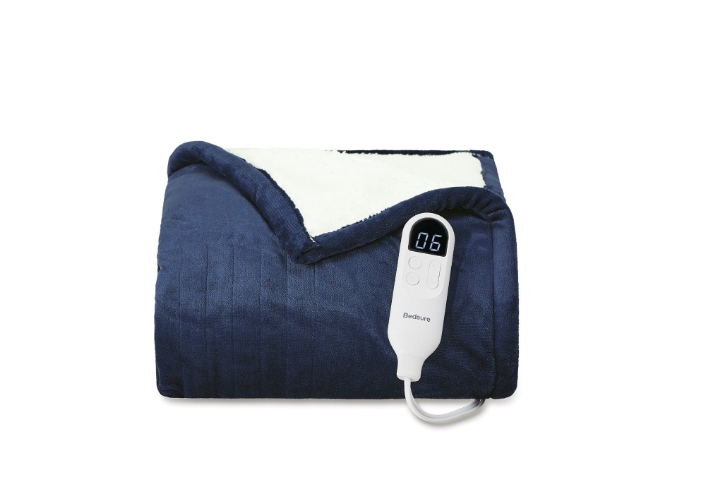
Never tuck the controller under pillows or blankets. Controllers are ventilated for a reason, and a unit that cannot shed heat can misbehave. Keep it on a nightstand or clipped to the side of the bed where you can see the settings at a glance.
The Combination With Other Bedding
Layering a heated blanket under a heavy, tightly tucked duvet can push temperatures higher than intended because the heat has nowhere to escape. Keep the top layer breathable and avoid tucking the sides tightly over the blanket. If you use a heated mattress pad instead of a blanket, the same principle applies — leave the heat a path to dissipate.
Signs It Is Time to Stop Using It
Electric blankets do not last forever, and the failures that matter are visible if you know what to look for. Inspect the blanket at the start of every cold season, ideally before the first night you plan to use it.
Watch for frayed edges, exposed wire at the connection point, discoloration or scorch marks on the fabric, a cord that feels stiff or cracked, and any section that stays cold while the rest heats. A cold patch usually means a broken element, and a broken element in an energized blanket is not something to tolerate. Stiffness in the cord is a sign of insulation degradation, which is exactly the condition that leads to shorts.
Age is its own warning. Most manufacturers give a working lifespan in the range of a decade, but age in storage also matters: a blanket that spent several summers folded under a weight of other linens may have developed internal creases that never flatten out. If it creases instead of lying flat, stop using it.
Why Blankets Fail in the First Place
Most electric blanket failures are mechanical, not electrical in origin. The heating elements are thin wires woven through the fabric, and they are designed to flex gently across a flat surface. They are not designed to be folded sharply, sat on repeatedly, or compressed under a mattress. Every one of those stresses the same point in the wire, and eventually the conductor breaks.
Insulation is the second common failure point. The cord and the internal wiring are coated in a flexible insulator that hardens with heat and age. A cord that has been trapped between a bed frame and a wall, or repeatedly bent at a sharp angle, develops cracks in that coating long before the wire itself fails. That is why a blanket can look perfectly fine and still be unsafe.
Understanding this changes how you treat the blanket. If you think of it as a textile that happens to have wires inside, you will fold it, stuff it, and store it in ways that shorten its life. If you think of it as a light electrical appliance that happens to be soft, you will handle it more deliberately — and it will last far longer.
Getting the Most Out of It Without the Risks
Most of the comfort benefits of a heated blanket come from how you use it, not from how high you set it. Preheating the bed for a short period before you get in and then lowering the setting is more comfortable than running it hot all night, and it uses far less energy. A warm bed with a cool room is the combination most people actually sleep best in.
If you share the bed, look for dual-zone control so each person sets their own temperature. Trying to split the difference with a single control usually leaves one person too warm and the other still cold, which is the exact frustration the blanket was meant to solve.
Turn it off when you are not in the bed. A blanket left running over an empty mattress does nothing except wear the elements and waste power. A timer handles this automatically if you are the type to forget.
Choosing One That Is Safer by Design
A well-made heated blanket removes much of the guesswork through its own engineering. Look for automatic shutoff that turns the blanket off after a set period, so an accidental overnight session cannot continue indefinitely. Multiple heat zones per side are worth having if you and a partner disagree about temperature, because a single-zone blanket forces one of you to compromise every night.
Machine washability is another underrated feature. Blankets that can be washed according to the manufacturer's instructions stay cleaner and are less likely to accumulate the skin oils and dust that degrade fabric over time. A blanket you can clean is a blanket you will keep in good condition rather than tolerate for too long.
Bedsure's heated blanket line includes timed shutoff and washable construction, which covers the two features that matter most for everyday safe use.
Storage Between Seasons
How you store a heated blanket matters as much as how you use it. Never fold it along the element lines and stack heavy items on top for months at a time — that is a recipe for permanent internal creases. Roll it loosely instead, or fold it once across the width and lay it flat in a breathable bag. Keep it somewhere dry and free of extreme heat, and avoid storing it where it could be chewed by pets or cramped by packed linens.
Before storing, let the blanket cool completely and give it a wash if the fabric allows it. Storing a blanket with body oils in the fibers invites odor and can degrade the insulation over the summer. A clean, loosely rolled blanket comes out of storage in far better condition next winter.
Read the Instructions Once — Properly
It sounds trivial, but the instructions specify things that are not obvious: whether the blanket can be used with a heated mattress pad, whether it should be preheated before you get in, what temperature the fabric tolerates in the dryer, and which settings are suitable for all-night use. Two minutes with the manual is the cheapest safety upgrade available.
Note also what the blanket should not be used for — typically anything involving moisture, such as drying wet hair or warming a damp bed, and any use with infants or people who cannot sense temperature changes themselves. These limits exist because the blanket cannot regulate for someone who cannot feel it.
Warmth Without the Worry
A heated blanket is a small comfort with a straightforward set of rules attached. Use it as designed rather than improvising its placement, route the cord so nothing bears down on it, and inspect the fabric and wiring at the start of every season. Replace anything with a cold patch, a scorched surface, or a stiff cord. Choose a model with automatic shutoff and a washable cover, and the blanket becomes exactly what it should be — a warm bed on a cold night, with nothing to think about.