
Hair loss is a gradual process for many people, but its effects can become increasingly noticeable over time. A changing hairline, reduced coverage around the crown, or thinning across the scalp may lead individuals to explore professional hair restoration. While non-surgical treatments can help certain patients, others may wish to investigate whether a surgical procedure is appropriate for their condition.
For residents of Oman, India is one destination to consider when researching hair restoration abroad. The country has a broad healthcare sector, with clinics offering different surgical methods, consultation arrangements, and postoperative services. However, selecting a suitable provider requires more than comparing promotional offers or looking at photographs of successful procedures.
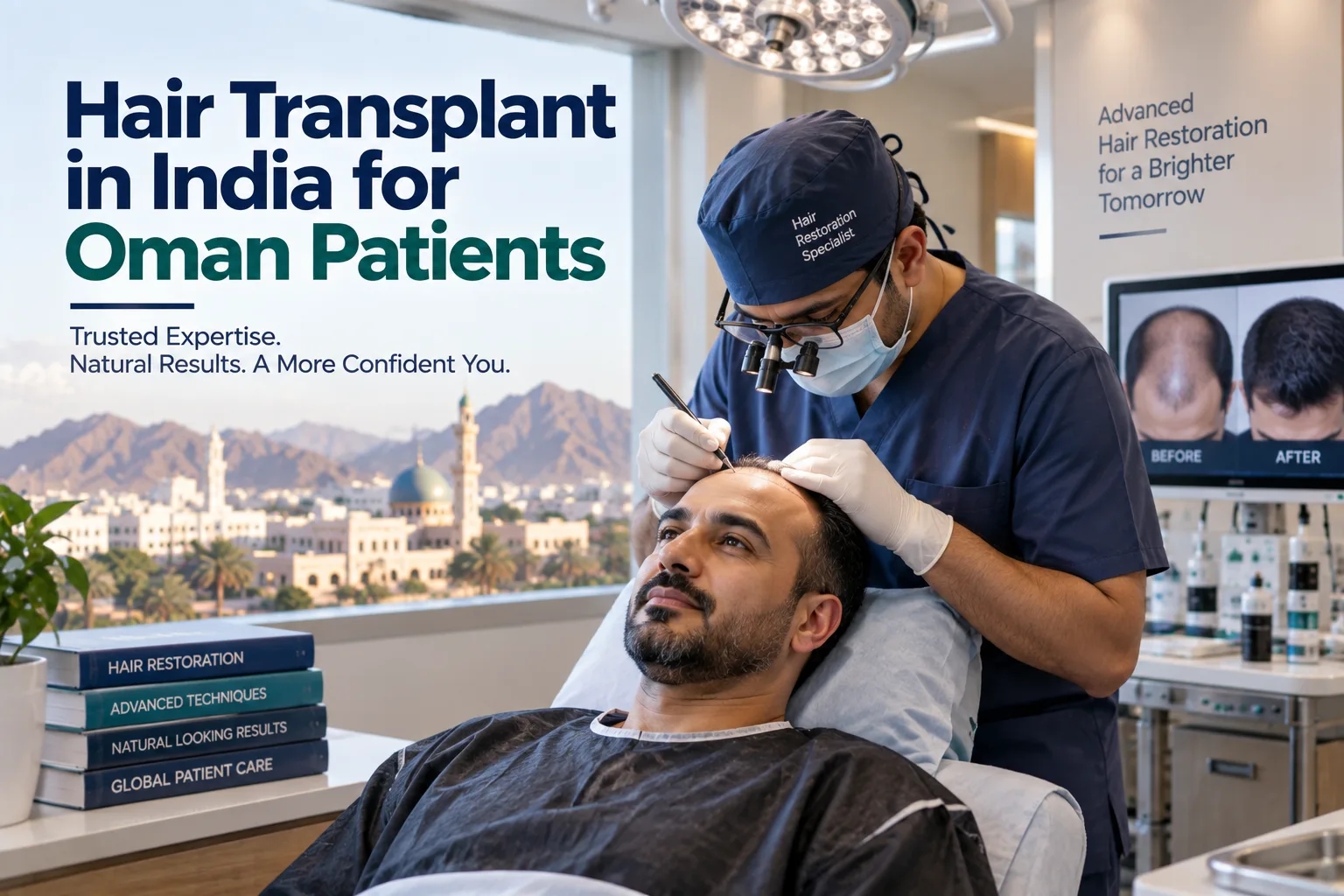
Hair Transplant in India for Oman Patients involves several connected decisions, including understanding the cause of hair loss, choosing a suitable technique, reviewing medical credentials, preparing a realistic budget, and checking travel requirements.
HealthRoop aims to help patients explore their healthcare options and prepare the right questions before making a decision. This guide examines the essential aspects of planning a hair transplant in India, from assessing treatment suitability to understanding expenses and organising travel from Oman.
Is Hair Transplant Surgery Suitable for Every Patient?
Before comparing clinics, patients should establish whether a transplant is likely to address their particular hair loss concerns. Hair transplantation is a surgical procedure, and its suitability depends on individual medical and physical characteristics.
Hereditary pattern baldness is one common reason people seek transplantation. Nevertheless, hair loss can also result from medical conditions, scalp inflammation, nutritional issues, hormonal changes, and certain medications. Some causes require medical investigation or treatment before surgery can be considered.
A qualified doctor may examine the scalp, assess the donor region, review the patient's medical history, and discuss the expected progression of hair loss.
Several factors can influence the recommendation:
Donor hair availability: Hair follicles from the back and sides of the scalp may be suitable for transplantation, but the available supply is limited.
Hair characteristics: Thickness, texture, colour contrast, and curl pattern can influence the appearance of coverage.
Age and hair-loss progression: Younger patients may experience continued hair loss after surgery, making long-term planning especially important.
Scalp health: Certain scalp conditions may need treatment before a procedure.
Personal expectations: The achievable result depends on available grafts and the area requiring coverage.
A responsible specialist should explain when surgery is appropriate and when other treatments may be more beneficial. Patients should be wary of providers who recommend surgery without conducting an adequate assessment.
Hair Transplant Technique: Understanding Your Options
Selecting a suitable Hair Transplant Technique involves evaluating how grafts will be obtained and implanted, how much donor hair is available, and what result can reasonably be achieved.
Follicular Unit Extraction for Targeted Restoration
Follicular Unit Extraction, known as FUE, involves harvesting individual follicular units from the donor area using specialised instruments. The grafts are then prepared and implanted into the recipient area according to the surgical plan.
FUE may be considered by patients who want to avoid the long linear scar typically associated with strip harvesting. Small scars can still develop at individual extraction sites, and the visibility of these marks depends on several factors.
The technique can be used to address different patterns of hair loss, including selected cases of receding hairlines and crown thinning. However, the number of grafts that can be safely collected varies between patients.
Overharvesting can reduce donor density and affect the scalp's appearance. Therefore, the surgeon should balance immediate coverage with the possibility of future hair loss and additional treatment.
Follicular Unit Transplantation for Selected Cases
Follicular Unit Transplantation, or FUT, uses a strip of scalp removed from the donor region. A trained team separates the strip into follicular units, which are subsequently implanted into the areas requiring restoration.
This method may be appropriate for selected patients who need a larger graft supply and have suitable scalp characteristics. Its main disadvantage is the linear scar left in the donor area.
Before choosing FUT, patients should discuss healing, scar visibility, hairstyle preferences, and the surgeon's assessment of their donor region.
Direct Hair Implantation and Implantation Instruments
Direct Hair Implantation, commonly abbreviated as DHI, generally refers to a method of placing prepared follicular units with a specialised implanter device. The exact procedure can differ between providers.
Patients should ask whether the clinic performs extraction and implantation as separate steps, which instruments are used, and who carries out each stage. They should also request clarification about whether the quoted price covers all parts of the operation.
DHI is not automatically the best choice for every individual. Appropriate surgical planning, careful handling of grafts, and the experience of the medical team are important regardless of the technique advertised.
Can Hair Transplantation Stop Future Hair Loss?
A transplant redistributes selected hair follicles; it does not prevent every existing hair from becoming thinner in the future. Untreated hair may continue to recede or lose density, potentially changing the overall appearance over time.
A doctor may recommend medical management alongside surgery when clinically appropriate. Patients should discuss the long-term plan before proceeding so that the initial hairline and graft distribution are designed with future changes in mind.
How to Compare the Best Hair Transplant Clinics in India
Finding the Best Hair Transplant Clinics in India requires a structured evaluation rather than relying on online rankings alone. Patients travelling from Oman should look for providers who explain treatment decisions clearly and place medical suitability ahead of sales targets.
Investigate the Doctor's Experience
Ask about the surgeon's qualifications, professional registration, training in hair restoration, and experience with the proposed procedure. Confirm who is responsible for designing the hairline, performing extraction, and implanting grafts.
The clinic should provide clear information about the surgical team's roles. Patients deserve to know who will perform the important medical steps rather than relying solely on the clinic's brand name.
Request a Personalised Treatment Proposal
A useful proposal should explain the area being treated, the estimated graft requirement, the expected limitations, and the reasons for choosing a particular technique.
It should also address donor-area management. The donor supply is finite, and using too many grafts during one procedure can limit future options.
Look Beyond Promotional Photographs
Before-and-after photographs can help patients understand a clinic's work, but they should be evaluated carefully. Ask whether the images show the provider's own patients, how long after surgery they were taken, and whether the photographs use comparable lighting and angles.
Results from another patient cannot predict an individual's outcome with certainty.
Understand the Clinic's Safety Arrangements
Ask where the operation will take place, what infection-control procedures are followed, how discomfort is managed, and what arrangements exist for handling complications.
The provider should also discuss potential risks, including infection, scarring, temporary shedding, changes in scalp sensation, poor growth, and an unnatural appearance.
Confirm Follow-Up Availability
International patients need clear instructions after returning home. Before booking, establish how postoperative questions will be handled, whether remote follow-up is available, and how the clinic responds if an in-person assessment becomes necessary.
HealthRoop can help patients organise their research and identify the information they should obtain when comparing providers. Patients should independently confirm each clinic's qualifications, facilities, and suitability.
Hair Transplant Cost in India for Oman Patients: What Should You Budget?
The Hair Transplant Cost in India for Oman Patients depends on the individual treatment plan and the provider's pricing structure. There is no single fee that applies to all patients because the number of grafts, technique, clinical facilities, and included services may differ considerably.
A consultation is the most appropriate starting point for obtaining an estimate based on the patient's condition.
Main Components of Treatment Pricing
Graft requirements: The area requiring restoration and the available donor supply influence the planned procedure. The highest possible graft count is not necessarily the safest or most effective option.
Procedure selection: FUE, FUT, and different implantation approaches can involve different equipment, staffing, and surgical arrangements.
Medical expertise: The surgeon's qualifications, experience, and involvement may influence the overall fee.
Clinic facilities: Operating facilities, staff, and the services included in the treatment package can affect the price.
Preoperative assessments: Some patients may require consultations or investigations before surgery can be scheduled.
Aftercare services: Postoperative reviews, medicines, and additional consultations may be included in the initial quote or charged separately.
How to Compare Treatment Quotes
When collecting estimates, ask each clinic to provide the same information so that the prices can be compared fairly.
Request details of the estimated graft count, the proposed method, the surgeon's role, the services included, and any potential additional charges. Clarify the currency, payment terms, cancellation policy, and arrangements if the treatment plan changes after examination.
Patients should avoid selecting a provider based exclusively on a low advertised price. A less expensive procedure may not offer the same level of medical supervision, facilities, or postoperative support.
Additional Expenses for Patients from Oman
The total budget should include international travel as well as treatment expenses. Depending on the chosen provider and itinerary, additional costs may include:
Return flights between Oman and India.
Accommodation before and after the procedure.
Transport between the airport, hotel, and clinic.
Meals and personal expenses.
Prescribed medicines and postoperative supplies.
Extra nights if a clinical review or recovery requires a longer stay.
Follow-up medical consultations after returning to Oman.
It is wise to keep an additional financial reserve for unexpected travel changes or medical needs. Before paying a deposit, obtain a written estimate and confirm which services are not covered.
HealthRoop can help patients understand the factors to compare when reviewing healthcare options, but the treating clinic must confirm the final medical estimate.
Visa for Hair Transplant in India from Oman: Important Preparations
The Visa for Hair Transplant in India from Oman should be considered before booking flights or confirming a surgical date. The correct application route depends on the traveller's nationality, passport, purpose of travel, and the rules in force at the time of application.
Living in Oman does not automatically determine which Indian visa category an individual can use. Applicants should verify the rules applicable to their own nationality.
Review Medical Travel Eligibility
India offers medical travel visa options, including an e-Medical Visa for eligible applicants. However, patients should confirm whether their nationality and intended procedure qualify under the current requirements.
Official information is available through the Indian Visa Online portal. Applicants should use official instructions to confirm eligibility, supporting documents, fees, and application procedures.
Prepare the Required Documentation
Depending on the visa category, applicants may be asked to provide:
A valid passport that meets the applicable requirements.
A completed application and a recent photograph.
A treatment invitation or appointment letter from an Indian medical provider, where required.
Supporting medical documents, if requested.
Other information specified by the official application process.
The required documents can vary. A clinic's confirmation of an appointment does not guarantee visa approval.
Organise Your Application in Advance
Step 1: Contact the clinic. Discuss your medical concerns and arrange an assessment to determine whether a hair transplant may be appropriate.
Step 2: Request relevant documentation. Obtain a treatment or appointment letter if the clinic provides one and it is required for the applicable application.
Step 3: Check official requirements. Confirm your eligibility and the correct visa category through the official Indian visa service.
Step 4: Complete the application accurately. Follow the published instructions and allow sufficient processing time.
Step 5: Coordinate your travel. Once your travel arrangements and medical appointment are sufficiently confirmed, organise accommodation and transportation.
Patients travelling with a family member should separately investigate whether an appropriate companion or attendant visa category is available. Rules may change, and the relevant authorities determine the outcome of each application.
Choosing Accommodation and Planning Your Stay
Medical travel planning should account for convenience, comfort, and access to the treating facility. Patients do not necessarily need to stay in a particular hotel, but accommodation should make it practical to attend appointments and follow the surgeon's postoperative instructions.
Before booking, consider the distance to the clinic, transportation options, access to meals, and whether assistance is available if you feel uncomfortable after the procedure.
Ask the clinic how many days it recommends remaining in India for your particular treatment plan. The appropriate schedule depends on the procedure, individual recovery, and any recommended postoperative review.
Avoid arranging a tightly packed itinerary immediately after surgery. Rest and follow-up care should take priority over sightseeing or other activities.
Patients should also confirm whether airport transfers or accommodation arrangements are genuinely included in a treatment package rather than assuming they are complimentary.
What Happens After the Procedure?
Hair transplant results develop gradually, so patients should understand the recovery process before travelling.
During the initial recovery period, the scalp may show redness, swelling, small scabs, or tenderness. The treating team should explain how to wash the scalp, protect the grafts, manage discomfort, and resume ordinary activities.
Transplanted hairs frequently shed during the first few weeks. This can be part of the normal growth cycle and does not necessarily indicate treatment failure.
New growth commonly becomes more noticeable over the following months, while the appearance continues to mature over approximately 9 to 12 months or sometimes longer. Results vary according to the patient's characteristics, the condition of the donor hair, graft survival, and the progression of untreated hair loss.
Patients should obtain written aftercare instructions and know which symptoms require urgent medical attention. Increasing pain, fever, spreading redness, or unusual discharge should not be ignored.
Before leaving India, arrange a follow-up plan with the clinic. Remote consultations may help with routine questions, but symptoms requiring a physical examination should be assessed by an appropriate medical professional.
Why Consider HealthRoop When Researching Hair Restoration?
Making decisions about an overseas medical procedure can feel complicated when clinical information, pricing, and travel requirements all need to be considered together.
HealthRoop can serve as a starting point for patients who want to understand the treatment journey and prepare for discussions with healthcare providers. By gathering the right information before making a commitment, patients can compare options more effectively and identify unanswered questions.
A well-prepared patient should know the proposed treatment method, the surgeon's responsibilities, the expected financial commitment, the risks involved, and the arrangements for postoperative care.
Before proceeding, verify the specific services available through HealthRoop and the independent credentials of any recommended healthcare provider. Patients should make their final medical decision after consulting an appropriately qualified professional.
Conclusion
Travelling for a hair transplant requires careful planning, especially when treatment involves crossing international borders. Oman residents considering India should evaluate medical suitability, research potential providers, understand the available techniques, and calculate the complete cost of treatment and travel.
Researching the Hair Transplant Technique, comparing the Best Hair Transplant Clinics in India, understanding the Hair Transplant Cost in India for Oman Patients, and checking the Visa for Hair Transplant in India from Oman can help patients make more informed decisions.
The most appropriate treatment is not necessarily the most expensive or the most heavily advertised. It is the option that matches the patient's medical needs, donor hair capacity, expectations, and ability to access reliable aftercare.
With careful preparation and support from HealthRoop where available, patients can approach their consultations with greater confidence and a clearer understanding of their options. The first step is always a proper medical assessment to determine whether hair restoration surgery is suitable for the individual.
Disclaimer: This article is intended for general educational purposes and does not replace professional medical advice or official immigration guidance. Treatment costs, provider credentials, service availability, and visa requirements should be confirmed directly with the relevant healthcare providers and authorities.