
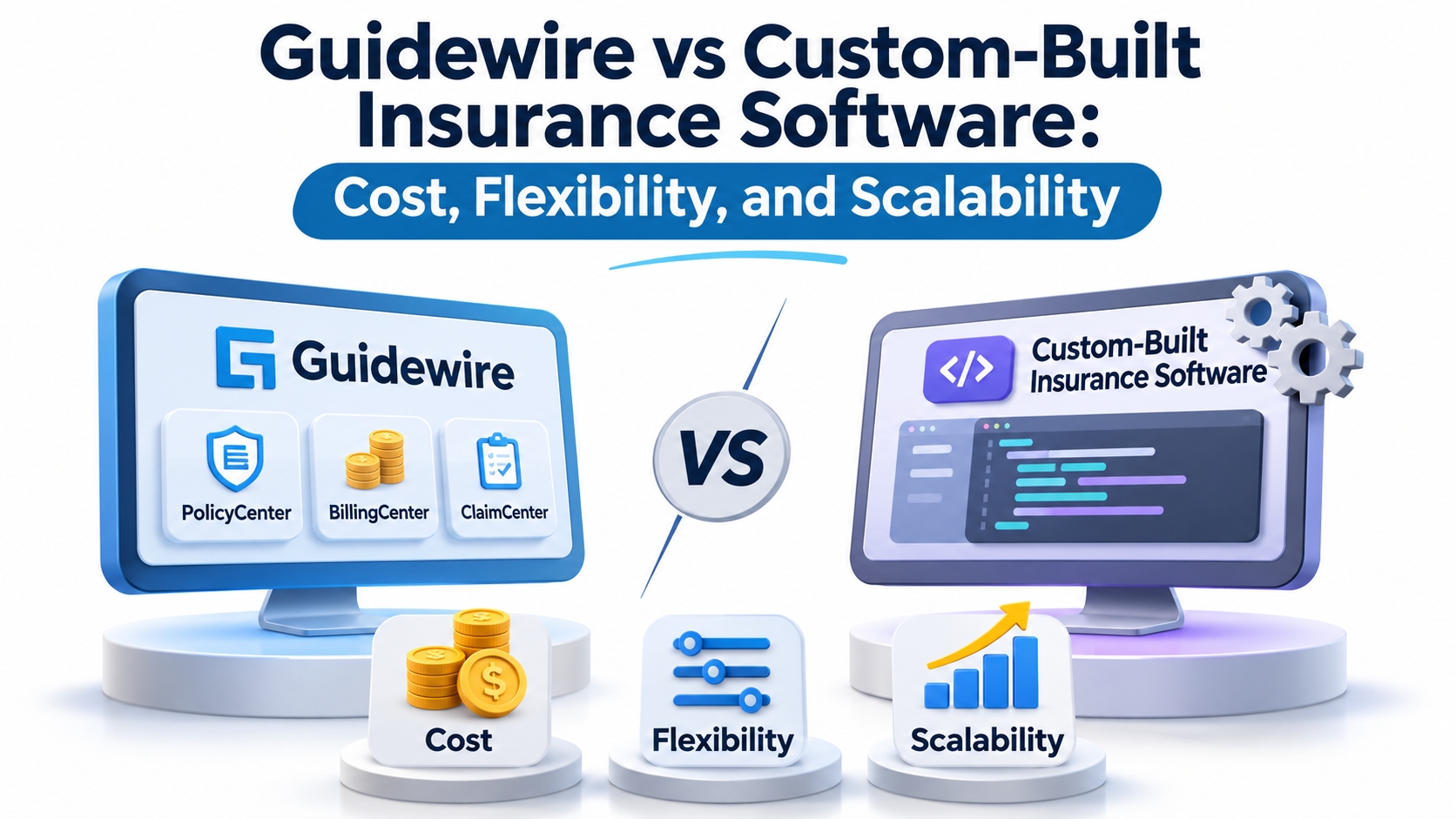
Choosing insurance software is not just a technology decision; it is a long-term business investment. While some insurers prefer established platforms, others want complete control through custom development. But which approach delivers better value when cost, flexibility, and scalability matter?
The difference becomes clearer when implementation expenses, maintenance responsibilities, integration requirements, and future business growth are examined together. Understanding these factors can help insurers avoid expensive technology decisions.
Understanding Guidewire and Custom-Built Insurance Software
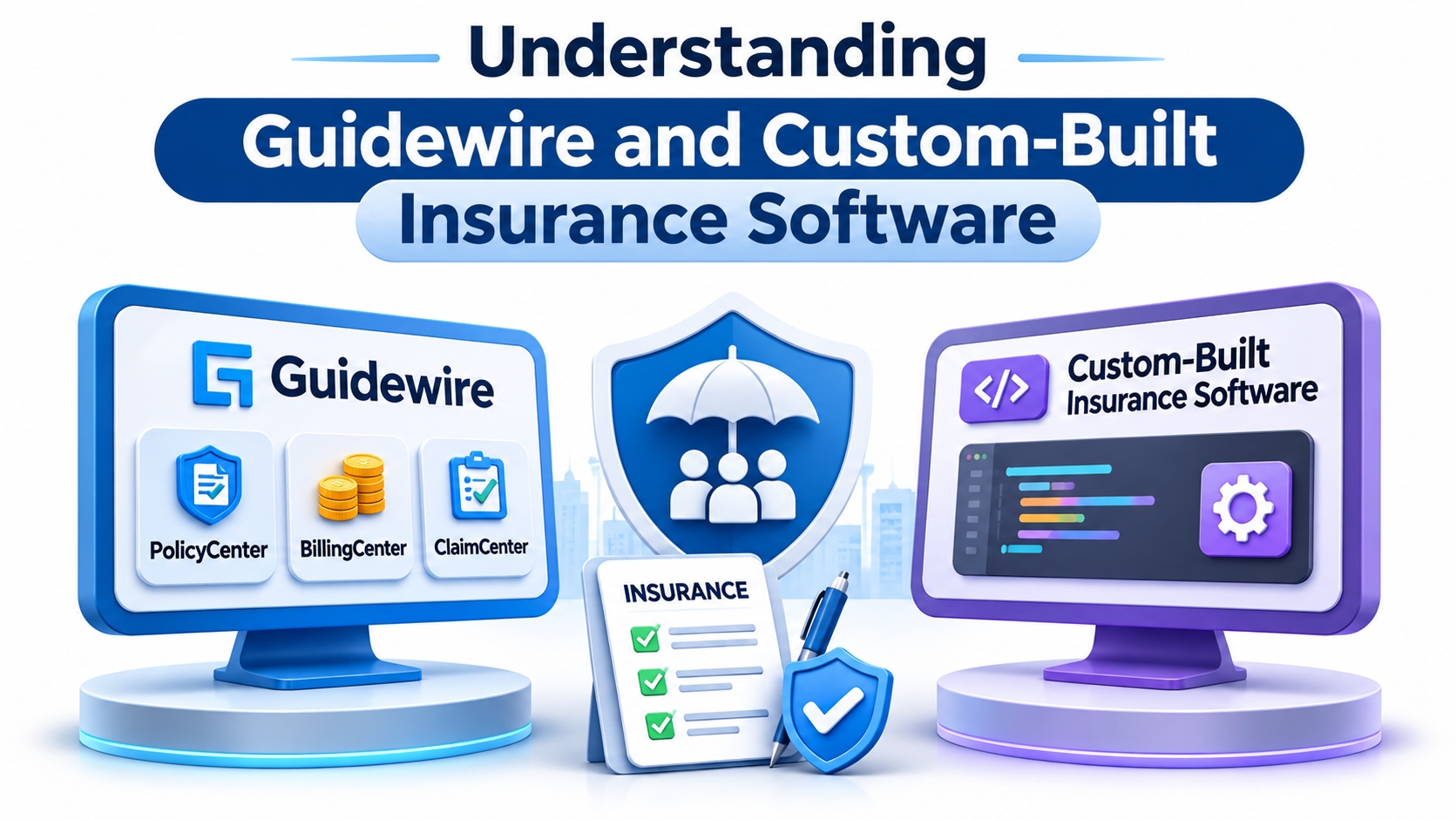
Guidewire is an established insurance technology platform designed primarily for property and casualty (P&C) insurance operations. Its InsuranceSuite includes specialized applications that support policy administration, billing, and claims management.
Its major applications include:
PolicyCenter: Supports policy creation, underwriting workflows, renewals, endorsements, and policy administration.
BillingCenter: Handles billing operations, payment plans, invoices, and financial transactions.
ClaimCenter: Supports claims reporting, investigation, assignment, settlement, and claims processing.
These applications provide insurers with a structured foundation for managing essential business operations.
Custom-built insurance software takes a different approach. Instead of adopting an existing insurance platform, businesses develop applications according to their specific operational requirements. They can determine the architecture, programming languages, database technologies, integrations, and user interfaces.
For example, an insurance startup developing a specialized digital insurance product might build its own quotation engine and customer portal. An established insurer managing multiple product lines might prefer an enterprise platform with existing insurance capabilities.
The right choice depends on business complexity, available resources, and long-term technology objectives.
Initial Investment and Long-Term Cost Considerations
Cost is one of the biggest factors influencing the decision between Guidewire and custom-built insurance software. However, comparing only the initial implementation budget can produce misleading conclusions.
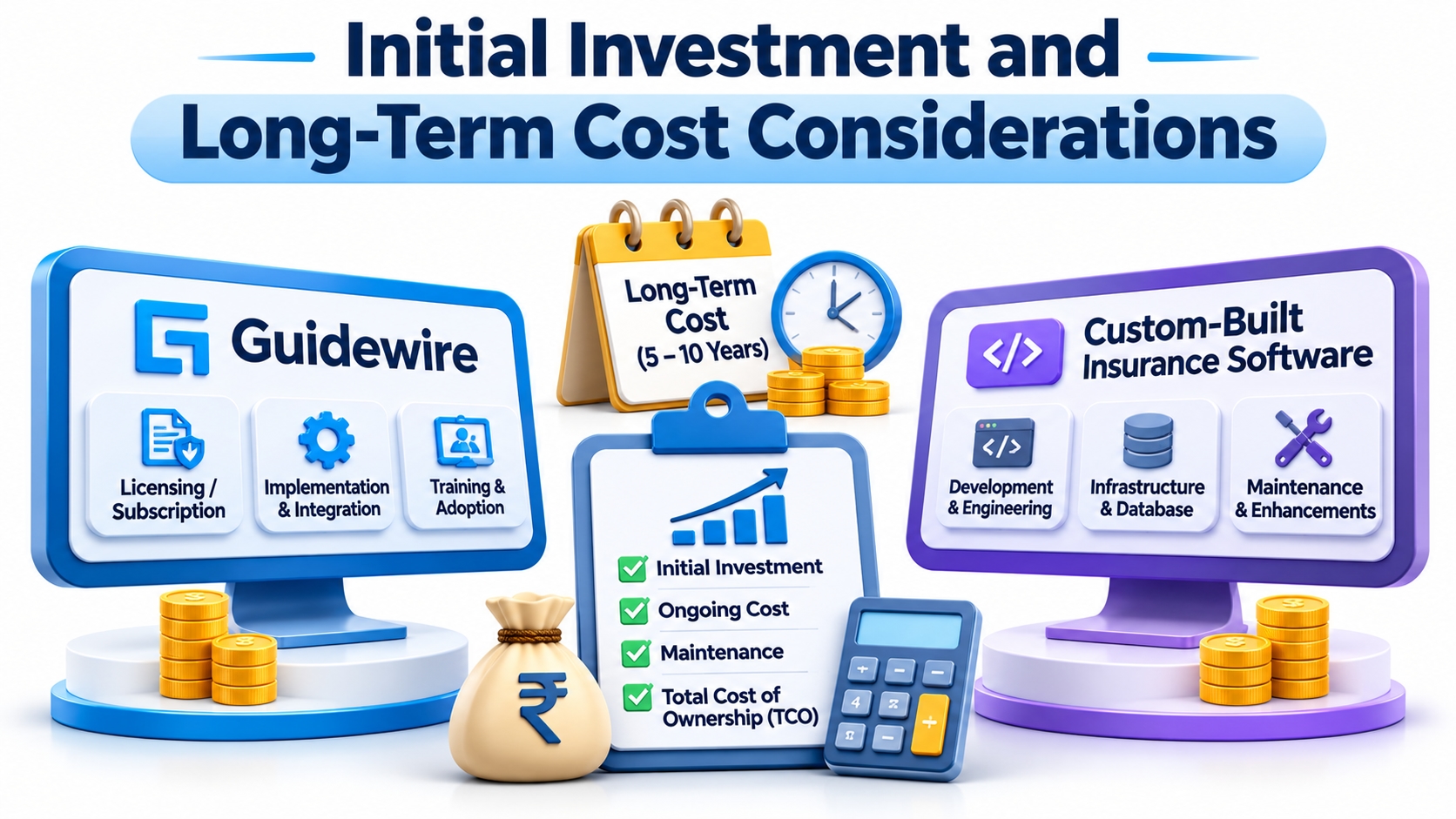
Guidewire generally involves licensing or subscription arrangements, implementation services, configuration, integrations, data migration, and employee training. The overall investment depends on the selected applications, business requirements, deployment model, and implementation complexity.
Custom development requires businesses to finance the complete development process. Expenses can include:
Business requirement analysis and solution architecture.
Software developers and technical architects.
Database development and infrastructure.
Security implementation and regulatory controls.
Testing, deployment, and maintenance.
Custom software may initially appear less expensive when the project covers a limited business function. However, building an enterprise-level policy administration or claims management system requires considerably more engineering effort.
Long-term expenses also matter. Guidewire customers must consider platform subscriptions, implementation partners, integrations, and ongoing configuration. Custom software owners must continuously fund engineering teams, infrastructure, security updates, technical support, and enhancements.
Therefore, businesses should evaluate total cost of ownership over five to ten years rather than focusing exclusively on initial development expenses.
Flexibility and Customization: Which Offers More Control?
Flexibility is where the two approaches demonstrate important differences.
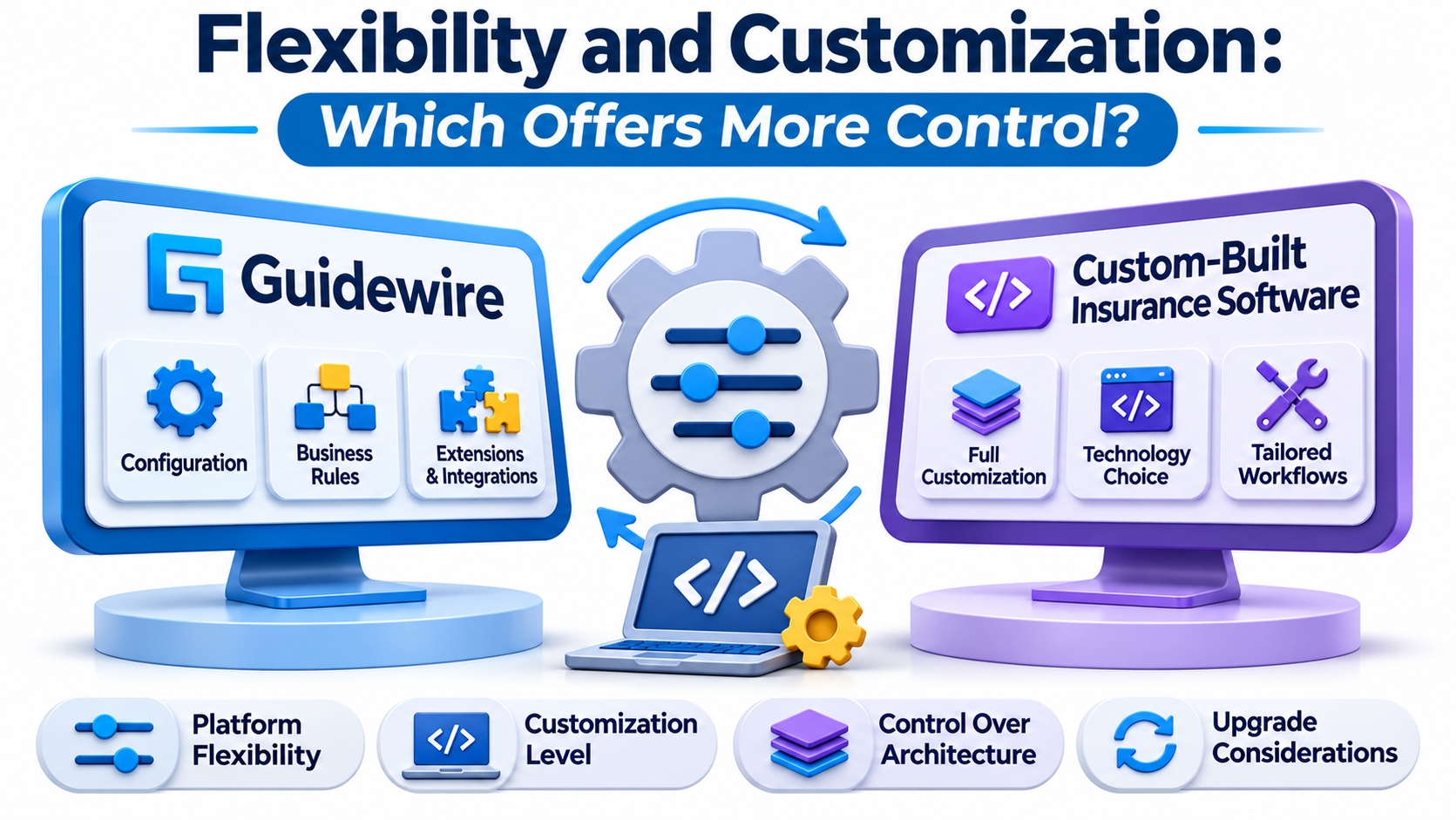
Guidewire provides insurance-specific configuration capabilities that allow organizations to implement business rules, product structures, workflows, and operational processes. Its platform also supports integrations and extensions for requirements that go beyond standard functionality.
This approach helps insurers adapt established insurance processes without independently developing every application.
However, customization must follow the platform's architecture and supported extension mechanisms. Highly specialized requirements may require additional development expertise and careful consideration of future upgrades.
Custom-built software provides greater architectural freedom. Businesses can decide how individual components communicate, how workflows operate, and how information is stored.
For example, an insurer developing a completely different underwriting process can design the application around its own decision-making model.
Custom development offers advantages such as:
Complete control over application architecture.
Freedom to select development technologies.
Tailored business workflows.
Greater control over user experience.
Ability to prioritize specialized business requirements.
However, flexibility also creates responsibility. Every customized feature must be developed, tested, secured, documented, and maintained.
The best solution is not necessarily the one offering unlimited customization. It is the one providing enough flexibility without creating unnecessary technical complexity.
Scalability, Cloud Infrastructure, and Business Growth
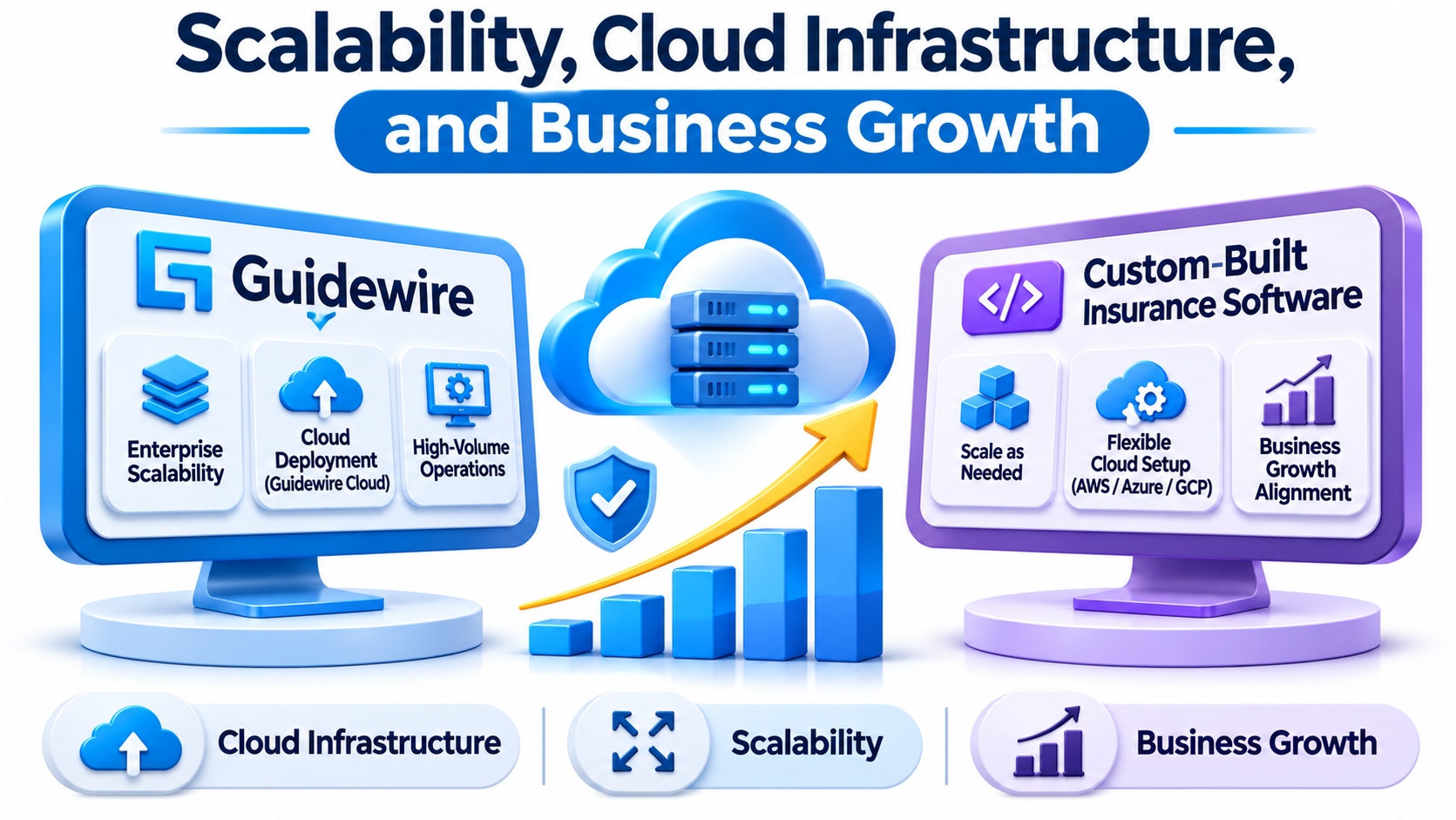
Insurance businesses rarely remain at the same operational scale. They may introduce new insurance products, expand into additional markets, increase policy volumes, and support larger customer bases.
Guidewire offers an established platform designed for enterprise insurance operations. Its cloud capabilities support application deployment, infrastructure management, monitoring, and scaling.
For example, Guidewire Cloud Platform provides tools for managing InsuranceSuite applications and their infrastructure. Organizations can manage application nodes and deployment environments according to operational requirements.
This helps businesses manage changing workloads while maintaining a structured application environment.
Custom-built insurance software can also scale effectively when designed with suitable architecture.
Developers may use cloud infrastructure, distributed services, containerization, automated deployment pipelines, and database optimization to support business growth.
However, scaling a custom application requires continuous architectural planning.
Important considerations include:
Database scalability: Managing increasing policy, customer, and claims records.
Application performance: Maintaining response times during higher transaction volumes.
Infrastructure capacity: Increasing computing resources when demand grows.
Integration scalability: Supporting additional external services and business partners.
Security: Protecting sensitive customer and financial information.
Guidewire offers a predefined enterprise insurance foundation, while custom development provides greater architectural control. Both can support growth, but their implementation responsibilities differ.
Integration, Maintenance, and Technical Ownership
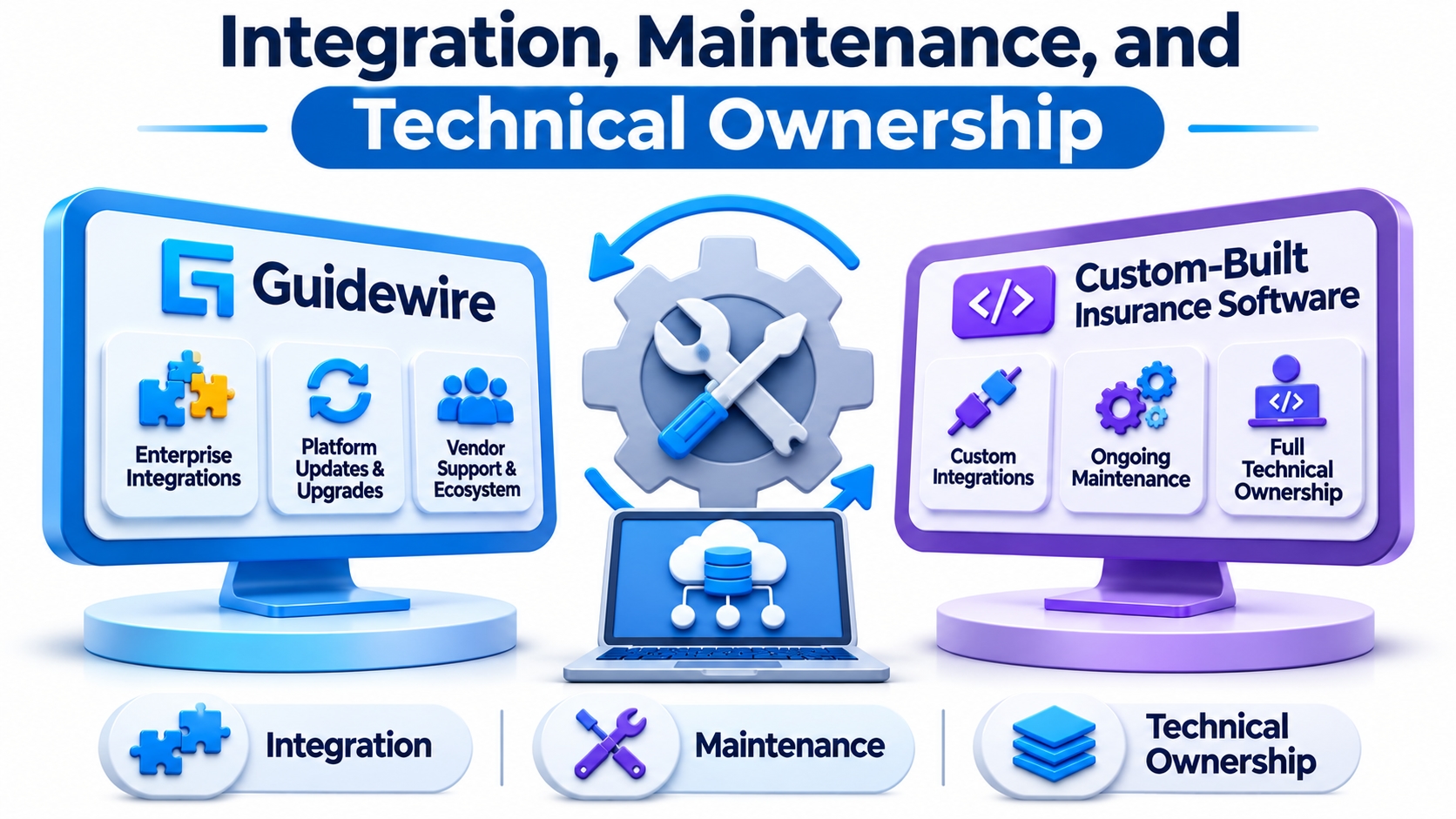
Modern insurance companies depend on multiple applications, including customer relationship management systems, payment gateways, document management platforms, analytics tools, and external data services.
Consequently, integration capabilities are essential when selecting insurance software.
Guidewire supports integrations through its platform capabilities and developer ecosystem. Insurers can connect InsuranceSuite applications with external systems to support business operations.
Its established architecture can help reduce the need to independently design every insurance-related integration.
Custom-built applications provide control over integration architecture. Development teams can create APIs, connect third-party services, and establish communication between internal applications according to specific requirements.
However, integration complexity increases when systems use different data formats, authentication mechanisms, and communication protocols.
Maintenance responsibilities also differ.
With Guidewire, organizations work within an established product ecosystem and must manage configuration changes, integrations, deployments, and platform-related requirements.
With custom software, the organization assumes greater responsibility for application maintenance, bug fixes, security updates, infrastructure management, and technical documentation.
For insurance businesses, long-term maintenance planning should be considered before selecting either approach.
How Should Insurance Companies Choose the Right Solution?
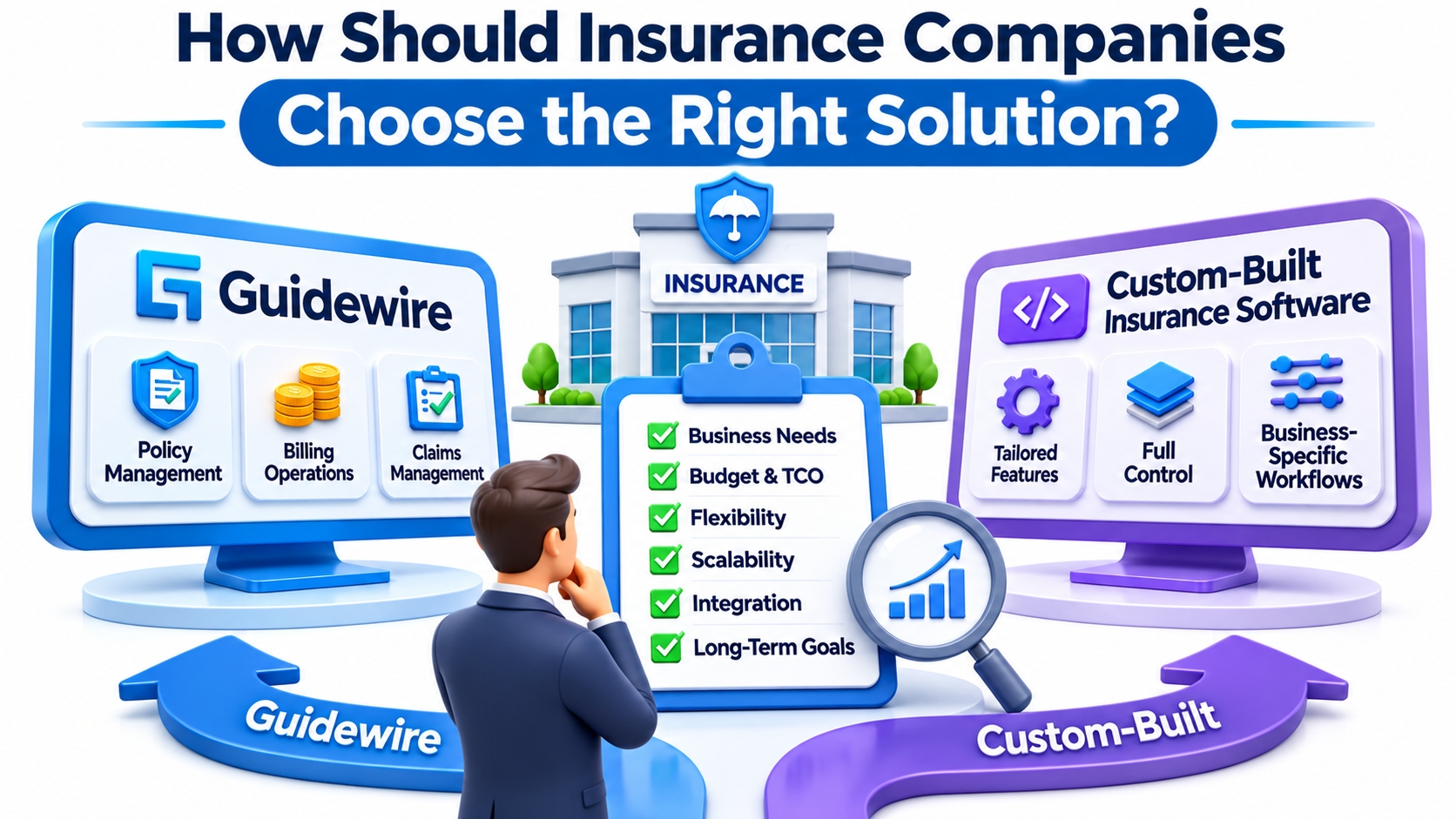
The decision between Guidewire and custom-built software should begin with business requirements rather than technology preferences.
Guidewire can be a suitable choice for insurers that need established policy administration, billing, and claims capabilities. It is particularly relevant when organizations want a structured platform supported by insurance-specific functionality.
Custom development may be appropriate when businesses have highly specialized workflows, unique product requirements, or technology capabilities that cannot be addressed efficiently through an existing platform.
Consider these decision factors:
Choose Guidewire: When established insurance functionality, enterprise operations, and structured implementation are priorities.
Choose custom development: When unique business requirements justify greater architectural freedom and long-term engineering investment.
Consider a hybrid approach: When standard insurance operations can run on an established platform while specialized customer experiences or business applications are developed separately.
Professionals entering this technology domain should also understand how insurance platforms operate beyond their basic features. JastTech emphasizes practical learning in insurance technology, platform functionality, and implementation-oriented technical skills.
For aspiring professionals, Guidewire Training in Hyderabad can provide exposure to insurance workflows, PolicyCenter, ClaimCenter, BillingCenter, and practical development concepts.
Conclusion
Guidewire and custom-built insurance software solve different business challenges. Guidewire offers an established insurance technology foundation with specialized applications, configuration capabilities, and cloud deployment options. Custom-built software provides greater control over architecture, development priorities, and specialized workflows. However, neither option is automatically cheaper or more scalable. The actual outcome depends on implementation complexity, technical resources, integration requirements, and long-term maintenance.
Ultimately, insurance companies should evaluate their operational priorities, financial resources, and future growth plans before making a decision. A platform-based approach can reduce the burden of independently developing core insurance functionality, while custom development can deliver competitive advantages when unique requirements justify the investment. The smartest technology strategy is the one that balances business needs, development costs, flexibility, and sustainable scalability.Similarly, Guidewire Certification Preparation can help learners organize their platform knowledge and strengthen their understanding of essential Guidewire concepts





