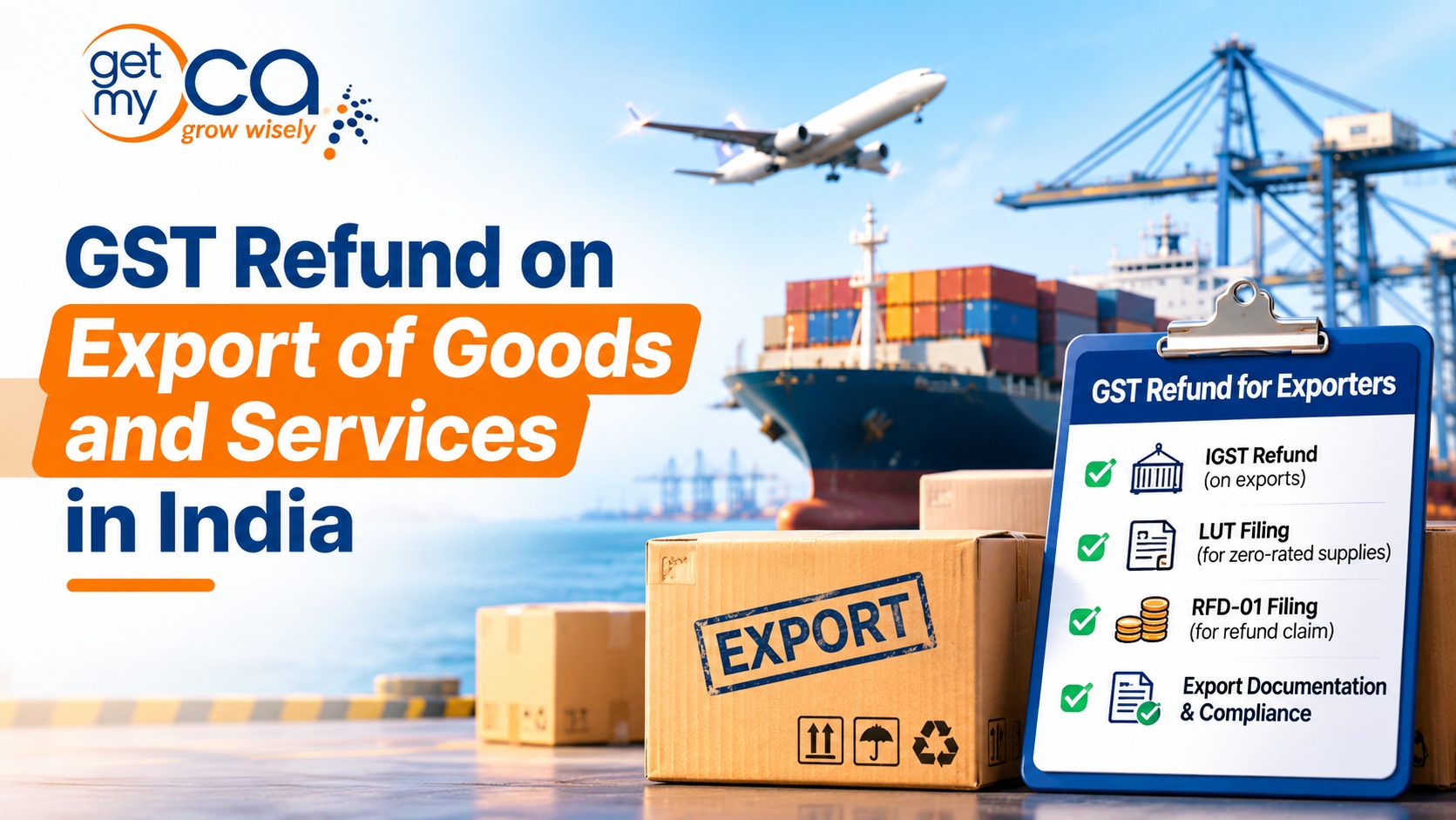
Indian service exporters frequently invoice international customers in currencies such as US dollars, euros and British pounds.
These businesses may receive payments through overseas banks, international payment platforms or authorised banking channels.
Because exchange rates change over time, the rupee value of an export invoice may differ from the amount ultimately recorded when payment is received.
Accurate reconciliation is important when preparing GST refund applications for zero-rated export services.
Why Does Foreign Currency Reconciliation Matter?
Export invoices may be issued in foreign currency while GST records are maintained in Indian rupees.
A business can therefore have different values for the original invoice, accounting recognition and subsequent bank receipt.
Understanding GST refund on export of services from India helps businesses identify which values and records are relevant to the refund calculation.
An exchange rate difference does not automatically mean that the underlying export transaction is incorrectly reported.
However, unexplained differences between invoices and payment records can create difficulties during reconciliation.
How Are Foreign Currency Export Invoices Recorded?
Exporters should determine the applicable GST valuation and exchange rate provisions when reporting transactions.
Accounting standards may also govern how foreign currency transactions and exchange differences are recorded in financial statements.
Businesses should distinguish the GST reporting value from subsequent accounting gains or losses arising from exchange rate movements.
A later fluctuation in the exchange rate does not automatically require the original export invoice to be revised.
The correct treatment depends on the transaction and applicable rules.
Why Do Service Exporters Need Payment Evidence?
Section 2(6) of the IGST Act contains conditions for qualifying as an export of services.
These include relevant conditions concerning receipt of consideration in convertible foreign exchange or Indian rupees where permitted by RBI.
Businesses may need to maintain Bank Realisation Certificates, Foreign Inward Remittance Certificates or other appropriate banking evidence.
The documents should establish the relationship between export invoices and payments received.
Exporters should also review whether the relevant refund statement requires particular invoice-wise payment information.
What Happens When Overseas Clients Make Partial Payments?
International clients may settle invoices through multiple payments.
For example, a consulting company may issue an invoice for a completed project and receive payment in two instalments.
The exporter should maintain a reconciliation showing the original invoice amount, amounts received and outstanding balance.
The applicable turnover calculation for zero-rated export services must follow Rule 89(4), including its prescribed treatment of relevant receipts and completed services.
Businesses should not automatically treat an outstanding invoice as fully realised turnover for refund purposes.
What About Bank Charges and Payment Platform Deductions?
International payments may involve intermediary bank charges or payment platform fees.
These deductions can cause the amount credited to the business bank account to differ from the amount invoiced.
Exporters should obtain appropriate supporting statements and examine whether the difference represents a fee, currency conversion adjustment or unpaid customer amount.
The correct GST and accounting treatment should be evaluated according to the actual transaction.
A net bank credit should not automatically be treated as the full value of the export service without reconciliation.
What Records Should Exporters Maintain?
Important records include:
Export service agreements.
Foreign currency invoices.
Applicable exchange rate workings.
Foreign bank remittance details.
Payment platform settlement statements.
Bank charges.
Invoice-wise receipt reconciliation.
GSTR-1 and GSTR-3B.
LUT acknowledgement.
Eligible ITC records.
Refund calculation statements.
These records help explain discrepancies between invoice values and realised payments.
How Can Exporters Improve Refund Accuracy?
Businesses should reconcile foreign currency invoices and banking records every month.
They should separately identify outstanding receivables, exchange differences and payment processing charges.
The refund calculation should be reviewed against the relevant GST provisions before Form GST RFD-01 is submitted.
Professional GST refund filing and tax compliance services can assist service exporters with payment reconciliations, eligible credit review and refund documentation.
Conclusion
Foreign currency reconciliation is an important part of GST refund preparation for Indian service exporters.
Businesses should maintain accurate invoice and payment records, apply the relevant statutory turnover rules and document exchange rate differences.
Proper reconciliation helps support more reliable refund calculations and reduces avoidable filing discrepancies.