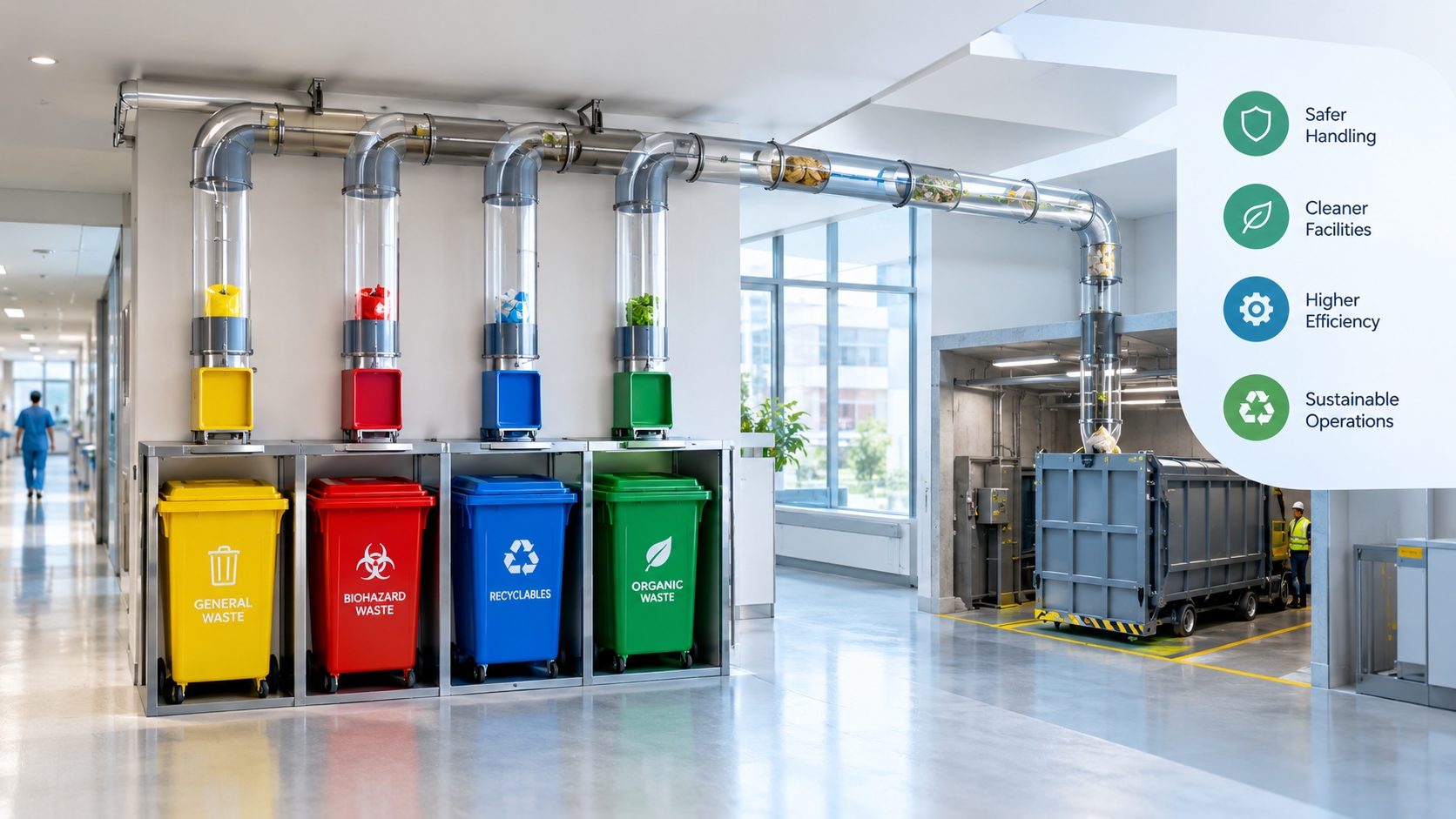
Introduction: The Cost Is More Than the Purchase Price
A hotel kitchen generates food scraps every day, a hospital cafeteria faces strict hygiene expectations, and a food-processing unit may handle substantially larger waste volumes. For each facility, an Automatic Waste System represents an investment that extends beyond the equipment invoice.
The real expense includes installation, electricity, labour, maintenance and the cost of handling waste that the machine cannot process. Buyers who compare quotations on purchase price alone often discover these expenses after commissioning.
Here's the practical question: will the system reduce your total waste-handling cost without creating another operational headache?
Specification: What Determines Processing Costs?
Capacity and waste composition
An Organic Waste Processing Machine must match the quantity and type of waste generated daily. Fruit peels, cooked food, vegetable scraps and packaging contamination can affect processing performance.
Ask for rated capacity in kilograms per day, expected operating hours and acceptable feed material. A machine advertised at a particular capacity may perform differently with wet, mixed or inconsistent waste.
Technology, utilities and installation
A Food Waste Management System may use technologies such as composting, mechanical dewatering or biological processing. These methods have different space, utility and output requirements.
Equipment: purchase price, controls and included accessories.
Installation: civil work, drainage, ventilation and electrical connections.
Operation: power consumption, labour and consumables.
Maintenance: service visits, replacement parts and downtime.
Output management: handling, storage and lawful disposal or use of processed material.
One overlooked detail is the moisture content of incoming waste. Two facilities producing identical waste weights can have different processing requirements because their waste composition differs.
Objective: Five Criteria for Evaluating Suppliers
Before selecting Automatic Waste System Manufacturers, ask these five questions.
What is the tested capacity? A bad answer is a brochure figure without details about feed composition or operating conditions.
What is the actual power requirement? Be wary of suppliers who quote motor power but cannot explain expected energy consumption per operating cycle.
What maintenance is required? “Minimal maintenance” means little without a schedule, spare-parts list and service terms.
What happens to the output? Reject vague claims that all processed waste automatically becomes saleable compost; output quality depends on technology and feedstock.
What does the quotation exclude? A low price that omits installation, drainage or commissioning is not a bargain.
That's where procurement discipline matters. Get the exclusions in writing before comparing the final prices.
Benefits: Where the Investment Can Protect Margins
A properly specified system can reduce several recurring business costs.
Lower waste-handling expenses: On-site processing may reduce collection frequency, depending on local arrangements and output volume.
Less manual handling: Automation can reduce staff time spent moving waste, although loading and cleaning may still require workers.
Better space utilisation: Compact equipment may free up storage space otherwise occupied by waste bins.
Improved hygiene management: Enclosed handling can reduce exposure to waste, provided cleaning and operating procedures are followed.
More predictable budgeting: Documented electricity consumption and maintenance schedules help estimate annual operating expenses.
Potential resource recovery: Suitable organic output may be reused or composted when its quality and local rules permit.
Nobody should promise savings without examining the baseline. Compare current collection charges, labour hours and disposal costs against the proposed system's full operating expenses.
Availability: Finding Waste Processing Equipment in India
Businesses searching for Automatic Waste System Manufacturers in India should assess service access alongside equipment pricing. A nearby service team can reduce travel delays, but proximity alone does not prove technical competence.
Likewise, Automatic Food Waste System Suppliers and Automatic Food Waste System Suppliers in India should provide clear specifications, installation requirements and after-sales support. Buyers can also evaluate Automatic Food Waste System Exporters and Automatic Food Waste System Exporters in India when considering specialised configurations, provided import costs, spare-parts availability and service responsibilities are clear.
For procurement teams, request comparable quotations from Automatic Food Waste System Dealers and Automatic Food Waste System Dealers in India. Check whether each quotation includes commissioning, operator training and warranty coverage.
Here's a practical consideration: facilities in industrial clusters may have better access to service networks, while remote sites should confirm spare-parts delivery times before placing an order.
About Airox Technologies
At Airox Technologies, we understand that waste-processing equipment must fit the facility's daily workload, available space and operating budget. We encourage buyers to evaluate capacity, waste composition, installation requirements and ongoing maintenance before choosing an Automatic Waste System.
We believe a useful quotation starts with operating information, not assumptions.
Request a Cost Assessment
We invite procurement managers, facility operators and business owners to contact our team with their waste-processing requirements.
Response target: Within one business day, subject to confirmation by our team.
Minimum order quantity (MOQ): Project-dependent; we confirm this after reviewing the configuration.
Send us: Daily waste volume in kg, waste type, facility location, available installation space and preferred commissioning date.
Conclusion: Calculate the Cost Before You Commit
The true cost of an Automatic Waste System depends on capacity, installation, electricity, maintenance and the facility's existing waste-handling expenses. When evaluating Automatic Waste System Manufacturers, compare suppliers using the same operating assumptions rather than headline prices. With accurate site data and written service terms, Indian businesses can make better procurement decisions and plan future waste-processing needs with greater confidence.
Frequently Asked Questions
1. What is the biggest cost factor in a food waste processing system?
Capacity and processing technology usually have a major influence on the initial price, while electricity, labour and maintenance shape long-term costs. An Organic Waste Processing Machine also needs to match the waste composition; otherwise, actual performance may differ from the quotation.
2. How do I evaluate Automatic Waste System Manufacturers?
Ask for capacity specifications, utility consumption, installation inclusions, warranty conditions and references for comparable installations. Automatic Waste System Manufacturers should explain limitations clearly. A caveat: no single machine is suitable for every waste stream or site.
3. What should I ask Food Waste Management System suppliers?
Request a written breakdown of equipment, commissioning, training, consumables and annual maintenance. Compare Automatic Food Waste System Suppliers and Automatic Food Waste System Suppliers in India using identical requirements. Actual operating savings will depend on local collection charges and the facility's waste volume.
4. Are Automatic Food Waste System Exporters worth considering?
They can be worth evaluating when a particular technology or configuration is unavailable locally. Compare Automatic Food Waste System Exporters and Automatic Food Waste System Exporters in India on landed cost, delivery time, warranty coverage and access to replacement parts. Imported equipment is not automatically cheaper over its operating life.
5. Should I buy through Automatic Food Waste System Dealers?
Dealers may assist with local coordination, installation and service, but responsibilities vary by agreement. Compare Automatic Food Waste System Dealers and Automatic Food Waste System Dealers in India on technical support, spare-parts access and written service commitments before ordering.