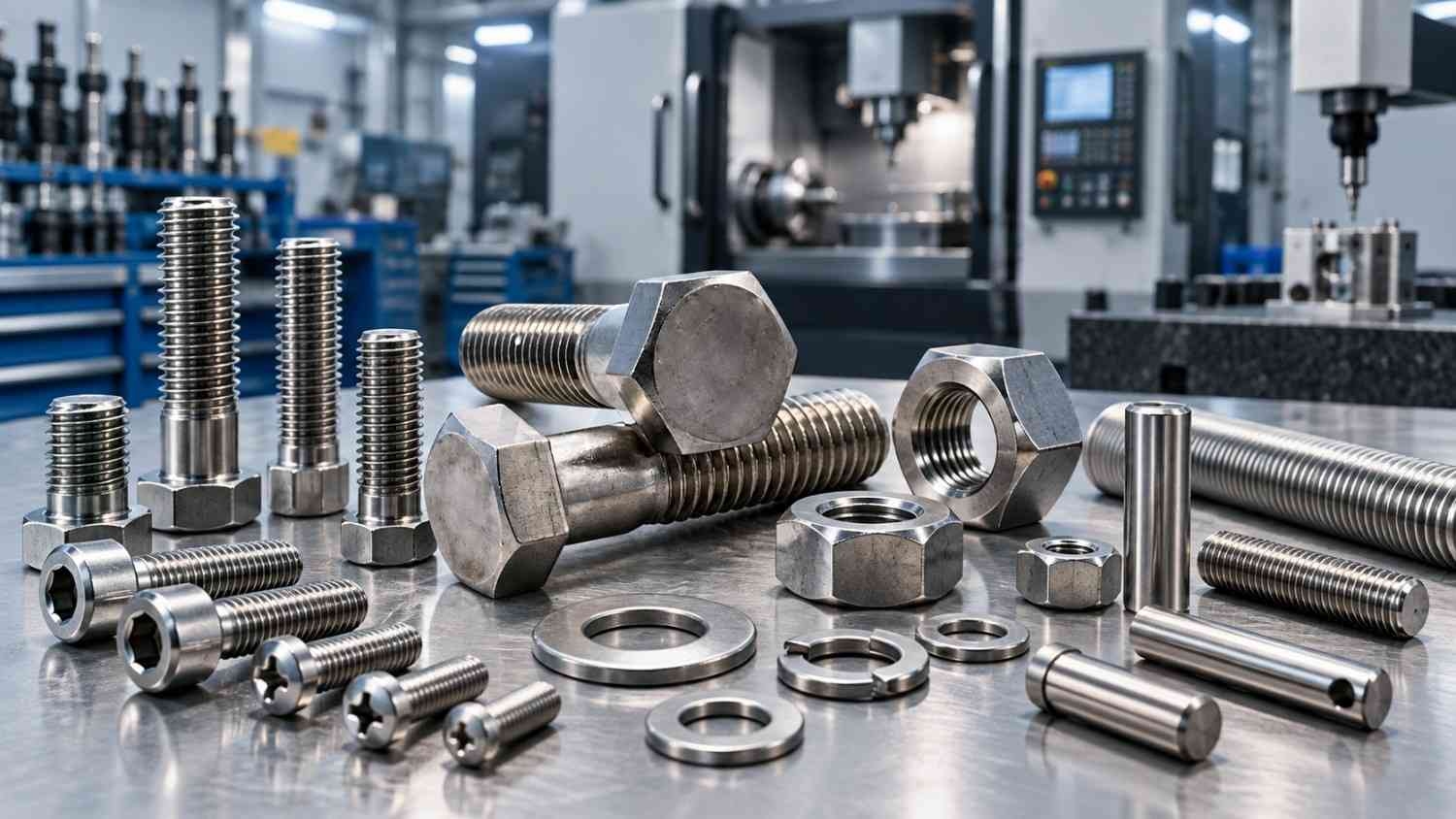
Ten identical joints. Same bolts, same torque wrench, same operator. Two loosened within a month.
That's scatter, not bad luck. With a torque wrench, the standard assumption is that the highest preload in a group of bolts runs 1.6 times the lowest. Which means the fastener you picked for a stronger joint is only as strong as your least-tightened bolt. Here's how to select for the joint, not just the part.
Fastener Selection Starts With How the Joint Carries Load
Friction-Grip or Bearing
In a friction-grip joint, clamp force carries the shear, so preload is everything. In a bearing joint, the shank takes it, so shank diameter and hole fit matter more. Ordering without saying which is a guess.
Grip Length and Engagement
Longer grip lengths stretch more under preload, so they hold clamp force better as the joint settles. Short, stubby bolts lose it fast. Too little thread engagement strips threads before the bolt yields.
Friction Scatter
Here's the detail buyers skip.
Nut factors routinely vary by about ±25%, and careful torque wrench calibration does little to improve preload accuracy. Coating, lubricant and thread quality move preload more than the tool does. That's harder to control than any torque chart admits.
Five Questions That Expose Fasteners Suppliers Who Ignore the Joint
Impact wrenches carry a much higher tightening factor than torque-controlled tools, and some critical joints don't allow impact tightening at all. Most buyers never tell a supplier which tool they use.
Do they ask how the joint is tightened? Good: torque, angle or tension method, and tool type. Bad: never asks.
Can they hold coating and thread friction steady? Good: coating thickness and friction data per lot. Bad: "Same plating as always."
Do they know your grip length? Good: recommends length and thread run-out. Bad: sells you the catalogue length.
How do they treat a joint that loosens? Good: asks for the failed part and torque records. Bad: blames the assembler by reflex.
Will they say when a joint needs a different bolt count? Good: says so plainly. Bad: agrees the current design is fine.
Where Correct Selection Pays Back in the Joint
Even when torque tools hold ±2%, the resulting preload can still vary from ±9% to as much as ±60%, depending on the tightening factor.
Right-sized bolts mean fewer of them, so joints cost less to drill, tap and tighten. Consistent friction narrows preload scatter, so designers can trim safety margins without gambling. Correct grip length holds clamp load through settling and thermal cycles. Matched thread tolerances spread load across more threads, helping fatigue life. Drawing-based parts remove the shim stacks that hide design mismatches. And a documented process cuts field returns nobody can trace.
Why Joint Trials Run Faster Near the Plant
India's industrial fastener market generated USD 4,684.1 million in 2025 and is forecast to grow at 8.7% a year through 2033. A Fasteners Manufacturer in India within reach of your plant lets you run a joint trial and get a corrected lot without a two-week freight loop. Ask all Fasteners Suppliers how fast they turn revised samples.
A Leading Fasteners Supplier in India can name the number of days.
The Question We Ask Before We Quote a Bolt
We make fasteners to your drawing, so before we quote we ask how the joint is tightened. Torque wrench, nut-runner, impact tool: each changes the preload the bolt actually sees. If your coating will shift friction, we say so before the first sample, not after it. Our CNC machining and centerless grinding hold the dimensions; consistent friction is the part we watch most closely, because it's the part buyers forget.
Before the Next Joint Design Review
A stronger joint comes from a fastener, a tightening method, a coating and a grip length chosen together. Write all four on the drawing, not just the bolt size. At the next design review, ask who owns each one.
FAQs
Is a higher-strength fastener always the fix for a weak joint?
Strength raises the preload you can apply, not your control over it. Scatter and embedment still decide whether the joint holds.
Should I re-torque bolts after first use?
Gasketed or soft-clamped joints often need it after settling; hard metal-to-metal joints may not. Your design engineer should set the procedure; we can't call it from a drawing.
What does a Fasteners Manufacturer add to joint design?
Control over the dimensions and finish that set friction and fit, plus fast changes to thread tolerance or grip length. It doesn't replace your joint calculation, though.
How do I compare Fasteners Suppliers on joint reliability?
Ask for coating, hardness and dimensional data per lot, then run a joint trial on your own assembly.
How do I recognise a Leading Fasteners Supplier in India for critical joints?
They ask how you tighten before quoting and can trace your lot to a heat number. A quick quote with no questions is a warning sign.