The construction, mining and transport industries in Australia rely on specialised equipment to move large quantities of bulk materials efficiently. From sand and gravel to soil, aggregates and minerals, choosing the right trailer can make a significant difference to transportation productivity, unloading efficiency and workplace safety.
Among the most commonly used options are end tipper and side tipper trailers. Both are designed to transport and unload bulk materials, but they operate differently and are suited to different working environments.
Understanding the differences between these two trailer types can help transport operators, construction companies and mining businesses select the right equipment for their projects.
1. What Is an End Tipper Trailer?
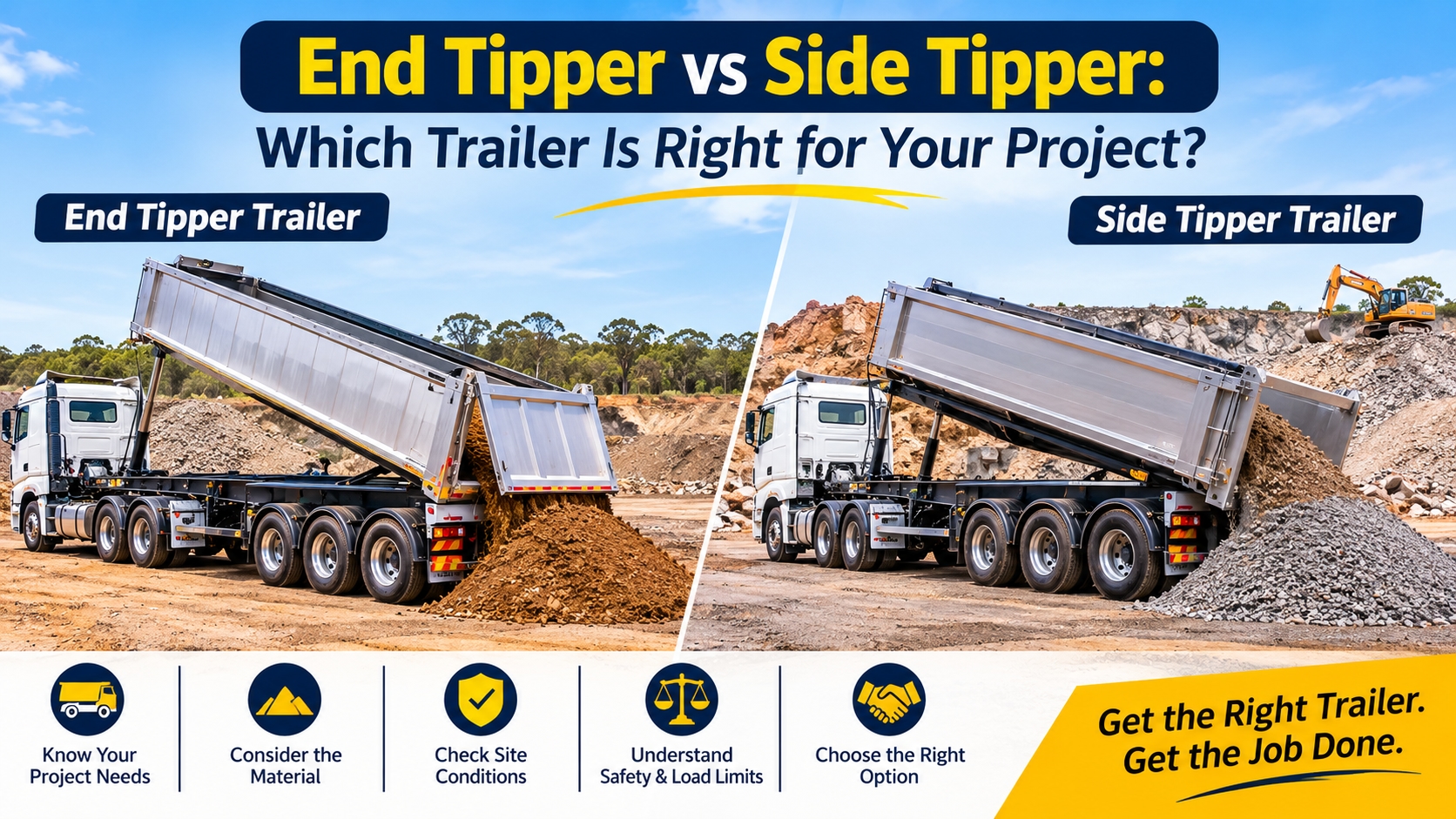
An end tipper trailer is designed to unload materials through its rear section. It uses a hydraulic lifting system to raise the front of the trailer body, allowing the contents to slide towards the rear and discharge through the tailgate.
These trailers are commonly ucharged along a designated area or stockpile.
Typical applications include:
Transporting minerals and mining materials.
Moving sand and aggregates.
Supporting large construction projects.
Transporting coal and other bulk products.
Delivering materials for road construction and earthmoving.
Side tipper trailers can offer efficient unloading for suitable operations, particularly where multiple loads need to be discharged along a planned route.
However, operators must ensure there is sufficient side clearance and that the unloading area is suitable for the trailer configuration.
3. Key Differences Between End Tipper and Side Tipper Trailers
The main difference between these trailers is their unloading direction.
An end tipper discharges materials towards the rear, while a side tipper unloads materials sideways. This difference affects site access, sed in construction, earthmoving, agriculture and quarry operations.
End tipper trailers are particularly useful when materials need to be deposited at a specific location, such as a stockpile, unloading bay or construction site.
Common applications include:
Transporting sand, gravel and crushed rock.
Moving soil and construction materials.
Delivering road base for road construction projects.
Transporting agricultural products.
Supporting quarry and earthmoving operations.
One of the main advantages of an end tipper is its straightforward unloading arrangement. However, operators need sufficient clearance behind the trailer and suitable ground conditions before unloading.
2. What Is a Side Tipper Trailer?
A side tipper trailer is designed to discharge bulk materials through its side rather than the rear. Its hydraulic system tilts the trailer body sideways, allowing the load to slide out onto the ground.
Side tipper trailers are commonly used in mining, large-scale construction, roadworks and bulk material transportation.
They are particularly useful for projects where materials need to be disunloading arrangements and the type of projects each trailer can support.
End tippers are often suitable for projects with designated rear unloading areas, including construction sites, quarries and material storage locations.
Side tippers can be useful for larger operations where materials need to be discharged along a stockpile or designated unloading area.
The choice should depend on the project layout, material type, vehicle configuration and unloading requirements rather than simply selecting the trailer with the largest capacity.
4. Consider the Type of Material You Need to Transport
Material type is another important factor when choosing between end tipper and side tipper trailers.
Different materials have different weights, moisture levels and flow characteristics. These factors can influence how easily a load moves during unloading.
For example, sand, gravel and crushed rock are commonly transported using both trailer configurations. Mining operations may require side tippers for bulk mineral movements, while construction businesses may use end tippers for soil, road base and aggregates.
Wet or sticky materials can sometimes remain inside the trailer body instead of discharging completely. Operators should consider body design, liners and material characteristics when selecting equipment.
Always check the trailer's rated payload capacity and ensure that the load is suitable for the vehicle combination.
5. Evaluate Site Conditions and Unloading Space
Site conditions are particularly important when operating tipper trailers.
End tipper trailers require suitable rear clearance and a firm, level unloading surface. When the trailer body is raised, its centre of gravity changes, which can increase the risk of instability.
Side tipper trailers also require careful planning. The unloading area must provide sufficient side clearance, and the ground must be suitable for the vehicle and trailer combination.
Before unloading, operators should consider:
Ground stability and surface conditions.
Slope and cross-fall of the unloading area.
Available space around the trailer.
Weather conditions and strong winds.
Vehicle alignment and positioning.
Potential hazards to nearby workers and equipment.
A proper site assessment and suitable exclusion zones are essential for safe tipping operations.
The Australian construction industry also highlights the importance of managing rollover risks, ground conditions and people working near tipper vehicles. Safe work procedures and appropriate operator training should always be in place.
6. Understand Load Capacity and Safety Requirements
Choosing a trailer based only on its physical size can lead to operational problems. Businesses should also consider the trailer's specifications and applicable weight restrictions.
Important factors include aggregate trailer mass, gross trailer mass, tare weight, payload capacity and axle ratings.
The trailer must be compatible with the towing vehicle and approved vehicle combination. Operators should also understand the applicable Australian heavy vehicle mass and dimension requirements.
Regular inspections are important for identifying potential mechanical problems before they affect operations.
Check the following components regularly:
Tyres, wheels and wheel nuts.
Braking systems and suspension.
Hydraulic cylinders and hoses.
Chassis and structural components.
Tailgate mechanisms and locking systems.
Lights and electrical connections.
For tipper operations, hydraulic equipment should be maintained according to the manufacturer's recommendations.
7. Buying or Hiring Tipper Trailers for Your Business
Purchasing a tipper trailer can be a suitable investment for businesses with regular bulk transportation requirements. However, ownership involves upfront investment and ongoing expenses such as maintenance, registration, insurance and storage.
For businesses working on temporary construction projects or handling seasonal demand, hiring may provide a more flexible option.
Commercial trailer hire allows operators to access specialised equipment without purchasing every trailer configuration required for occasional projects.
When comparing available equipment, consider the trailer's specifications, location, condition, availability and hire agreement.
Businesses looking for different commercial trailer options can explore this trailer and equipment hire marketplace to review available listings and hire options.
8. Finding Suitable Trailer Hire Options in Perth
Western Australia has a range of construction, mining, earthmoving and transport operations that require suitable equipment for different projects.
Businesses operating around Perth may need specialised trailers depending on their material transportation requirements, project locations and delivery schedules.
When sourcing equipment, consider local availability, collection arrangements, hire duration and whether the trailer meets your operational requirements.
Companies looking for local equipment options can explore trailer hire in Perth to find information about available trailer and equipment hire services.
Planning ahead can help businesses identify suitable equipment and avoid delays when starting new projects.
Conclusion
End tipper and side tipper trailers both play important roles in Australia's construction, mining and transport industries. Although they are designed for similar bulk transportation tasks, their unloading mechanisms make them suitable for different applications.
End tippers are commonly used where rear unloading is practical, while side tippers can support operations requiring sideways discharge along designated areas.
Before choosing either option, consider your material type, load requirements, site conditions, unloading space and safety procedures.
By selecting suitable equipment and maintaining proper operating practices, transport and construction businesses can improve productivity, manage equipment costs and support safer bulk material transportation.