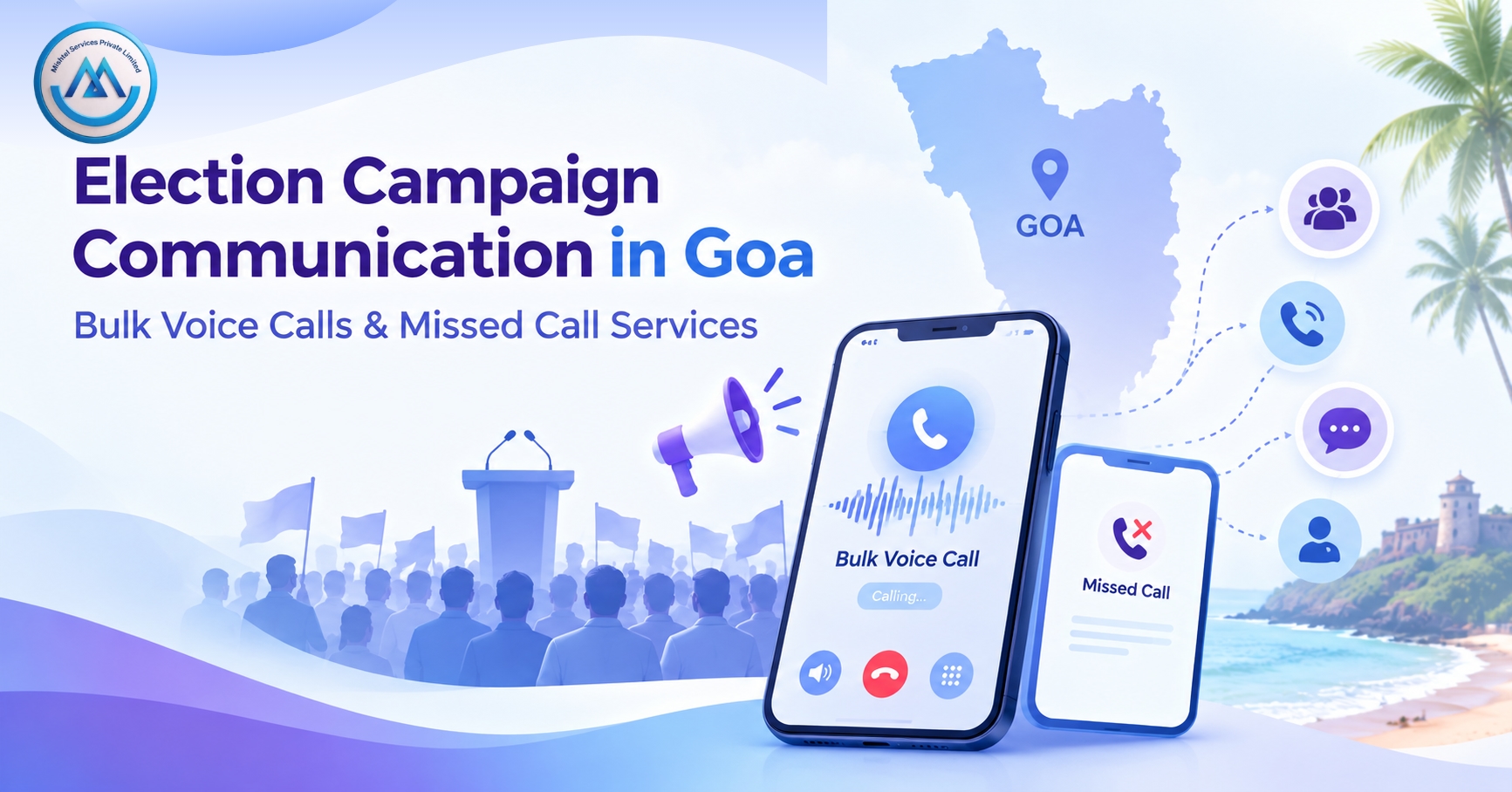
A campaign team in Goa has a meeting planned for the evening. At noon, the venue changes. Volunteers need new timings. Supporters in coastal towns and inland villages must hear about it quickly. Calling each person takes hours, and the message may reach some people too late.
This is where phone-based tools help. Voice calls can share one recorded message with many people, and missed calls give people an easy way to reply. This guide from Mishtel explains how both tools work for election campaign communication in Goa, and how to use them responsibly.
Quick answer: Bulk voice calls send one recorded message to many phone numbers. A missed call service lets people respond by calling a number and hanging up. One shares information and the other collects responses. Plan the message, the follow-up and the compliance checks before you start.
Why Phone-Based Communication Suits Goa
Goa is a small state with a mix of busy towns, coastal areas and quieter villages. Campaign teams often need to reach people spread across these places in a short time.
A phone call reaches people who may not read long messages or use many apps. A recorded voice message is easy to follow. A missed call is easy to give. Neither needs an app or a data plan.
Language also matters. People in Goa speak languages such as Konkani, Marathi, Hindi and English. A message in a language the listener understands is far more useful. Check that your provider supports the language you need before you plan a campaign.
What Are Bulk Voice Calls?
Bulk voice calling sends one recorded voice message to many phone numbers through automated outbound calls. You record the message once. The system plays it to each person who answers.
A Bulk Voice Call Service is the platform that runs these calls. It is often called an OBD, short for outbound dialer, because the system makes the outgoing calls for you.
Campaign teams can use it for:
Event announcements
Meeting reminders
Schedule updates
Volunteer coordination
Public information
Other permitted campaign communication
How Bulk Voice Calls Work
The process has five steps:
Record a short, clear message.
Upload a contact list of people you are permitted to call.
Set a suitable date and time.
Start the campaign. The system dials each number and plays the message when someone answers.
Review the call reports to see which calls were answered.
Every listener hears the same approved recording. This keeps information consistent across the whole contact list.
The main limit is that the call is one-way. People can listen, but they cannot ask a question unless you give them another route.
What Is a Missed Call Service?
A missed call is a call that rings and disconnects before anyone answers. Many people already use missed calls to say "please contact me" without paying for a call.
A Missed Call Service turns this habit into a response tool. You publish a dedicated number. When a person gives a missed call, the system records their number and the call time. Nobody has to speak to an agent.
Teams can use it for:
Volunteer sign-ups
Event enquiries
Callback requests
Information requests
Feedback on one specific activity
How a Missed Call Campaign Works
The flow is simple:
Set up a dedicated number for one clear purpose.
Share the number through permitted materials, such as posters, messages or social media.
People give a missed call to show interest or ask for help.
The system records each response, and your team sees the numbers in a report.
Your team follows up. Depending on the setup, the system can also trigger a callback or a recorded message.
Tell people why they should call and what will happen next. A number with no explanation causes confusion.
The main limit is that a missed call carries very little information. It tells you someone is interested, but not what they need. Your follow-up fills that gap.
Bulk Voice Calls vs Missed Calls
Point | Bulk voice calls | Missed call service |
|---|---|---|
Direction | Outgoing from the campaign | Incoming from the person |
Main purpose | Share a recorded message | Collect a response |
Effort for the person | Answer and listen | Call and hang up |
Best for | Announcements, reminders, updates | Sign-ups, enquiries, callback requests |
Main limit | One-way | Shares no details |
Neither tool is better. They solve different problems.
How to Use Both Together
The two tools work best as a pair. Here is a neutral example for a community meeting.
An automated voice call announces the meeting and gives the date, time and place.
The recording invites people to give a missed call to confirm interest or ask for details.
After the calls, the team opens the report and sees who responded.
Team members call back the people who asked for details.
This turns a one-way message into a simple two-way flow. It also saves time, because the team calls only people who asked.
Practical Uses in Goa Campaigns
For bulk voice calls:
Telling people about a changed venue or timing
Reminding volunteers about duty hours
Announcing a public meeting
Sharing public information, as allowed
For missed calls:
Letting people register interest in an event
Collecting volunteer enquiries
Taking callback requests
Offering a simple way to ask for information
These uses support clear communication. They do not guarantee turnout, support or any election outcome.
Limitations to Keep in Mind
Message length: recordings work best when short. Long messages lose listeners.
Contact quality: old or wrong numbers waste effort, so keep your list clean.
Timing: calls at the wrong hour can annoy people. Avoid very early mornings and late nights.
Follow-up: a missed call response is only useful if someone follows up.
Language: a message in the wrong language will not be understood.
No guaranteed results: outcomes depend on your list, message, timing and process.
Adding Other Channels to Your Setup
Voice calls and missed calls are strong, but they are not the only tools.
A Bulk SMS Service is useful for short written updates. A text can carry the date, the place and the missed call number, so people can save it.
An IVR Service answers incoming calls with a recorded menu. Callers press a key to hear event details, ask for a callback or reach a team.
A Cloud Call Center helps when calls need a human voice. Agents manage incoming and outgoing calls from one system, with call records and reports.
A Toll-Free Service gives people a free number to reach the campaign when they need to speak to someone.
For routine questions, some teams also consider an AI Voice Agent. It handles automated conversations based on a set workflow. Use it with clear information and proper consent, and keep humans available for sensitive calls.
Pick channels by the task, not by how many tools you can add.
How to Plan Your Campaign Step by Step
Set a clear goal. Decide whether you want to inform, remind or collect enquiries.
Choose your audience. Use only contacts you are permitted to reach.
Pick the language. Record in the language your listeners understand.
Write a short message. One message, one main point.
Pick the right channel. Voice for announcements, missed call for responses.
Plan the callbacks. Decide who calls back and by when.
Test first. Send a trial to your own team and call your own number.
Review the reports. Fix weak points before the next activity.
What to Check Before Choosing a Provider
Can I see call reports and responses?
How does the service handle large call volumes?
Does it support the language I need?
Is support available when I need it?
Can I add numbers or capacity later?
How is my contact data protected?
Is the pricing clear?
Get answers in writing. Do not assume a feature exists without confirmation.
How to Measure Results
Simple numbers help you improve:
How many calls were answered
How many missed call responses arrived
How many callbacks were completed
How much the activity cost compared with its purpose
These figures show how your process performed. They do not promise a result.
Responsible and Compliant Communication
Election communication carries responsibility. Before you begin, check the current guidelines from the Election Commission of India. Also review applicable telecom rules, privacy requirements and consent requirements.
Keep these habits:
Call only people you are permitted to contact.
Respect opt-outs.
Keep messages factual and clear.
Say who is calling and why.
Use contact data only for its stated purpose.
Re-check the rules before every campaign, because they can change.
If you are unsure, speak to a legal professional.
How Mishtel Supports Campaign Communication
Every campaign is different. Mishtel offers bulk voice calls, missed call service, IVR, bulk SMS, cloud call center and AI voice solutions. You can combine them around your workflow, such as announcements first, then responses, then callbacks.
Mishtel is based in Noida, Uttar Pradesh. Its website states that it is a VNO (Virtual Network Operator) approved by the Department of Telecommunications, Government of India.
For election-related needs, you can also review Chunavi Sewa, a Mishtel service page focused on election communication. It can help you see which tools match your requirements.
The right setup depends on your contact list, language needs, call volume and follow-up plan. The Mishtel team can help you plan around them.
Frequently Asked Questions
What are bulk voice calls for election campaigns?
It is the use of automated calls to deliver one recorded message to many phone numbers. Teams use it for announcements, reminders and other permitted communication.
How does a missed call service work?
A person gives a missed call to a dedicated number. The system records the caller's number, and the team can follow up with a callback or a message.
What is the difference between bulk voice calls and IVR?
Bulk voice calls send outgoing recorded messages. IVR answers incoming calls with a menu, and callers choose options by pressing keys.
Can both services work together?
Yes. A voice message can share information and invite a missed call. The missed call then acts as a simple response.
Can messages be sent in local languages?
Many teams record in the language their listeners understand. Confirm language support with your provider before you plan the campaign.
Do these services guarantee better campaign results?
No. They support communication. Results depend on your list, message, timing and follow-up.
What should we check before launching?
Check Election Commission of India guidelines, telecom rules, and privacy and consent requirements. Also plan your message, timing and follow-up.
Conclusion
Bulk voice calls and missed call services solve two sides of the same problem. One shares information with many people at once. The other gives people an easy way to reply.
Start with a clear goal, a short message and the right language. Plan your callbacks, test first and review your reports. Follow the rules and keep communication honest and clear.
To discuss your needs, contact the Mishtel team and share your requirements.