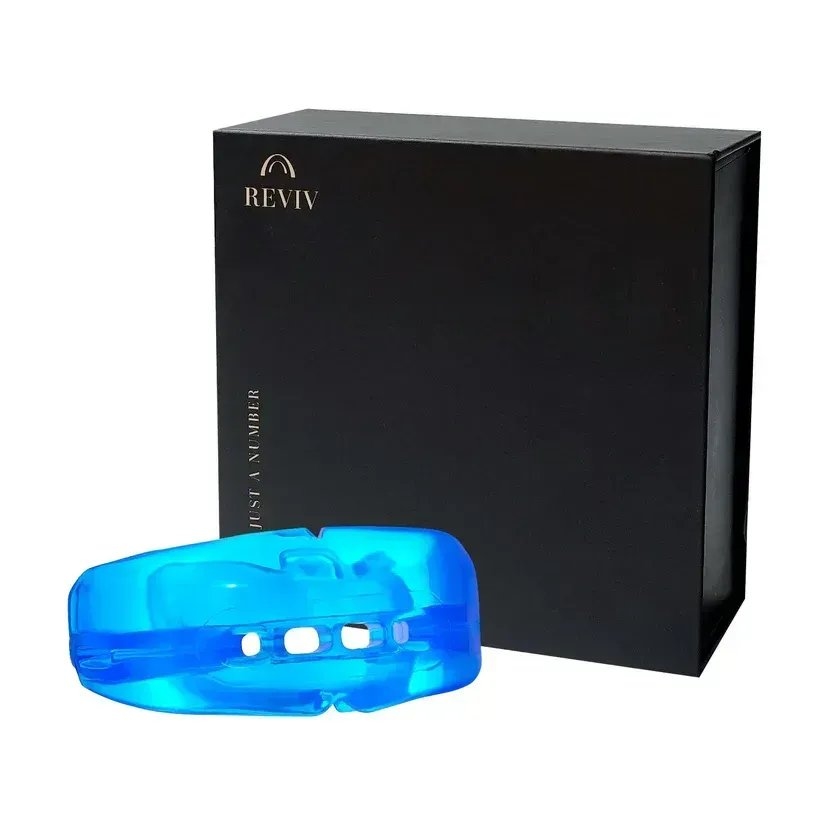
Many people look for practical ways to improve their nighttime routine, protect their teeth, and manage jaw discomfort. Mouthguards are one option that attracts attention, but not every product is designed for the same purpose. Reviv is a mouthguard marketed around jaw support and nighttime use, making it important to understand what it may offer and which claims require more evidence.
But does Reviv really work? Can it improve jawline appearance, reduce teeth grinding, or support better jaw comfort? And is it worth buying in 2026?
What Is Reviv?
Reviv is a mouthguard product designed to be worn in the mouth. Its product range and marketing focus on jaw support and oral biomechanics, although features and materials may differ between models.
The manufacturer describes its appliances as supporting jaw positioning during use. However, a mouthguard's mechanical function should be distinguished from broader claims about changing facial structure, improving overall health, or reshaping the jawline.
Mouthguards are commonly used for purposes such as protecting teeth from grinding. The suitability of a particular device depends on its design, fit, intended use, and the needs of the person wearing it.
Before buying Reviv, check the specific model, its instructions, materials, sizing information, and the manufacturer's current terms.
How Does Reviv Work?
Reviv is intended to be worn inside the mouth, with its design providing a physical interface between the teeth and supporting the jaw during use.
The manufacturer describes its design in terms of jaw mechanics and nighttime use. However, it is important to separate plausible mechanical functions from claims that have not been demonstrated through suitable clinical research.
A mouthguard may provide a barrier between the teeth, which can be useful for managing tooth wear associated with grinding. Depending on its design and fit, an oral appliance may also influence jaw comfort.
That does not mean every mouthguard stops grinding or treats jaw disorders. Nor does wearing a mouthguard establish that facial bones will move or that a person's jawline will become more defined.
What Are the Potential Benefits of Reviv?
The potential benefits depend on the model, its fit, the reason for using it, and the available evidence.
Tooth Protection
One established purpose of many mouthguards is to create a barrier between the upper and lower teeth. A suitable guard may help protect teeth from the effects of grinding.
However, not every consumer mouthguard offers the same level of protection. People with significant grinding or dental problems may benefit from an assessment by a dentist.
Jaw Comfort
Some people experience morning jaw tightness or discomfort associated with clenching and grinding. Certain oral appliances may help manage some symptoms, but results depend on the underlying problem and the appliance's design.
Reviv should not be assumed to treat every cause of jaw pain or temporomandibular joint (TMJ) problems.
Nighttime Use
A mouthguard may fit into a nighttime routine if it is comfortable and appropriate for the user's needs. Fit is important because a poorly fitting appliance can cause discomfort or other problems.
Convenience
Depending on the model, a consumer mouthguard may offer a convenient alternative to arranging a custom appliance. Nevertheless, a ready-made or self-fitted guard is not automatically equivalent to one designed and fitted by a dental professional.
Can Reviv Improve Your Jawline?
This is an important question for anyone considering Reviv because some marketing around jaw-support products focuses on facial appearance.
There is not sufficient clinical evidence to conclude that wearing Reviv reshapes facial bones or reliably creates a more defined jawline.
Facial appearance is influenced by genetics, bone structure, body composition, age, and other factors. A mouthguard should not be considered a proven cosmetic treatment for changing these characteristics.
Be cautious of dramatic before-and-after pictures, guaranteed facial transformations, or claims that a simple oral appliance can correct facial asymmetry.
If your main goal is cosmetic improvement, seek reliable professional advice before spending money on a product based on unverified structural claims.
Reviv Pros and Cons
Potential Pros
Provides an oral appliance for people researching jaw-support products.
May be convenient for nighttime use when the model is suitable.
A physical barrier may help protect teeth when the device is appropriate for grinding-related needs.
Different models may offer different sizing or design options.
Potential Cons
Jawline transformation claims are not established by strong clinical evidence.
Comfort and fit can vary between individuals.
A poorly fitted appliance may cause discomfort or affect the bite.
It may not be appropriate for every dental or jaw condition.
Product price, materials, durability, and warranty terms require verification.
It should not replace professional dental assessment when symptoms persist.
These factors are worth considering before deciding whether Reviv is appropriate for your needs.
Is Reviv Safe to Use?
Safety depends on the specific model, fit, materials, condition of your teeth, and any existing jaw problems.
Before using Reviv, review the manufacturer's instructions and consult a dentist if you have ongoing jaw pain, dental restorations, bite problems, or a history of TMJ symptoms.
Keep these precautions in mind:
Check the sizing and fitting instructions carefully.
Do not force an appliance that feels uncomfortable or fits poorly.
Stop using it if you notice new pain, tooth sensitivity, bite changes, or gum irritation.
Keep the appliance clean according to the manufacturer's instructions.
Inspect it regularly for damage or wear.
Ask a dentist whether it is suitable if you grind your teeth heavily.
A mouthguard should not be used to self-treat unexplained jaw pain or persistent dental symptoms. Professional advice can help identify the cause and determine whether a particular appliance is appropriate.
Reviv Price and Buying Guide
Before ordering Reviv, check the current price and terms for the exact model you intend to purchase. Product options, materials, package contents, and warranties can vary.
Consider these factors before making a decision:
Price: Compare the total cost, including shipping and taxes.
Model and sizing: Confirm that the selected model is suitable for your intended use and mouth size.
Materials: Look for clear information about the materials used and applicable safety standards.
Durability: Check how long the appliance is expected to last and when it should be replaced.
Refund policy: Read the return period, eligibility rules, and any exclusions.
Warranty: Confirm what is covered and whether replacement conditions apply.
Avoid choosing a product based only on promotional claims. A clear understanding of its actual function and purchase terms is more useful.
Reviv vs. a Dentist-Fitted Mouthguard
The right choice depends on why you need an appliance.
A consumer mouthguard may appeal to someone looking for a convenient option. A dentist-fitted appliance, however, can be selected and adjusted according to an individual's teeth, bite, and symptoms.
Factor | Reviv or Consumer Guard | Dentist-Fitted Guard |
|---|---|---|
Fit | Depends on the model and fitting method | Customized to the individual |
Convenience | May be easier to obtain | Usually requires a dental visit |
Assessment | May not include a dental examination | Allows professional evaluation |
Cost | Depends on the product | Varies by treatment and provider |
Suitability | Not ideal for every condition | Can be selected for specific needs |
A dentist can help determine which option is appropriate, especially if grinding is severe or jaw pain continues.
Frequently Asked Questions
Does Reviv really work?
Its usefulness depends on the specific model and intended purpose. A mouthguard may provide a physical barrier between teeth, but broad claims about facial changes or jawline improvement are not established.
Can Reviv make your jawline sharper?
There is insufficient clinical evidence that wearing Reviv reliably changes facial bone structure or creates a sharper jawline.
Can Reviv help with teeth grinding?
A suitable mouthguard may help protect teeth from grinding-related wear. However, it may not stop grinding itself, and the appropriate appliance depends on individual dental needs.
How long does Reviv take to show results?
There is no reliable universal timeframe. Outcomes depend on the purpose of use, fit, and individual circumstances. Cosmetic changes should not be expected or guaranteed.
Is Reviv safe for everyone?
No. People with dental problems, bite issues, or ongoing jaw pain should seek professional advice before using an oral appliance.
Is Reviv worth buying in 2026?
It depends on the specific model, its intended purpose, fit, price, and evidence supporting its claims. Compare these factors before purchasing.
Final Verdict: Is Reviv Worth Trying?
Reviv may interest people researching mouthguards for nighttime jaw support or teeth-grinding concerns. However, its suitability depends on the particular model, how well it fits, and what you expect it to accomplish.
The most important distinction is between a mouthguard's potential mechanical function and claims about cosmetic facial transformation. A suitable appliance may help protect teeth, but that does not establish that it can reshape the jawline or change facial bones.
My final assessment: Research Reviv carefully before buying. Check the product specifications, materials, sizing instructions, warranty, and refund policy. If you have persistent jaw pain or significant teeth grinding, consult a dentist about the most appropriate option.
Making an informed choice means focusing on realistic expectations, proper fit, and evidence rather than relying on dramatic marketing claims.
Read More Reviv Official Website