Startups face a marketing problem that established companies don’t. You have no brand recognition, no customer base, no history and usually very little money. Yet you need to prove that people want what you’re building, and you need to do it quickly.
That pressure is why so many founders either overspend on ads that don’t convert or do nothing until launch day and wonder why nobody shows up. The better path sits in between: a lean, staged approach where each step earns the right to the next. Some founders build this themselves, others bring in help from digital marketing Karachi startups can turn to, but the sequence below works either way. It’s built for small teams, tight budgets and the realities of 2026, where AI tools, short video and conversational search have changed how people discover new products.
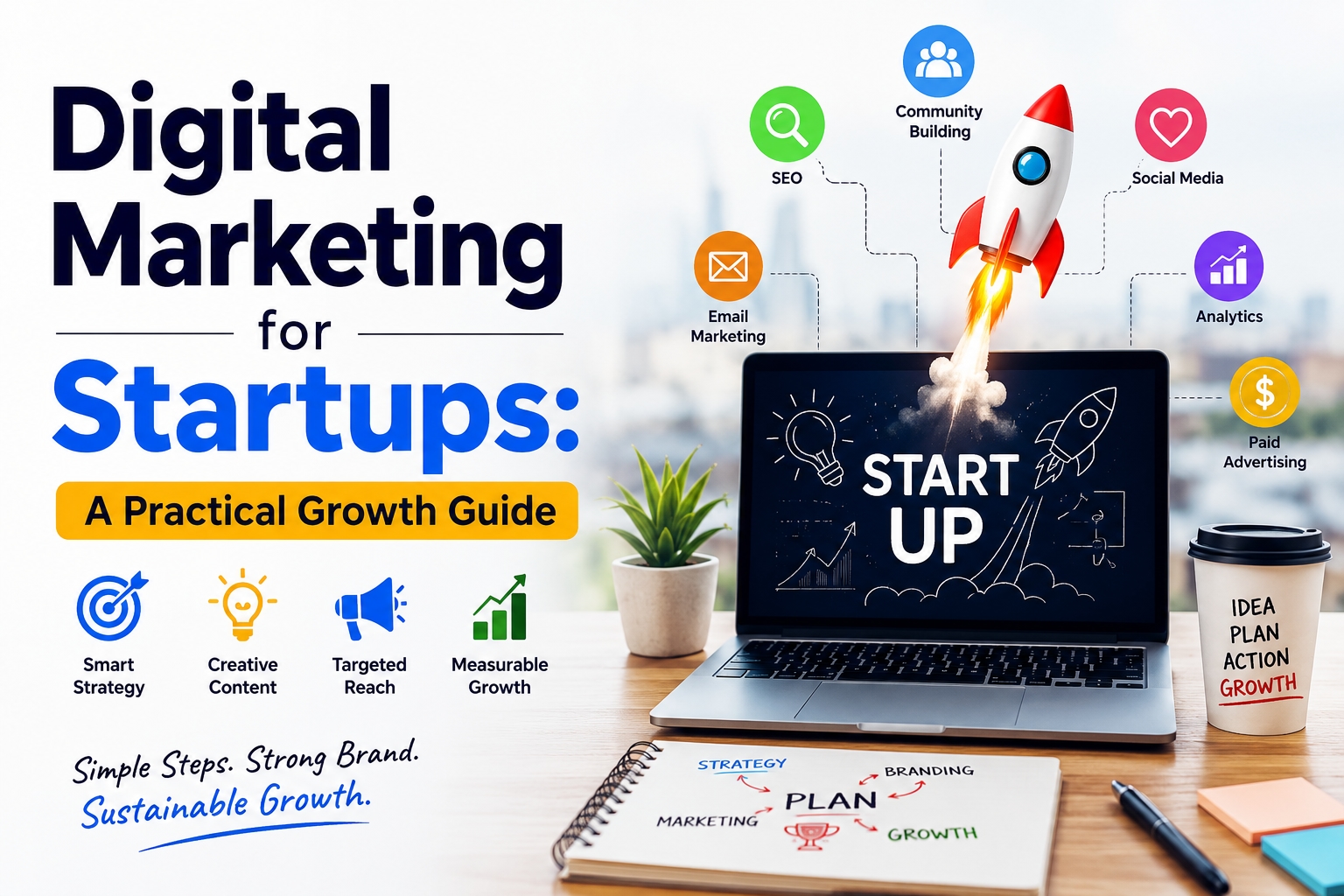
Why Startup Marketing Is Different
Established businesses optimize. Startups explore. You’re still learning who your customer is, which message works and which channel actually brings people in. That changes how you should spend your time and money.
Three principles matter most:
Learn before you scale. Spending big before you know what works just burns cash faster.
Talk to people directly. At this stage, conversations teach more than dashboards.
Move in small, measurable experiments. Try something cheap, check the result, then repeat or drop it.
Keep these in mind through every stage below.
Stage 1: Before Launch, Validate and Build a Foundation
Define one specific customer and one specific problem
“Small businesses” isn’t a target. “Restaurant owners in Karachi who lose orders because they can’t manage WhatsApp messages” is. The narrower you start, the easier it is to find people, write messages that land and prove value.
Talk to at least ten to twenty real people who fit your target. Ask how they currently solve the problem, what annoys them and what they’ve tried. Write down the exact words they use, because that language becomes your marketing copy.
Write a one-sentence promise
You should be able to complete this: “We help [specific customer] do [specific result] without [main frustration].” If you can’t say it clearly, customers won’t understand it either.
Set up a simple, credible web presence
You don’t need a huge website. You need:
A fast, mobile-friendly landing page that explains the problem, your solution and one clear next step
A way to capture interest, such as a waitlist, demo request or WhatsApp button
Basic trust signals, like founder names and photos, a short story and early feedback
Analytics so you can see where visitors come from
A clear one-page site often beats a sprawling, unfinished one.
Claim your brand’s basic profiles
Reserve your name on the platforms your customers use, and set up a Google Business Profile if you have a physical location or serve a local area. Keep your name, description and contact details consistent everywhere.
Stage 2: Launch, Get Your First Customers
At launch, your goal isn’t scale. It’s getting your first 10 to 50 customers and learning from them.
Start with people you can reach directly
Your earliest customers usually come from outreach, not advertising:
Personal networks and friends of friends
Founder-led messages to ideal customers on LinkedIn or WhatsApp
Relevant communities, groups and forums where your audience already gathers
Partnerships with complementary businesses
Local events and meetups
Be helpful and specific, not spammy. A personal message that mentions a real problem gets far better responses than a mass blast.
Use founder-led content
People trust people more than logos. As a founder, you have a story, and sharing it is one of the cheapest forms of marketing available.
Post short videos about the problem you’re solving and what you’re learning
Share behind-the-scenes updates and honest lessons
Explain things your customers struggle with, in plain language
Show the product being used, even in rough form
You don’t need polish. You need authenticity and consistency.
Offer something that makes trying you easy
Early customers take a risk on an unknown company. Reduce it with a free trial, a discounted pilot, a money-back promise or a limited free version. In exchange, ask for feedback and, if they’re happy, a testimonial.
Stage 3: Early Traction, Find Channels That Work
Once you have some customers, you can start testing which channels bring more of them. Resist the urge to try everything. Pick two or three and run focused experiments.
Search and SEO for the long game
SEO is slow, but it compounds, which makes it valuable for startups that can’t afford ads forever. Start with the questions your customers ask:
Write clear, specific articles and pages that answer those questions
Lead with a direct answer, then add depth and examples
Include real experience, such as case studies, data from your own users and screenshots
Make sure your site is fast, crawlable and mobile-friendly
In 2026, many searches end in AI-generated summaries, so content that is specific and based on real experience has a better chance of being cited than generic advice.
Social media and short video
Pick the one or two platforms where your customers actually spend time. Short videos on Instagram, TikTok, YouTube Shorts or LinkedIn can build awareness quickly at low cost. Focus on useful tips, product demos, customer stories and answers to common questions.
Email and messaging
Collect emails or phone numbers with permission from day one. A simple welcome sequence and occasional useful updates keep people engaged and turn interest into customers. For many markets, WhatsApp is also a powerful channel for conversations and support.
Paid ads, but only for testing
Ads can speed up learning, but they punish unclear messaging. Start with a small budget to test:
Which audience responds
Which message or offer gets clicks
Which landing page converts
Use search ads for people actively looking for a solution, and social ads to test awareness and interest. Track cost per lead and cost per customer, not just clicks. Only increase spend after you have a message and page that convert reliably.
Stage 4: Growth, Double Down and Systemize
When you know what works, you can scale it carefully.
Build a referral engine
Happy customers are your best marketing. Make referrals easy and rewarding with a simple invite link, a discount for both sides or an easy way to share. Ask for referrals at moments of success, such as right after a good result.
Collect proof and use it everywhere
Reviews, testimonials, case studies and logos reduce the risk for new buyers. Add them to your website, ads, emails and social posts. A short case study with real numbers is worth more than any slogan.
Invest in what compounds
Put more into assets that keep paying back: your best-performing content, your email list, your reviews and your brand reputation. These grow in value over time, while ads stop the moment you stop paying.
The Metrics That Matter for Startups
Skip vanity numbers. Track a few that connect to survival:
Customer acquisition cost (CAC): how much you spend to win a customer
Conversion rate: the share of visitors who sign up or buy
Activation: the share of new users who reach their first success
Retention: how many customers stay
Payback period: how long it takes to earn back the cost of acquiring a customer
Source of customers: where they actually came from
If it costs more to win a customer than they bring in, scaling will only speed up your losses. Fix retention and unit economics first.
Common Startup Marketing Mistakes
Launching to silence. Waiting until launch day to find an audience is too late. Start building attention early.
Targeting everyone. A vague audience produces vague messages.
Overspending on ads too soon. Test cheaply first.
Copying big competitors. Their budgets and brand recognition aren’t yours.
Ignoring existing customers. Retention and referrals are far cheaper than new acquisition.
Chasing every platform. Focus beats presence.
Not measuring. Without data, you’re guessing.
Giving up too early. Many channels need a few months to show results.
A Simple 90-Day Startup Plan
Days 1 to 30: Validate and prepare. Interview customers, write your one-sentence promise, build a clear landing page and set up analytics.
Days 31 to 60: Launch and learn. Reach out directly to your first customers, start sharing founder-led content, collect feedback and testimonials, and test one or two channels.
Days 61 to 90: Double down. Keep the best-performing channel, add a referral offer, publish your first case study and review your numbers to decide what to scale.
Final Thoughts
Marketing a startup isn’t about having the biggest budget. It’s about learning quickly, staying close to your customers and putting your limited resources where they work. Start narrow, prove demand with a few real customers, find one or two channels that bring more of them, and only then scale.
You don’t need a perfect plan. You need a clear target, an honest message and the discipline to test, measure and adjust. Do that consistently, and your startup will build momentum that money alone can’t buy.