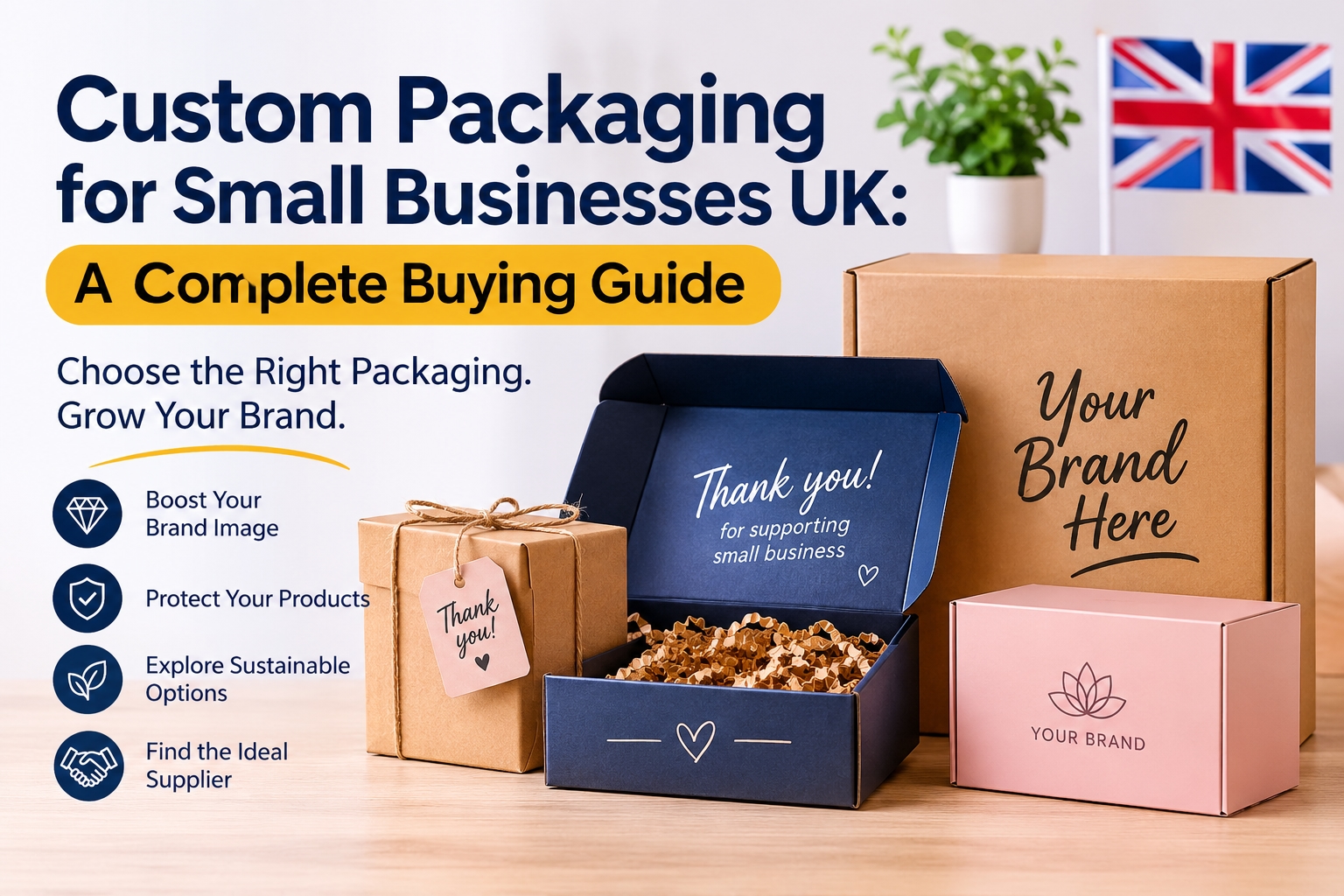
Starting a small business involves plenty of important decisions, from choosing the right products to finding reliable suppliers. Packaging is another decision that deserves careful attention. It is often the first physical part of your brand that customers experience, particularly when they order something online.
For a small business, packaging needs to do more than look attractive. It should protect products during storage and delivery, make orders look professional, communicate your brand identity and fit within your operating budget.
However, choosing packaging is not always straightforward. There are different box styles, materials, printing methods, finishes and order quantities to consider. Some businesses need simple cardboard boxes for everyday deliveries, while others require specially designed packaging for candles, cosmetics, clothing, jewellery or food products.
This is where custom packaging for small businesses UK becomes an important consideration. Instead of purchasing standard boxes that may not suit your products, you can select packaging according to your product dimensions, presentation requirements and business needs.
This complete buying guide explains what small businesses should consider before ordering custom packaging, how to compare available options and how to make a sensible purchasing decision without spending more than necessary.
Why Custom Packaging Matters for Small Businesses
When customers receive an order, they notice more than the product inside. They also experience how it has been packed, protected and presented.
Standard packaging can be practical, but it does not always provide the right fit or appearance. Custom packaging gives businesses more control over these details.
Here are some important reasons why it deserves consideration.
It Creates a More Professional Brand Image
A consistent brand presentation helps customers recognise your business. Adding your logo, brand colours, product information and other design elements to packaging can make your parcels look more organised and professional.
For example, a small skincare company might use white packaging with a simple logo and soft colours. A handmade candle business could choose kraft boxes with minimal printing to create a natural appearance.
The packaging should reflect the type of products you sell and the customers you want to reach.
It Helps Protect Products
Packaging is also responsible for protecting goods during handling, storage and transportation.
A box that is too large may allow products to move around, while packaging that is too small can place unnecessary pressure on the contents. Choosing suitable dimensions and materials helps reduce these problems.
For fragile products, additional inserts, dividers or protective cushioning may be necessary.
It Improves the Customer Experience
Receiving a carefully packed order can make the purchasing experience feel more complete.
Small details such as neat printing, an appropriate box size and a well-presented product can help create a positive impression. This is particularly useful for businesses selling gifts, handmade products, beauty items and premium goods.
However, attractive packaging should always remain practical. Customers should be able to open it easily, and the product should arrive in good condition.
Which Types of Custom Packaging Should Small Businesses Consider?
The right packaging depends on what you sell, how you deliver orders and how customers use your products. There is no single box style suitable for every business.
Below are some common options worth considering.
1. Custom Mailer Boxes
Mailer boxes are widely used by online shops because they provide a practical solution for sending products directly to customers.
They are generally made from corrugated cardboard and can be customised with printed designs, logos and brand colours.
They are suitable for:
Clothing and fashion accessories.
Subscription products.
Skincare and beauty products.
Gift items.
Small retail orders.
Mailer boxes are particularly useful when presentation matters as much as delivery protection.
2. Custom Cardboard Boxes
Cardboard packaging is a versatile choice for businesses selling different types of products. It is available in various sizes, shapes and thicknesses.
Small retailers can use cardboard boxes for product storage, order fulfilment, retail presentation and general packaging requirements.
The main advantage is flexibility. You can select dimensions and printing according to the product rather than relying entirely on standard packaging sizes.
3. Custom Kraft Boxes
Kraft boxes are popular with businesses looking for a simple, natural-looking packaging style.
Their brown paper appearance works particularly well for handmade products, candles, soaps, bakery items and small gift businesses.
Kraft packaging can also be printed with a business logo or other brand details. However, if sustainability is important to your brand, check the actual material composition and recycling information rather than assuming every kraft box is automatically environmentally friendly.
4. Custom Rigid Boxes
Rigid boxes are made from thicker, sturdier board and are often selected for products that need a more premium presentation.
They can be suitable for:
Jewellery and watches.
Luxury cosmetics.
Corporate gifts.
Premium accessories.
Special occasion products.
They generally cost more than basic folding cartons or cardboard packaging, so they are worth considering when the product value and presentation requirements justify the additional expense.
5. Product-Specific Packaging
Some products require packaging designed around their particular shape, dimensions or handling requirements.
For example:
Candle boxes can include suitable internal support.
Cosmetic boxes can be designed for bottles, jars and beauty sets.
Jewellery boxes can use inserts to hold individual pieces securely.
Apparel boxes can provide a neat presentation for folded clothing.
Bakery boxes need to suit the food product and its handling requirements.
Medical product packaging may need to meet specific product and regulatory requirements.
Choosing product-specific packaging can help businesses achieve a better fit and a more organised presentation.
How to Choose the Right Packaging Material
Material selection is one of the most important parts of buying custom packaging. It affects strength, appearance, printing quality, weight and overall cost.
Before choosing a material, consider the weight of your product, the delivery method and the level of protection required.
Corrugated Cardboard
Corrugated cardboard contains a fluted layer between flat sheets of paperboard. This construction provides cushioning and strength, making it a common choice for shipping boxes.
It is particularly useful for businesses sending products through courier networks or handling regular online orders.
Different corrugated board specifications offer different levels of strength. Ask your packaging supplier which option is appropriate for your product weight and delivery conditions.
Folding Carton Board
Folding carton board is commonly used for retail packaging and product boxes.
It provides a smooth surface for printed graphics, product information and branding. Small businesses selling cosmetics, candles, accessories and other retail products may find it suitable.
It is generally better suited to product presentation than to demanding shipping conditions unless additional protection is provided.
Kraft Paperboard
Kraft paperboard provides a distinctive natural appearance and is available in different thicknesses and specifications.
It can work well for brands that prefer understated packaging. Its suitability depends on the product weight, box construction and intended use.
Rigid Board
Rigid board offers a more substantial structure and a premium feel. It is often used for gift boxes, jewellery packaging and luxury product presentation.
When comparing materials, do not focus on thickness alone. Ask about board construction, product weight limits and whether additional inserts or protective components are needed.
How to Get the Correct Packaging Size
Choosing the correct box dimensions can make a noticeable difference to product protection, storage and delivery costs.
Before requesting a quotation, measure the product carefully.
Record:
Length: The longest measurement of the product.
Width: The measurement across the product.
Height: The vertical measurement when positioned as intended inside the box.
These measurements help you communicate your requirements to the packaging manufacturer.
Remember that the internal dimensions of a box are particularly important when checking whether a product will fit.
If your product needs an insert, cushioning or protective wrapping, allow enough room for these components. However, avoid ordering an unnecessarily large box because excessive empty space can increase material usage and require additional void filling.
For businesses selling products in several sizes, it may be more economical to use a small selection of box dimensions rather than ordering a completely different box for every item.
Custom Printed Packaging: What Should Your Design Include?
One of the main reasons businesses choose bespoke packaging is the opportunity to create a recognisable brand presentation.
However, a good packaging design does not need to be complicated. A clear and consistent design can often work better than a box covered with too many graphics.
Consider including the following elements.
Your Business Logo
Your logo should be easy to recognise and positioned where customers can see it. It does not necessarily need to cover a large area of the box.
Brand Colours
Use colours that match your website, product labels and other marketing materials. Consistency across these elements can make your business easier to recognise.
Product Information
Depending on the packaging type, you may need to include product names, instructions, ingredients, warnings, handling information or other relevant details.
Check any applicable labelling requirements before approving your artwork.
A Simple Visual Layout
Leave enough space between design elements to keep the packaging readable. Avoid using too many fonts, colours or decorative details.
Before production, request a digital proof and check the spelling, dimensions, colours, logo placement and other artwork details.
Which Printing Methods and Finishes Are Worth Considering?
Custom packaging suppliers may offer several printing and finishing options. The right choice depends on your artwork, material, order quantity and budget.
Common Printing Methods
Digital printing: Often useful for shorter production runs, multiple designs and businesses that want to test packaging before committing to larger quantities.
Lithographic printing: Commonly used for higher-quality printed packaging and larger production runs. It can provide consistent, detailed results.
Flexographic printing: Frequently used for printing on corrugated materials and packaging applications where efficient production is important.
Not every supplier offers every printing method, so ask which process is suitable for your chosen box material.
Popular Packaging Finishes
You can also improve the appearance of packaging with additional finishes, including:
Matt lamination: Creates a smooth, understated surface.
Gloss lamination: Adds a shiny finish and enhances colour appearance.
Spot UV: Adds a glossy effect to selected areas of the design.
Embossing: Raises particular design elements above the surface.
Foil stamping: Adds metallic details to logos or decorative elements.
These options can improve presentation, but they may increase production costs. Choose finishes that serve a clear purpose rather than adding unnecessary extras.
How Much Does Custom Packaging Cost for a Small Business in the UK?
There is no single price for custom packaging. The final quotation depends on several production and design requirements.
Understanding these factors will help you compare suppliers and plan your packaging budget.
Main Factors That Affect Packaging Prices
1. Order quantity
The number of boxes you order can affect the price per unit. Larger orders may reduce the individual cost, although they require more money upfront and additional storage space.
2. Box dimensions
Larger boxes generally require more material. Unusual shapes or complex constructions can also increase production costs.
3. Material selection
Different cardboard grades, rigid boards and other materials have different costs.
4. Printing requirements
The number of printed colours, artwork complexity and printing method can affect the quotation.
5. Additional finishes
Lamination, foil stamping, embossing and specialist finishes may add to the production price.
6. Inserts and internal protection
Custom inserts, dividers and cushioning components can increase the overall cost but may be necessary for fragile or specially shaped products.
How Small Businesses Can Manage Packaging Budgets
You do not need the most expensive packaging to create a professional impression.
Try these practical approaches:
Start with one or two packaging styles that cover your main products.
Select standard box constructions where they meet your requirements.
Keep artwork simple and consistent.
Compare quotations for different order quantities.
Avoid unnecessary finishes.
Ask whether a sample or prototype is available before placing a large order.
Consider storage costs before purchasing packaging in bulk.
Always compare the total quotation rather than looking only at the price per box. Check whether printing, delivery, setup, tooling and any other charges are included.
Should You Order Custom Packaging in Small or Large Quantities?
This is an important question for new and growing businesses.
Ordering a large quantity may reduce the unit price, but it also means spending more money before the boxes are needed.
A small production run may cost more per unit but can help you avoid excess stock.
When Small Orders Make Sense
Smaller quantities may be suitable if:
You have recently launched a business.
Your product range is still changing.
You are testing a new packaging design.
You have limited storage space.
Your monthly sales are difficult to predict.
When Larger Orders May Be Better
Larger production runs may be worth considering when:
Your products sell consistently.
You regularly use the same box dimensions.
Your packaging design is unlikely to change.
You have sufficient storage facilities.
The savings justify the initial investment.
Before ordering, ask the supplier about minimum order quantities (MOQs). These vary depending on the packaging type, material, printing process and manufacturer.
If you are unsure about demand, it is sensible to prioritise flexibility rather than purchasing more boxes than your business can reasonably use.
Sustainable Packaging Options for Small Businesses
Many small businesses want packaging that reduces unnecessary material use and supports responsible disposal.
There are several ways to approach this without compromising product protection.
Choose Recyclable Materials Where Appropriate
Paper-based packaging, cardboard and some kraft products may be recyclable, depending on their construction, coatings, adhesives and local recycling facilities.
Check the supplier's material specifications rather than relying on general descriptions.
Reduce Unnecessary Packaging
Use box dimensions that suit your products. Avoid excessive empty space, unnecessary layers and decorative components that do not provide a useful purpose.
Consider Recycled Content
Ask suppliers whether they offer materials containing recycled fibres and whether they can provide relevant information about the material composition.
Check the Full Packaging Structure
A box may contain different materials, including paperboard, plastic windows, foam inserts or laminated finishes. These components can affect how easily the packaging can be separated and recycled.
It is also worth understanding your responsibilities under UK packaging rules. Extended Producer Responsibility (EPR) for packaging may apply to businesses that meet the relevant producer definitions and thresholds. Small businesses should not assume that their size automatically exempts them. Check the current government guidance before making compliance decisions.
How to Choose a Reliable Custom Packaging Supplier
Finding a supplier is about more than comparing prices. You need a company that understands your requirements and can provide packaging that meets your expectations.
Before placing an order, consider these points.
1. Review Their Packaging Experience
Look at the types of packaging they manufacture. A supplier with experience in your product category may be better equipped to recommend suitable materials and constructions.
2. Request a Detailed Quotation
Provide your box dimensions, material preference, printing requirements, quantity and delivery location.
Ask for a clear breakdown of the costs so that you can compare quotations accurately.
3. Ask About Samples
A sample can help you assess the box structure, material quality, dimensions and printing before committing to a larger order.
4. Check Production and Delivery Times
Ask how long artwork approval, manufacturing and delivery are expected to take. Allow additional time if you are preparing for a product launch or seasonal sales period.
5. Confirm Artwork Requirements
Check the accepted file formats, artwork specifications and proofing process. Do not approve production until you are satisfied with the final design.
6. Understand the Supplier's Support
A useful supplier should be able to explain available materials, box styles, printing options and production requirements clearly.
Good communication can prevent misunderstandings and help you make better purchasing decisions.
Common Mistakes to Avoid When Buying Custom Packaging
Even a well-planned packaging order can become expensive if important details are overlooked.
Here are some mistakes worth avoiding.
Choosing appearance over protection: An attractive box is not useful if it cannot protect the product.
Guessing the dimensions: Always measure the product and consider any internal inserts.
Ordering too many boxes: Large quantities can create unnecessary storage costs and tie up working capital.
Ignoring the complete quotation: Additional charges can make a seemingly affordable order more expensive.
Overcomplicating the design: Too many design elements can make packaging look cluttered.
Skipping the proofing stage: Incorrect artwork or dimensions can lead to costly production problems.
Not checking delivery requirements: Packaging for courier deliveries may need a different construction from packaging used only for retail display.
Taking time to check these details before production can save money and prevent avoidable problems.
A Practical Checklist Before Placing Your First Order
If you are preparing to buy custom packaging for the first time, use this checklist to organise your requirements.
Identify the products that need packaging.
Measure each product accurately.
Decide whether you need shipping, retail or gift packaging.
Select a suitable material and box construction.
Decide whether you need custom printing.
Prepare your logo and artwork.
Confirm the required order quantity.
Ask about minimum order quantities.
Request a complete quotation.
Check whether a sample is available.
Confirm production and delivery times.
Approve the final artwork before manufacturing.
Having these details ready makes it easier to communicate with packaging suppliers and receive more accurate quotations.
Frequently Asked Questions About Custom Packaging for Small Businesses UK
1. Can a small business order custom packaging in low quantities?
Yes, some packaging suppliers offer shorter production runs. However, minimum order quantities depend on the box style, printing method, materials and manufacturing process. Ask suppliers about their available options before deciding.
2. What is the most affordable custom packaging for a small business?
Simple cardboard or kraft boxes with straightforward printing can be economical options for many businesses. The most affordable choice depends on product dimensions, order quantity, material requirements and delivery needs.
3. Is custom printed packaging worth it for a new business?
It can be worthwhile if packaging plays an important role in product presentation and brand recognition. New businesses can begin with a simple design and a manageable quantity rather than investing in expensive finishes immediately.
4. What information do I need to request a packaging quotation?
You should provide product dimensions, preferred box style, material requirements, printing details, order quantity and delivery location. Reference images or existing packaging samples can also help explain your requirements.
5. What is the difference between custom boxes and standard packaging?
Standard packaging is manufactured in predetermined sizes and designs. Custom boxes are produced according to specific dimensions, materials, printing and construction requirements. This gives businesses greater control over product fit and presentation.
6. Which packaging is best for an online small business?
Mailer boxes and suitable corrugated cardboard boxes are common choices for online retailers. The best option depends on product weight, fragility, dimensions, shipping conditions and presentation requirements.
7. Can I print my business logo on custom packaging?
Yes. Many packaging manufacturers offer logo printing, brand colours, product information and other artwork options. Available printing methods depend on the selected material and box construction.
8. Is recyclable packaging available for small businesses?
Yes. Many suppliers offer paper-based and cardboard packaging options. However, recyclability depends on the complete packaging structure, coatings, adhesives and facilities available in the relevant area.
Conclusion: Make a Better Packaging Decision for Your Small Business
Choosing the right packaging is an important step in building a professional and reliable small business. It influences how products are protected, how orders are presented and how customers experience your brand.
The best approach is to start with your actual requirements. Consider your product dimensions, delivery method, material preferences, printing needs and available budget before requesting quotations.
You do not have to invest in complicated packaging from the beginning. A well-sized cardboard box, a consistent printed design and suitable product protection can provide a strong starting point. As your business grows, you can explore additional finishes, specialist constructions and larger production quantities.
Ultimately, custom packaging for small businesses UK should be practical, affordable and suitable for your products. By comparing suppliers carefully and understanding the available options, you can make a purchasing decision that supports both your current operations and future business growth.
Explore Custom Packaging Solutions with Artsy Packaging
Artsy Packaging provides bespoke packaging solutions for UK businesses, including custom printed boxes, mailer boxes, rigid boxes, retail packaging and gift boxes. Choose suitable sizes, materials and designs to present and protect your products. Contact Artsy Packaging to discuss your requirements and request a free quotation.





