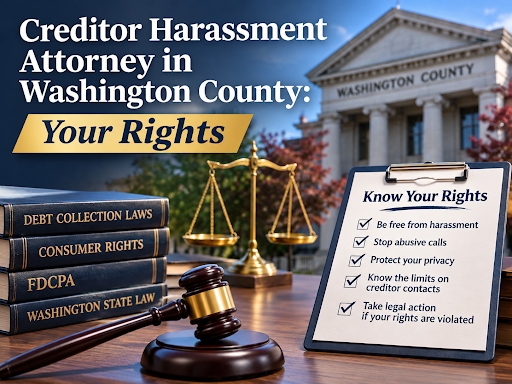
Debt collection can become stressful when repeated calls, threatening messages, or questionable collection practices interfere with daily life. A creditor harassment attorney in Washington County may assist consumers who believe debt collectors are using abusive, deceptive, or unfair collection practices. Federal consumer protection laws establish rules governing how covered debt collectors can communicate with consumers and what conduct may be prohibited. Understanding these protections, documenting communications, and recognizing potential violations can help consumers respond more effectively when collection activity crosses legal boundaries.
What Is Creditor Harassment?
Harassment can take different forms. Excessive telephone calls, threatening language, misleading statements, disclosure of debt information to inappropriate third parties, and attempts to collect amounts that are not legally owed may raise concerns depending on the circumstances.
Not every unpleasant collection interaction automatically constitutes a legal violation. The specific facts, type of debt, identity of the collector, applicable federal law, and state law all matter when evaluating a situation.
Common Collection Practices That May Raise Concerns
Debt collection becomes particularly concerning when communications involve threats or deception.
Excessive Communication
Repeated calls can disrupt work, family life, and ordinary activities. The Fair Debt Collection Practices Act, or FDCPA, places restrictions on certain debt-collection communications, including limits concerning communication times.
The supplied Washington County page notes that covered collectors generally cannot contact consumers before 8 a.m. or after 9 p.m. unless the consumer agrees.
Threats and Intimidation
A creditor harassment attorney in Washington County may not use threats that are false, unlawful, or misleading to pressure someone into paying. Threatening imprisonment or other consequences that the collector cannot legally impose can create serious concerns.
Consumers should preserve threatening voicemails, texts, letters, emails, and other communications rather than deleting them.
Contacting Other People
Debt information is generally sensitive. Improperly communicating details about someone's debt to family members, friends, coworkers, or other third parties may raise privacy and consumer-protection concerns.
The circumstances matter, including why the third party was contacted and what information was disclosed.
False or Inaccurate Reporting
Incorrect information reported to creditor harassment attorney in Washington County can affect a consumer's ability to obtain credit or other financial services. Consumers should review credit reports when they suspect that a collector is reporting inaccurate information.
Documentation showing the correct account information can become useful when disputing inaccuracies.
Understanding Your Rights Under the FDCPA
The FDCPA provides several protections for consumers dealing with covered debt collectors.
Consumers may have the right to dispute debts they believe are inaccurate or do not belong to them. They may also request information intended to validate the debt.
The law can also restrict certain deceptive, unfair, or abusive collection practices. Under applicable circumstances, consumers may request that a collector stop communicating with them, although this does not necessarily eliminate the underlying debt or prevent all legally permitted communications.
The available remedies depend on the facts and applicable law. The Washington County resource states that qualifying FDCPA violations may support a lawsuit and potentially lead to damages, attorney's fees, or other relief.
Why Documentation Matters
Documentation can make a potential harassment claim easier to evaluate. Keep copies of collection letters, emails, text messages, account statements, and credit-report entries.
For telephone calls, record details such as the date, time, telephone number, identity of the caller, and substance of the conversation. Recording calls can be subject to state-specific laws, so consumers should understand applicable recording rules before creating recordings.
A chronological log can also reveal patterns that may not be obvious from individual incidents.
When Should You Consult a Lawyer?
Speaking with a creditor harassment lawyer can help clarify whether the collection activity potentially violates consumer-protection laws.
Legal review can be particularly useful when collectors continue contacting a consumer after a dispute, make threats, provide misleading information, pursue a debt that appears invalid, or engage in repeated communications that create a documented pattern.
Some consumers may also search for lawyers to sue harassing debt collectors when they believe a collector's conduct has caused actionable harm. A lawyer can review the evidence and explain available legal options rather than assuming that every collection dispute automatically supports a lawsuit.
How Legal Assistance May Help
A legal professional can review collection communications, identify potentially relevant statutes, organize evidence, communicate with collectors, and explain available remedies.
The appropriate approach depends on the debt, collector, communications, timing, and applicable federal or state law. Legal advice should therefore be based on the specific circumstances rather than generalized assumptions.
What to Do If Collection Calls Continue
Start by preserving all communications. Avoid making statements or agreements you do not understand simply because a collector is applying pressure.
Review the debt information carefully and identify the original creditor, amount claimed, dates, and any discrepancies. If the debt is unfamiliar or disputed, seek appropriate guidance before making payment arrangements.
Consumers should also avoid ignoring legitimate debts simply because collection behavior is frustrating. A harassment issue and the validity of the underlying debt are separate questions.
Conclusion
Recognizing problematic collection behavior is an important first step toward protecting consumer rights. The supplied page from Zemel Law Firm discusses assistance with gathering evidence, debt validation, communication issues, and potential claims involving collection harassment. Careful documentation, understanding federal protections, reviewing the validity of the debt, and obtaining legal guidance when appropriate can help consumers determine the most suitable response to persistent or potentially unlawful collection activity.