
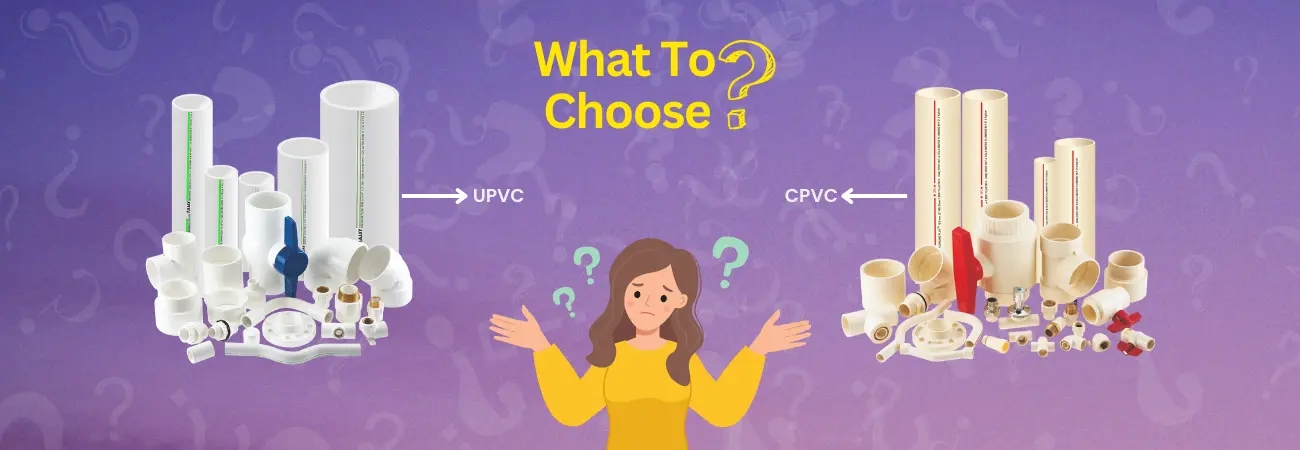
When you're building a new home, renovating a bathroom, or planning a commercial plumbing system, one question comes up again and again: should you use CPVC or UPVC pipes? Both look similar, both are plastic, and both are widely available across India. But they are designed for very different jobs, and choosing the wrong one can lead to leaks, warping, and expensive repairs down the line.
In this guide, we break down the key differences between CPVC and UPVC so you can make a confident, informed decision.
What Is CPVC?
CPVC stands for Chlorinated Polyvinyl Chloride. It starts as regular PVC resin, which then goes through an extra chlorination process. This added chlorine changes the material's molecular structure and gives it one big advantage: much higher heat resistance.
CPVC pipes can safely carry water at temperatures up to around 93°C, which makes them ideal for both hot and cold water supply lines. You'll commonly find them connected to geysers, solar water heaters, kitchen taps, and bathroom showers.
What Is UPVC?
UPVC stands for Unplasticized Polyvinyl Chloride. As the name suggests, no plasticizers are added during manufacturing, which makes the pipe rigid, strong, and highly durable.
UPVC pipes are built for cold water applications and typically handle temperatures up to about 60°C. They are widely used for cold water supply, overhead tank connections, borewell lines, irrigation, and drainage systems.
CPVC vs UPVC: Key Differences at a Glance
The main difference is heat. CPVC handles temperatures up to around 93°C, so it works for both hot and cold water. UPVC is rated up to about 60°C and is best kept for cold water lines. CPVC is slightly more flexible and costs more. UPVC is more rigid and more economical. You'll usually see CPVC in off-white or cream, running to geysers, bathrooms, and kitchens. UPVC usually comes in grey or white and is used for tanks, borewells, irrigation, and drainage.
1. Temperature Resistance
This is the single most important difference. If your pipe will carry hot water at any point, CPVC is the only sensible choice. UPVC can soften, sag, or deform under sustained heat, which weakens joints and leads to leakage. For cold water lines, however, UPVC performs excellently.
2. Water Safety and Hygiene
Both CPVC and UPVC are non-toxic, corrosion-free, and suitable for potable water when manufactured to the right standards. CPVC has an added edge because its chlorinated structure resists bacterial growth, helping keep drinking water clean over time. Always check that the pipes you buy are certified to the relevant BIS standards.
3. Durability and Strength
UPVC is known for its rigidity and high tensile strength, which makes it excellent for underground and outdoor use where pipes face soil pressure. CPVC is slightly more flexible, which helps it handle thermal expansion and contraction inside walls without cracking. Both materials are resistant to rust, scaling, and chemical corrosion, giving them a long service life of 50 years or more when installed correctly.
4. Installation
Both pipe types are lightweight and easy to install using solvent cement joints, with no need for heavy threading or welding equipment. This saves time and labour costs compared to traditional GI (galvanized iron) pipes. The key thing to remember: always use the correct solvent cement for each pipe type. CPVC cement and UPVC cement are not interchangeable.
5. Cost
UPVC pipes are generally more affordable than CPVC. If your project involves long stretches of cold water lines, such as from a borewell to an overhead tank, UPVC helps you keep costs down without compromising on quality. CPVC costs more, but for hot water lines the higher price pays off in safety and longevity.
Which One Should You Choose?
The smartest plumbing systems don't pick one over the other. They use both, each where it performs best:
Choose CPVC for: bathroom and kitchen hot water lines, geyser and solar heater connections, and internal plumbing that carries both hot and cold water.
Choose UPVC for: cold water supply, overhead and underground tank connections, borewell piping, garden and agricultural irrigation, and outdoor lines.
A typical Indian home, for example, might use UPVC to bring water from the borewell to the rooftop tank, and CPVC to distribute water from the tank and geyser to taps and showers inside the house.
Why Pipe Quality Matters More Than You Think
Even the right pipe type will fail if it's poorly made. Low-quality pipes can have uneven wall thickness, weak joints, and impurities that shorten their life or affect water safety. Since plumbing is hidden inside walls and under floors, replacing a failed pipe means breaking tiles and plaster, which is a costly and stressful process.
That's why it's worth investing in pipes from a trusted manufacturer that follows strict quality standards and offers a complete range of matching fittings.
Final Thoughts
The CPVC vs UPVC debate isn't about which pipe is better overall. It's about which pipe is better for a specific job. CPVC handles heat, while UPVC offers strength and value for cold water and outdoor applications. Use each in the right place, and your plumbing system will serve you reliably for decades.
Looking for high-quality CPVC and UPVC pipes for your next project? Ajay Pipes offers a complete range of durable, certified pipes and fittings designed for Indian homes, businesses, and farms. Whether you need hot water solutions or reliable cold water systems, visit ajaypipes.com to explore the full product range and find the right fit for your plumbing needs.