Bringing a touch of tradition into everyday hydration, Copper Water Dispensers have grown from a niche wellness product into a genuinely popular household item. Whether you're drawn to them for their believed health benefits or simply their distinctive aesthetic appeal, choosing the right dispenser involves understanding capacity, design, features, and proper maintenance. This guide covers everything worth knowing before making a purchase.
Why Copper Water Dispensers Have Grown in Popularity
Copper has long held a place in traditional Indian wellness practices, particularly Ayurveda, which recommends storing drinking water in copper vessels overnight. This practice is believed to allow trace amounts of copper to interact with the water, potentially offering various health benefits, though modern scientific consensus on these specific claims remains limited.
Beyond wellness considerations, Copper Water Dispensers have also gained popularity for purely aesthetic reasons. Their warm, distinctive finish adds a touch of heritage elegance to kitchens, dining areas, and even office spaces, making them appealing to those who simply appreciate authentic, handcrafted design alongside practical functionality.
Understanding Capacity Options
Choosing the right capacity is one of the most important decisions when selecting a copper water dispenser, since it directly affects both practicality and available space requirements.
Smaller capacities (around 5 litres) suit individuals or smaller households with limited counter or storage space, offering a practical option for personal daily hydration without requiring frequent refilling for larger groups.
Mid-range capacities (around 7-8 litres) work well for small to medium families, striking a balance between adequate water storage and manageable size for typical kitchen or dining area placement.
Larger capacities (10-12 litres or more) suit larger families, shared office spaces, or households that prefer minimizing how often the dispenser needs refilling, though these larger sizes require more significant counter or floor space.
Before purchasing, measuring your intended placement area helps ensure the chosen capacity fits comfortably within your available space, particularly for larger dispensers that may require dedicated stands or counter areas.
Design Styles Worth Considering
Antique finishes offer a classic, aged aesthetic that pairs well with traditional or heritage-inspired home décor, often becoming a visual centerpiece in dining areas or kitchen counters.
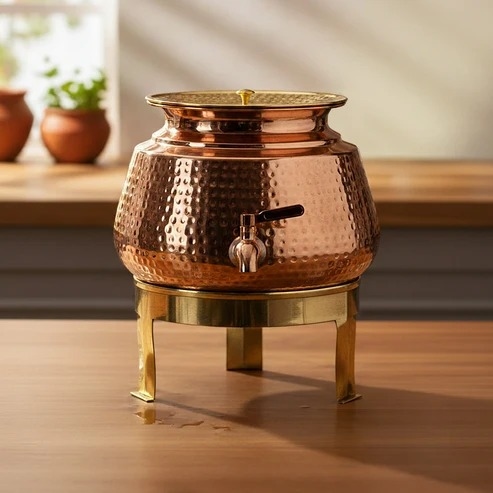
Hammered designs feature a textured, hand-beaten surface created through traditional craftsmanship techniques, adding visual depth and an artisanal quality that smooth, polished finishes don't offer.
Matka-inspired shapes draw from traditional Indian earthenware pot designs, translating that familiar silhouette into copper construction, appealing to those who appreciate culturally rooted aesthetics.
Etched designs incorporate decorative detailing directly into the copper surface, offering intricate visual interest for those seeking a more elaborate, ornamental appearance.
Barrel-shaped dispensers provide an alternative silhouette to traditional rounded designs, appealing to those looking for a distinctive shape that stands out from more common dispenser styles.
Key Features to Evaluate
Taps allow for direct, convenient dispensing without needing to lift or tilt the entire vessel, making them particularly valuable for larger capacity dispensers where lifting becomes impractical for daily use.
Lids help keep water protected from dust, debris, and contaminants, an important consideration for maintaining water cleanliness, particularly in open kitchen or dining environments.
Stands provide additional clearance beneath the dispenser, making it easier to place a glass or container directly underneath the tap for convenient serving, particularly useful for households that use the dispenser frequently throughout the day.
When comparing models, checking which combination of these features suits your specific usage pattern helps narrow down the most practical choice from the available range.
Placement Considerations
Choosing where to position your copper water dispenser affects both convenience and the dispenser's long-term condition. Kitchen counters offer convenient access during meal preparation and cooking, while dedicated dining area placement suits households that prefer serving water directly during meals.
Avoiding direct sunlight exposure helps preserve the copper's natural finish, since prolonged sun exposure can potentially affect the material's appearance over time. Similarly, keeping the dispenser away from excessive heat sources, such as direct proximity to stovetops, helps maintain both the material's integrity and the water's temperature stability.
Traditional Wellness Beliefs Around Copper Water
Ayurvedic tradition suggests that water stored in copper vessels overnight develops what's sometimes referred to as "tamra jal," believed to carry various health properties through natural mineral interaction with the copper surface. Common traditional beliefs associate this practice with supporting digestion, immunity, and overall wellness.
While these beliefs are rooted in centuries of traditional practice rather than extensive modern clinical research, many households continue this custom as part of broader wellness routines, valuing both the cultural continuity and the distinctive taste some believe copper-stored water develops.
Maintaining Your Copper Water Dispenser
Proper maintenance significantly affects both the appearance and functional lifespan of a copper water dispenser. Regular cleaning helps prevent the natural tarnishing that occurs when copper is exposed to air and moisture over time.
For routine cleaning, a mixture of lemon juice and salt or baking soda offers an effective, natural solution for removing tarnish and restoring shine without relying on harsh chemical cleaners that could damage the copper's surface.
For internal cleaning, ensuring the interior is regularly rinsed and dried helps prevent mineral buildup or residue accumulation, particularly important for dispensers used daily for drinking water storage.
For tap maintenance, periodically checking the tap mechanism for smooth operation and cleaning any mineral deposits helps ensure consistent, reliable dispensing over the dispenser's lifespan.
Comparing Models Before Purchase
Given the variety of capacities, designs, and features available, comparing multiple copper water dispenser options before purchasing helps ensure you select a model that genuinely fits your household's needs. Consider capacity relative to your typical water consumption, available placement space, desired aesthetic style, and whether features like taps and stands align with your intended daily use pattern.
Checking individual product specifications for material purity, since some dispensers may use copper alloys rather than pure copper, also helps ensure the piece aligns with your specific wellness or quality expectations.
Final Thoughts
Choosing the right copper water dispenser involves balancing capacity needs, design preference, and practical features like taps, lids, and stands against your household's specific requirements and available space. Whether drawn to these dispensers for their traditional wellness associations or simply their distinctive aesthetic appeal, understanding these key considerations ensures you select a piece that serves both your practical and personal style needs effectively.