A customer calls your business number, but no one picks up because your team is out of the office. That call is lost, and so is the customer. This happens to thousands of businesses every single day. A Cloud Telephony Service fixes this exact problem by moving your entire phone system to the cloud.
In 2026, customers expect instant replies. They don't wait around for a callback. So businesses that miss calls also miss sales, leads, and trust. This is why more Indian companies, from startups to large enterprises, are shifting to cloud-based calling systems.
In this guide, we will explain what cloud telephony is, how it works, its key features, and how it fits with other communication tools like IVR, Bulk SMS, and Call Centers.
What Is a Cloud Telephony Service?
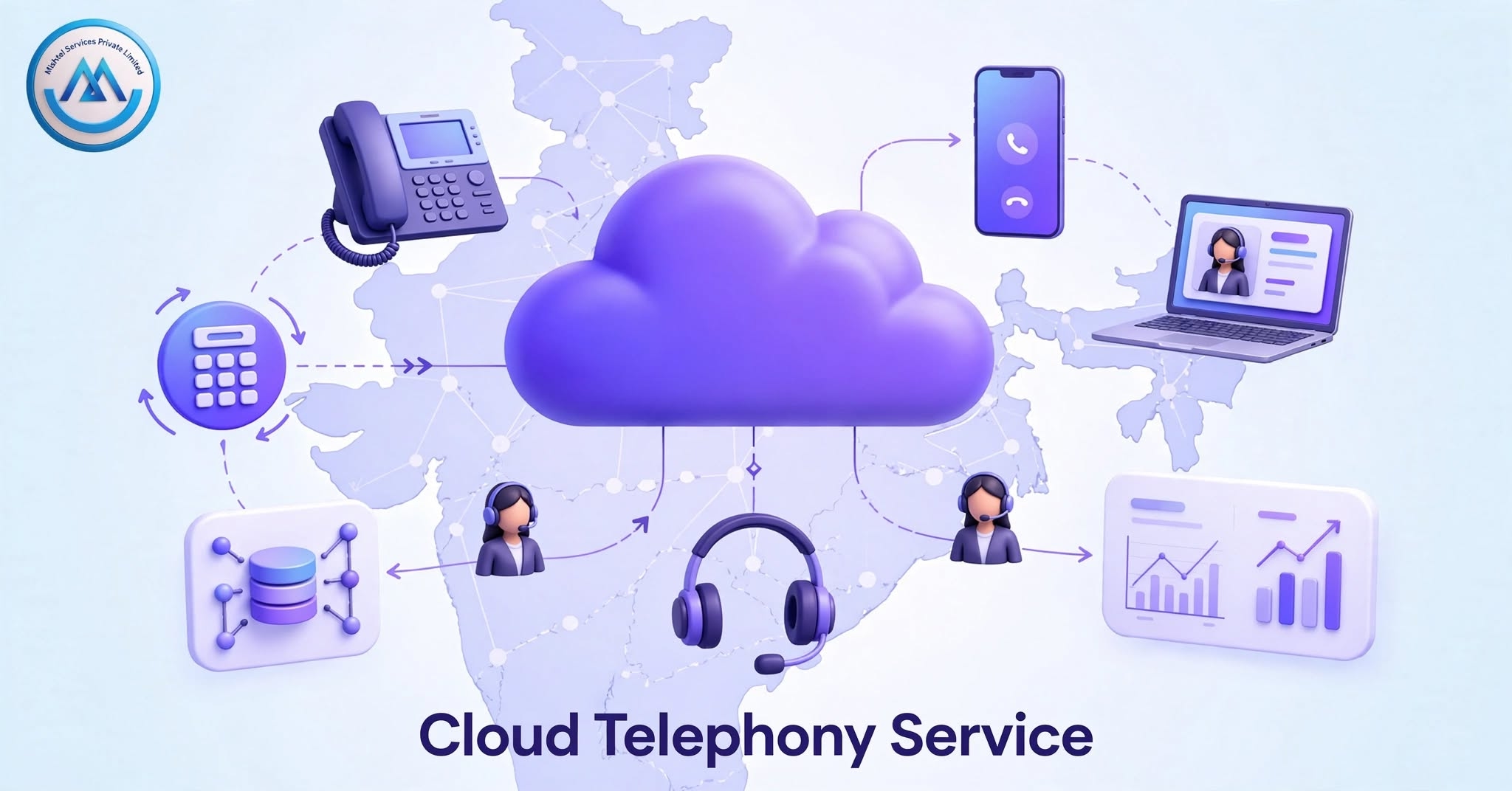
Cloud telephony is a phone system that runs on the internet instead of physical phone lines. There are no heavy machines or wires to manage. Everything works through software, hosted on secure cloud servers.
With this system, businesses can make and receive calls from anywhere. Your team can answer customer calls from a laptop, mobile app, or even a browser. There is no need to sit in one office location.
Small businesses use it to manage customer queries. Large enterprises use it to run entire call centers. Banks, hospitals, schools, and online stores all rely on cloud telephony to stay connected with people who call them.
How Does Cloud Telephony Work?
The process is simple once it's set up correctly. Here is how it usually works, step by step:
Number Setup – Your business gets a virtual number, such as a toll-free or local number.
Call Routing – Incoming calls are automatically routed to the right agent or department.
Cloud Processing – The call data travels through secure cloud servers, not physical wires.
Agent Connection – The call reaches an agent's phone, laptop, or app, wherever they are.
Recording & Tracking – Every call gets recorded and logged for quality and reporting.
Reporting Dashboard – Managers view call data, missed calls, and performance reports in real time.
This entire process takes only a few seconds. Customers don't notice any delay, they just get connected faster.
Key Features to Look For
Not every cloud telephony provider offers the same features. Here are the features that matter most for a growing business.
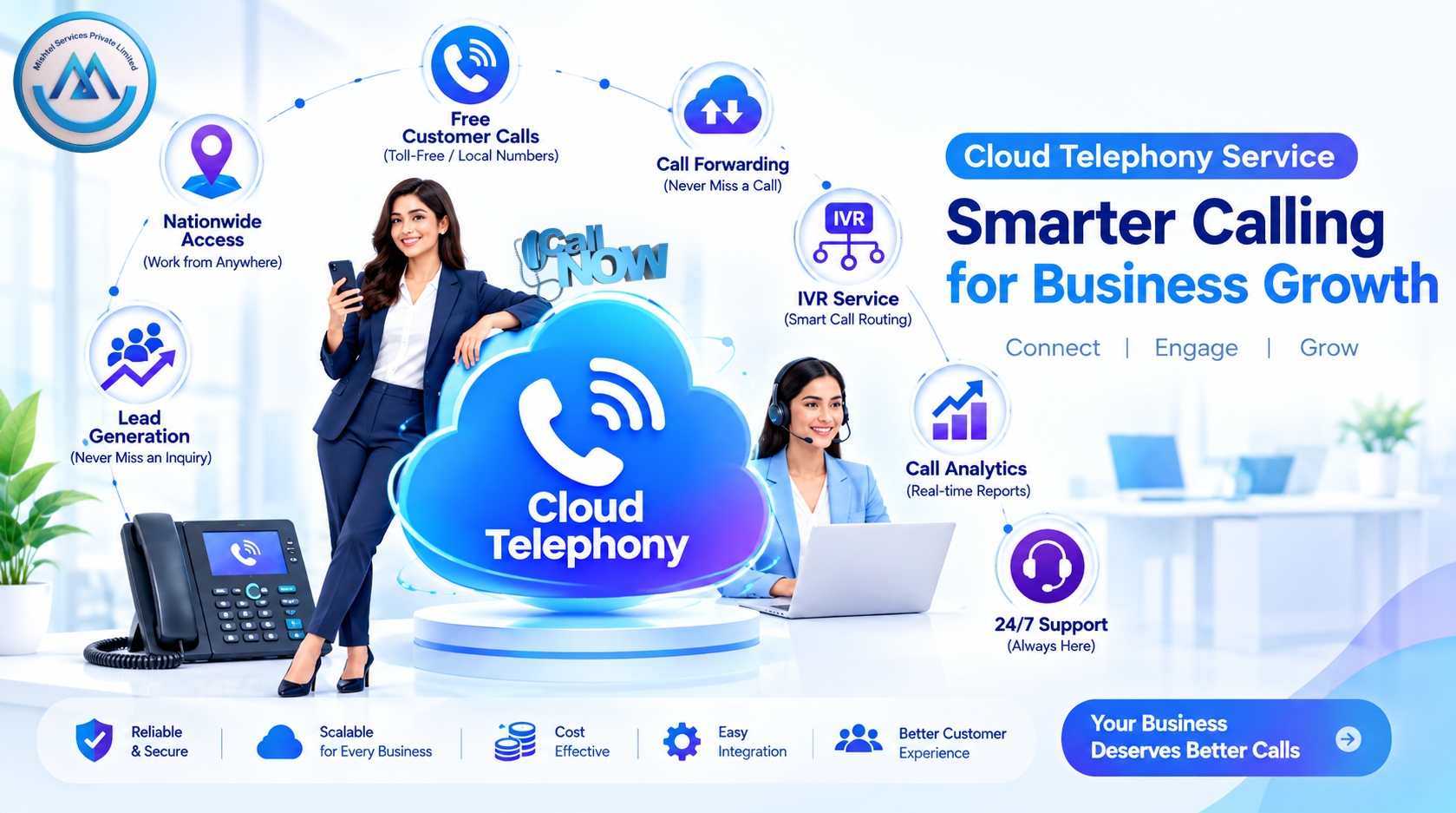
Smart call routing sends calls to the right person automatically. This reduces waiting time for customers.
Call recording allows you to review past conversations. This helps with training and dispute resolution.
Real-time dashboards give managers a clear view of call volume, agent performance, and missed calls.
An IVR Service adds a voice menu that lets customers pick the right department themselves, saving time for both the customer and your team.
For businesses that miss calls during busy hours, a Missed Call Service captures those leads automatically and notifies your team instantly.
A Click to Call Service lets website visitors connect with your sales team in one tap, which often turns browsing visitors into real leads.
Many businesses also use Call Forwarding Service so calls reach the right agent even when someone is unavailable or out of office.
Benefits of Cloud Telephony
Businesses that switch to cloud telephony usually notice results within weeks. Here's what changes.
Customer experience improves because calls get answered faster and routed correctly the first time. No one likes being transferred five times before reaching the right person.
Lead generation gets stronger since every call and missed call gets tracked. No inquiry slips through the cracks anymore.
Cost efficiency is another major advantage. There's no need for expensive hardware, wiring, or on-site maintenance teams.
Scalability becomes easy too. Adding new agents or numbers takes minutes, not weeks like traditional phone systems.
Tracking and analytics give business owners real data. You know exactly how many calls came in, how long they lasted, and where the gaps are.
Brand trust grows because customers get quick, professional responses every time they call. This builds long-term loyalty.
Operational efficiency improves because managers can monitor teams remotely and fix problems quickly, without needing to be physically present.
Cloud Telephony Use Cases Across Industries
Banking & BFSI
Banks handle thousands of daily customer queries about balances, loans, and complaints. Cloud telephony with IVR helps route these calls without long hold times, keeping customer trust intact.
Healthcare
Clinics and hospitals use cloud systems to manage appointment bookings and patient queries. A missed call from a patient in an emergency can be costly, so instant call capture matters here.
Education
Schools and coaching centers use cloud telephony for admissions inquiries. Parents calling for information get connected to the right department without confusion.
E-commerce
Online stores use it for order support and delivery updates. Combined with an OBD Service, they can send automated voice updates about order status to thousands of customers at once.
Real Estate
Property businesses receive high call volumes from ads and listings. Cloud telephony tracks which advertisement brought in each call, helping teams measure marketing performance.
Travel
Travel agencies use it to handle booking confirmations and support queries, especially during peak seasons when call volume spikes suddenly.
Government / Public Services
Public service helplines use cloud systems to manage citizen queries at scale, with call recording used for accountability and quality checks.
Cloud Telephony and Related Communication Channels
Cloud telephony works even better when combined with other channels. A typical communication flow looks like this:
Cloud Telephony Service → IVR → Missed Call → Click to Call → Bulk Voice → Call Center
For example, a customer calls your Toll-Free Service number. The IVR greets them and offers menu options. If the line is busy, the Missed Call Service captures the lead. Later, a Bulk Voice Service can follow up with a recorded voice message about offers or updates.
For promotional outreach, businesses often use a Convincing Campaign Service to deliver persuasive voice messages to a large customer base at once.
A Playback Service is also useful when businesses want to replay recorded announcements or promotional messages automatically during calls.
For larger teams handling high call volumes daily, a full Call Center Service brings all these tools together on one dashboard, making it easier to manage agents, calls, and reports in one place.
Pricing Considerations
Cloud telephony pricing depends on several factors, and no two businesses pay exactly the same amount. Here's what usually affects the cost:
Number of virtual numbers or toll-free lines needed
Monthly call volume and minutes used
Number of agents using the system
Features required, such as IVR, call recording, or analytics
Integration needs with your existing CRM or software
One-time setup charges, if applicable
It's best to request a custom quote based on your business size and call volume, since pricing varies by usage and features selected.
How to Choose the Right Provider
Picking a cloud telephony partner is an important decision. Use this checklist before you commit:
Factor | Why It Matters |
Reliability | Downtime means missed calls and lost customers |
Call Quality | Poor audio quality frustrates customers |
Reporting | You need clear data to measure performance |
Integration | The system should connect with your CRM or tools |
Scalability | It should grow easily as your business grows |
Support | Fast technical support avoids long downtime |
Compliance | Data and call security must follow regulations |
Pricing Transparency | No hidden charges or confusing bills |
API Availability | Needed if you want custom integrations |
Why Choose Mishtel
Mishtel offers a complete suite of business communication services under one platform. This includes cloud telephony, IVR, missed call tracking, click to call, bulk voice, and full call center solutions.
Businesses that use Mishtel don't need to manage multiple vendors for different communication needs. Everything works together, from a simple missed call capture to a full-scale call center setup.
Mishtel's team also supports businesses during setup and after, which matters a lot for companies without a large in-house technical staff. This makes it a practical choice for small businesses and growing enterprises alike.
Cloud Telephony vs Traditional Phone Lines
Feature | Cloud Telephony | Traditional Phone Lines |
Setup | Quick, software-based | Slow, needs hardware and wiring |
Cost | Lower, pay-as-you-use | Higher, fixed infrastructure cost |
Scalability | Easy to add lines/agents | Requires new physical connections |
Remote Access | Works from anywhere | Limited to office location |
Call Tracking | Built-in analytics | Usually manual or absent |
Maintenance | Handled by provider | Business manages hardware |
Frequently Asked Questions
What is a cloud telephony service used for?
It is used to manage business calls, route them automatically, and track performance, all without needing physical phone lines.
How much does cloud telephony cost in India?
Cost depends on call volume, number of agents, and features chosen. It's best to get a custom quote based on your needs.
Does cloud telephony work for small businesses?
Yes. Small businesses often start with basic features like a toll-free number and missed call tracking, then scale up as they grow.
Can cloud telephony integrate with a CRM?
Most providers, including Mishtel, offer API access so the phone system can connect with your existing CRM or software.
Is cloud telephony secure?
Reliable providers use secure cloud servers and follow data protection practices to keep call data safe.
What industries use cloud telephony the most?
Banking, healthcare, education, e-commerce, real estate, and travel are among the top industries using these services daily.
How is cloud telephony different from a regular business number?
A regular number only rings one phone. Cloud telephony routes calls intelligently, records them, and gives you detailed reports.
Conclusion
A Cloud Telephony Service helps businesses stay connected with customers without missing calls, losing leads, or overspending on hardware. Combined with tools like IVR, Missed Call Service, and a full Call Center Service, it builds a complete communication system that grows with your business.
If you're ready to stop missing customer calls, it may be time to explore what a cloud-based phone system can do for your team