Selecting the right insurance broker in India is an important decision when planning financial protection for individuals, families, and businesses. Insurance policies help manage unexpected financial risks, but choosing suitable coverage can sometimes be challenging because different insurers offer different benefits, premiums, exclusions, and policy conditions. This is where an experienced insurance broker can make the process easier.
Whether you need health insurance for your family, car or bike insurance for personal use, or commercial insurance to protect your business assets, a reliable broker can help you understand available options and make informed decisions. Instead of selecting a policy based only on its premium, you can evaluate coverage benefits, claim procedures, policy limitations, and long-term requirements.
This article explains how to choose an insurance broker in India for personal and business coverage, the important factors to consider, and how the right professional can support you throughout your insurance journey.
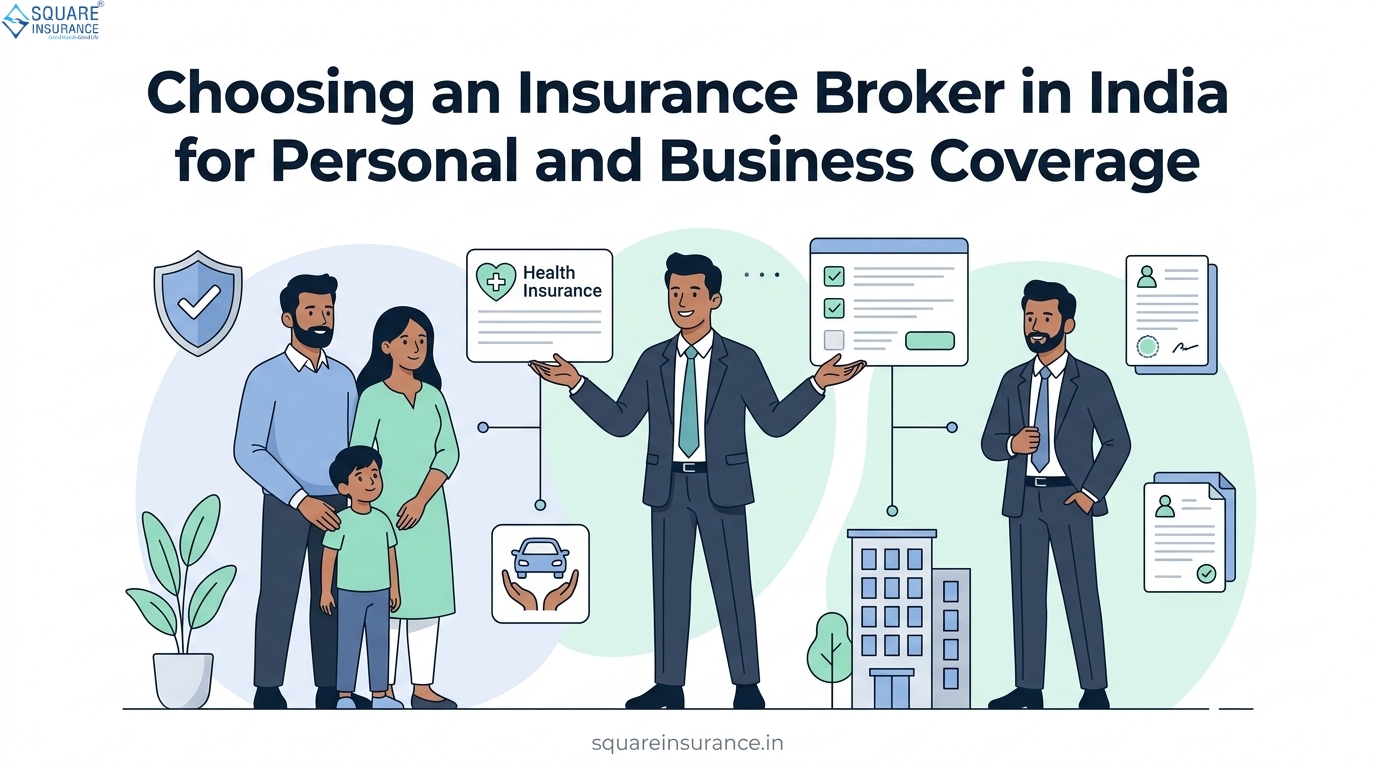
1. Understand Your Personal and Business Insurance Requirements
Before approaching an insurance broker, identify the type of financial protection you need. Personal and business insurance requirements are different, so understanding your priorities will help you select appropriate coverage.
Personal insurance requirements
Individuals and families generally consider the following insurance categories:
· Health Insurance: Helps manage medical expenses, hospitalisation costs, and eligible healthcare treatments.
· Life Insurance: Provides financial protection to dependants in the event of the policyholder's death, depending on the policy terms.
· Car Insurance: Covers eligible financial losses arising from accidents, theft, and third-party liabilities.
· Bike Insurance: Provides protection against covered damages and legal third-party liabilities.
· Travel Insurance: Helps manage eligible medical emergencies, trip interruptions, and other covered travel-related risks.
Business insurance requirements
Businesses may require different types of insurance depending on their industry, size, workforce, and operational activities.
· Property Insurance: Protects eligible business buildings, equipment, inventory, and other insured assets against specified risks.
· Marine Insurance: Covers eligible risks associated with the transportation of goods.
· Liability Insurance: Helps businesses manage covered legal liabilities arising from third-party claims.
· Employee Health Insurance: Provides medical coverage for employees under the policy conditions.
· Professional Indemnity Insurance: Offers protection against specified professional negligence claims.
· Fire Insurance: Helps businesses manage financial losses resulting from covered fire-related incidents.
A professional broker should understand these requirements before recommending suitable insurance solutions.
2. Check the Broker's IRDAI Registration and Credentials
One of the most important steps when choosing an insurance broker in India is verifying their regulatory credentials. Insurance brokers operate under the regulatory framework established by the Insurance Regulatory and Development Authority of India (IRDAI).
A registered insurance broker is authorised to undertake permitted insurance distribution activities according to the applicable regulations and licence category.
Before selecting a broker, consider checking:
· Whether the broker holds a valid IRDAI registration.
· The category of insurance broker licence.
· The company's business background and operating history.
· Whether it follows applicable regulatory requirements.
· The professional experience of its insurance team.
Regulatory registration helps establish credibility and gives customers greater confidence when discussing insurance requirements and policy options.
3. Evaluate the Range of Insurance Companies and Policies
A good insurance broker should provide access to multiple insurance companies and policy options rather than focusing on a single product.
Different insurers may offer different coverage limits, premiums, add-on benefits, waiting periods, deductibles, and claim conditions. Comparing these features can help customers identify policies that match their requirements.
For example, someone purchasing health insurance may need to compare room rent limits, pre-existing disease waiting periods, restoration benefits, network hospitals, and exclusions.
Similarly, a business looking for property insurance should evaluate the insured property value, covered risks, exclusions, and claim settlement requirements.
Consider these factors when evaluating a broker:
· Number and range of insurance company partnerships.
· Availability of personal and commercial insurance products.
· Variety of policy features and coverage options.
· Ability to explain differences between competing plans.
· Support in selecting appropriate coverage.
The objective should be to find a policy that offers suitable protection rather than simply choosing the cheapest available premium.
4. Assess the Broker's Industry Knowledge and Experience
Insurance products involve technical terms, policy conditions, exclusions, and regulatory requirements. An experienced broker should be able to explain these details in simple language.
For personal insurance, the broker should understand family requirements, financial responsibilities, vehicle usage, and healthcare needs.
For business insurance, industry knowledge becomes even more important. A manufacturing company, retail business, construction firm, and IT organisation may face completely different operational risks.
Before making a decision, evaluate whether the broker can:
· Understand your specific insurance requirements.
· Identify potential coverage gaps.
· Explain policy inclusions and exclusions.
· Recommend appropriate coverage limits.
· Clarify deductibles and additional benefits.
· Provide practical guidance during policy selection.
A knowledgeable broker focuses on understanding risks before suggesting insurance products.
5. Compare Premiums, Coverage Benefits, and Exclusions
Premium comparison is important, but it should never be the only factor when selecting an insurance policy.
Two policies with similar premiums may offer significantly different coverage benefits. One policy may provide additional protection, while another may include restrictive conditions or lower coverage limits.
Ask your insurance broker to explain the following details before purchasing:
· Premium Amount: Understand the total payable premium and applicable charges.
· Coverage Limit: Check the maximum amount payable under the policy.
· Policy Exclusions: Identify situations and expenses that are not covered.
· Deductibles: Understand the amount you may need to pay before insurance benefits apply.
· Waiting Periods: Review applicable waiting periods, particularly for health insurance.
· Add-on Covers: Evaluate optional benefits that may improve protection.
· Renewal Conditions: Understand renewal requirements and applicable terms.
A transparent insurance broker should explain these conditions instead of highlighting only attractive policy benefits.
6. Review Claim Assistance and After-Sales Support
An insurance broker's responsibility should not end after a policy is purchased. Support during claims, renewals, and policy-related queries is equally important.
Filing an insurance claim can involve documentation, verification, communication with the insurer, and compliance with policy conditions. A broker who provides proper assistance can help customers understand the process and avoid common documentation mistakes.
Before selecting a broker, ask about:
· Assistance with claim intimation and documentation.
· Guidance on claim procedures and required forms.
· Support in communicating with the insurance company.
· Updates on claim progress.
· Assistance with policy endorsements and modifications.
· Timely renewal reminders and policy servicing.
Remember that the insurer makes the final decision on claim admissibility according to the policy terms. A broker can assist and coordinate but cannot guarantee claim approval or settlement.
7. Look for Transparency and Clear Communication
Transparency is an essential quality of a trustworthy insurance broker. Customers should receive accurate information about policy benefits, limitations, premiums, and conditions before making a purchase.
A reliable broker should not make unrealistic promises or recommend unnecessary coverage simply to complete a sale.
Evaluate the broker's communication practices by checking whether they:
· Explain policy terms in understandable language.
· Share relevant quotations and policy details.
· Disclose applicable charges and conditions.
· Explain the limitations of insurance coverage.
· Maintain confidentiality of customer information.
· Respond to questions without unnecessary delays.
Clear communication builds trust and helps customers make decisions based on their actual insurance requirements.
8. Check Customer Reviews and Service Reputation
A broker's reputation can provide useful insights into the quality of its services. Customer feedback may help you understand how the company handles policy purchases, renewals, claims, and general enquiries.
While evaluating online reviews and testimonials, look beyond the overall ratings.
Pay attention to comments related to:
· Responsiveness of customer support.
· Accuracy of policy information.
· Assistance during claims.
· Renewal and servicing experience.
· Resolution of customer complaints.
· Overall transparency and professionalism.
You can also ask for references from existing business clients if you are purchasing commercial insurance.
However, remember that reviews represent individual experiences. Consider them alongside the broker's credentials, expertise, and service capabilities.
9. Evaluate Digital Services and Policy Management Facilities
Digital accessibility has become an important factor in insurance management. Online platforms and mobile applications can make it easier for customers to access policy information and manage insurance requirements.
When choosing an insurance broker in India, check whether it offers convenient digital facilities such as:
· Online insurance quotations and comparisons.
· Digital policy purchase and renewal.
· Access to policy documents.
· Online claim assistance.
· Policy status tracking.
· Digital customer support.
· Secure policy management facilities.
For businesses managing multiple insurance policies, digital tools can also simplify record-keeping, renewal tracking, and policy administration.
However, digital convenience should complement professional assistance rather than replace it entirely.
10. Understand the Broker's Grievance Redressal Process
Even after taking precautions, customers may sometimes face service-related issues or disagreements. Therefore, it is important to understand how an insurance broker handles complaints.
Ask whether the broker has a defined grievance redressal mechanism and whether customers can contact a designated grievance redressal officer.
Under the applicable regulatory framework, insurance brokers are required to maintain appropriate systems for handling customer grievances.
Customers should also understand the available escalation channels if an issue remains unresolved. IRDAI provides the Bima Bharosa grievance management system for policyholders to register and track eligible insurance-related complaints.
A clear complaint-handling process reflects the broker's commitment to customer service and accountability.
Why Choosing the Right Insurance Broker Matters
Choosing an appropriate insurance broker can make insurance planning more organised and effective. Instead of independently evaluating multiple policy documents, customers can receive professional guidance based on their personal or business requirements.
Some important advantages include:
· Better Policy Comparison: Access to multiple insurance options helps customers evaluate coverage and premiums.
· Suitable Coverage Recommendations: Professional guidance helps identify policies that match individual or business risks.
· Time Savings: Assistance with comparisons, documentation, and policy servicing can reduce administrative effort.
· Claims Guidance: Support during the claims process helps customers understand documentation and insurer requirements.
· Long-Term Insurance Planning: Periodic reviews can help identify changing coverage needs as families and businesses grow.
The value of an insurance broker lies not only in helping customers purchase policies but also in supporting informed insurance decisions over time.
Conclusion
Choosing an insurance broker in India for personal and business coverage requires careful consideration of regulatory credentials, industry experience, insurance company partnerships, policy comparison capabilities, claim assistance, and customer service. A suitable broker should understand your requirements, explain policy conditions transparently, and help you identify coverage that aligns with your financial responsibilities and risk exposure.
Whether you are securing your family's health, protecting your vehicle, or managing commercial business risks, the right insurance guidance can make a meaningful difference. Square Insurance aims to simplify insurance selection by helping individuals and businesses compare insurance options, understand policy benefits, and access support throughout their insurance journey. With a focus on convenient, transparent, and customer-oriented insurance services, Square Insurance can be considered when exploring insurance solutions for different protection requirements.
Frequently Asked Question (FAQs)
Q1. How do I choose the right insurance broker in India?
Check the broker's IRDAI registration, industry experience, insurance company partnerships, policy comparison services, customer reviews, claim assistance, and grievance redressal process before making a decision.
Q2. What is the role of an insurance broker?
An insurance broker helps customers understand their insurance requirements, compare available policies, obtain quotations, select suitable coverage, and receive assistance with policy servicing and claims.
Q3. Can an insurance broker help with both personal and business insurance?
Yes. Depending on its licence category and services, an insurance broker can assist with personal insurance products as well as commercial coverage, including property, liability, employee health, and other business insurance requirements.
Q4. Is an IRDAI-registered insurance broker important?
Yes. Registration confirms that the broker is authorised under the applicable regulatory framework to conduct permitted insurance broking activities in India.
Q5. Does an insurance broker help during the claim process?
Yes. An insurance broker can guide customers regarding claim intimation, documentation, communication with the insurer, and claim-related procedures. However, the insurer determines claim approval according to the policy terms.