
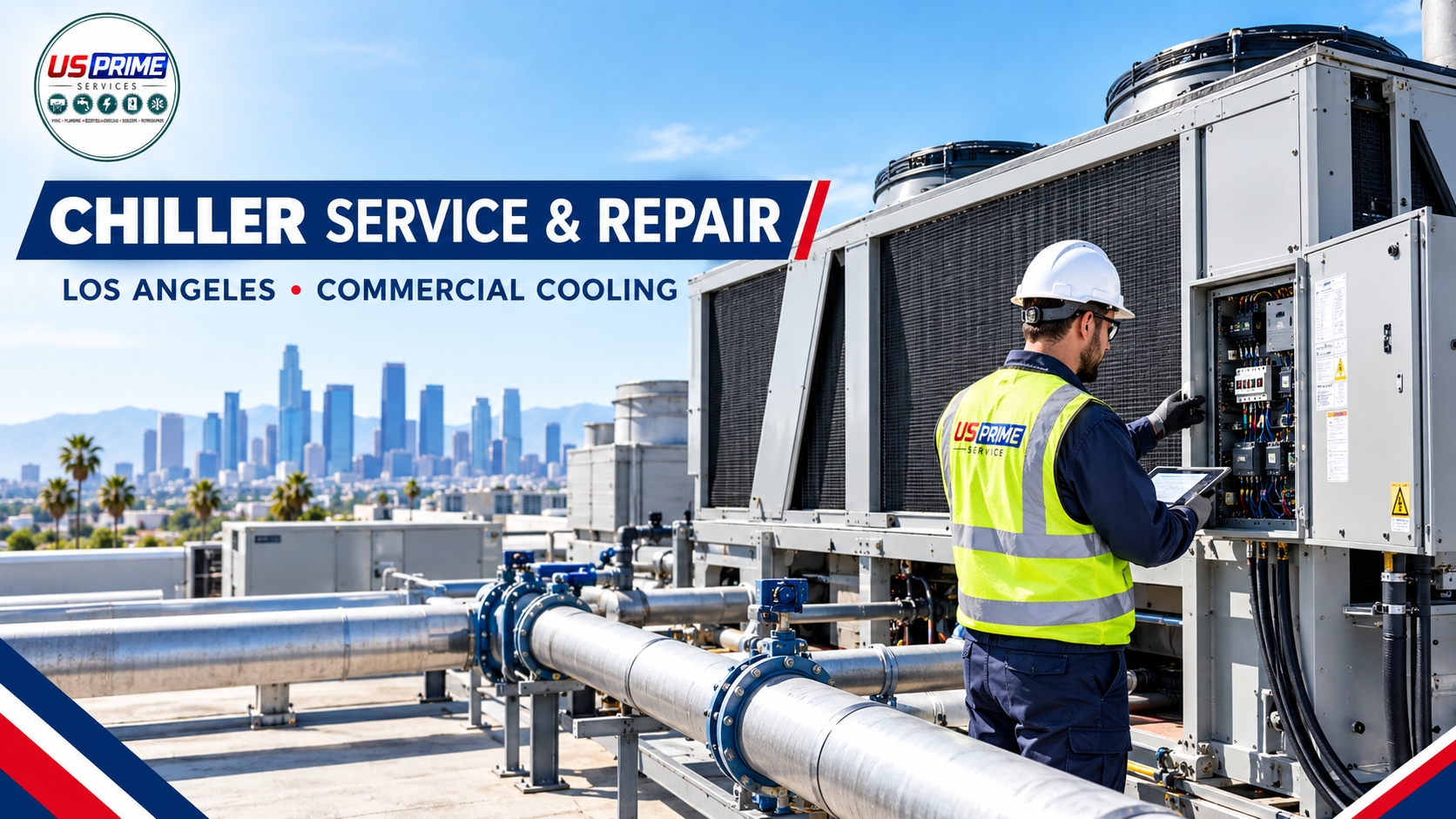
Chiller Service and Repair in Los Angeles: A Practical Guide for Commercial Buildings
A chiller rarely fails without warning. A room won't cool, a pump sounds different, or the energy bill creeps up. These small signs are easy to miss. When the system finally stops, the cost goes beyond the repair. Tenants get uncomfortable, equipment overheats, and work slows down.
This guide explains what a chiller does, the warning signs to watch for, and the common causes of trouble. It also covers when to call a professional, how to plan a new unit, and what to do in an emergency.
Chiller service is the planned work that keeps a cooling system running the way it was designed. It usually includes inspecting the unit, cleaning heat-transfer surfaces, checking refrigerant levels, testing electrical connections, and reviewing performance. The goal is to catch small problems before they cause a shutdown.
How a Chiller Works
A chiller removes heat from a liquid, usually water or a water-glycol mix. The cooled liquid travels through pipes to air handlers or process equipment. The heat is then released outside, either through a cooling tower or an air-cooled condenser.
Four main parts do the work: the compressor, the condenser, the evaporator, and the expansion device. If one part struggles, the whole system feels it. That is why a small fault can grow into a large one.
Warning Signs Your Chiller Needs Attention
Watch for these signals:
Rooms or equipment that do not reach the set temperature
Temperatures that swing up and down
New noise or vibration from the compressor or pumps
Oil or fluid leaks around the unit
Higher energy use with no added load
Frequent alarms or trips
A daily operating log makes these changes easier to spot. The daily chiller log is described as the first step toward keeping efficiency high. Even a few notes on temperatures and pressures help a technician see trends.
What Causes Chiller Problems
Several issues show up again and again.
Refrigerant leaks are one. Leaks, along with air and moisture getting into the system, lower efficiency and reliability. Dirty tubes are another. Scale, algae, and mud coat the tube walls and make the unit work harder. Poor water treatment makes this worse.
Electrical and control faults also cause shutdowns. So do pump and water-flow problems. These are possible causes, not a diagnosis. Only testing on site can confirm what is wrong.
Repair Work and When to Call a Professional
Chiller repair starts with finding the real cause. A good technician checks pressures, temperatures, electrical parts, controls, and water flow before replacing anything. Fixing the symptom without the cause often means the problem returns.
Chiller service repair works best when maintenance and fixes are planned together. A repair visit is a good time to note worn parts and fouled coils. Those notes can shape the next maintenance plan.
Some tasks are not for building staff. Federal rules require EPA Section 608 certification for anyone who services or repairs equipment that may release refrigerant. Electrical work on a chiller also needs a qualified person. Staff can safely check the log, look for visible leaks, and keep the area around the unit clear. Then they should call a professional.
Source: Chiller Service and Repair in Los Angeles: A Practical Guide for Commercial Buildings