Compare carbide and HSS cutting tools by speed, durability, cost, and application to choose the right option for accurate and efficient CNC machining.
Carbide vs HSS CNC Tools: Which Is Better for Machining?
Choosing the right cutting material is an important decision in modern manufacturing. The performance of a CNC tool depends on several factors, including workpiece material, cutting speed, machining conditions, and production requirements. Two commonly used materials are carbide and High-Speed Steel (HSS). Both offer useful advantages, but they perform differently depending on the application.
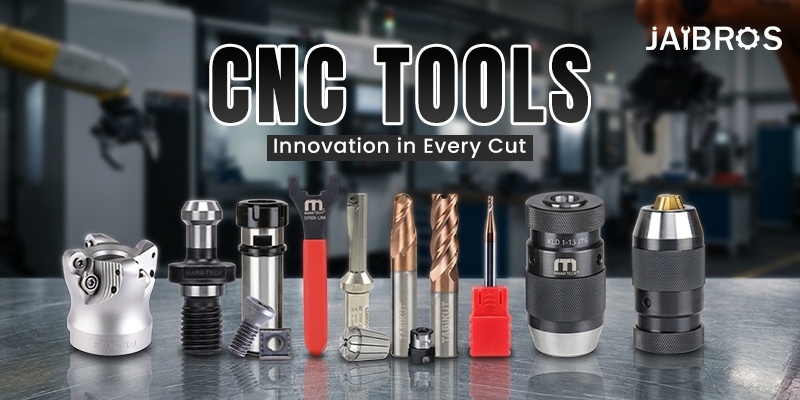
Understanding their differences helps machinists select suitable tools, improve productivity, and control machining costs. Let's compare carbide and HSS to understand which option works better for different machining operations.
1. What Are Carbide Cutting Tools?
Carbide cutting tools are generally manufactured from cemented carbide, a hard material made using tungsten carbide particles bonded with a metallic binder, commonly cobalt. They are known for their high hardness, wear resistance, and ability to maintain cutting performance at elevated temperatures.
These properties make carbide suitable for high-speed machining and applications involving harder materials. Carbide cutters are widely used in milling, drilling, and turning operations where dimensional accuracy and consistent production are important.
Key Advantages of Carbide
High hardness: Maintains a sharp cutting edge for demanding machining applications.
Heat resistance: Performs well at higher cutting temperatures.
Wear resistance: Can provide longer tool life under suitable operating conditions.
High productivity: Supports higher cutting speeds and reduced machining time.
Explore Jaibros carbide cutters for different milling and cutting applications.
2. What Are HSS Cutting Tools?
High-Speed Steel, commonly known as HSS, is an alloy steel containing elements such as tungsten, molybdenum, chromium, and vanadium. It is designed to retain hardness at elevated temperatures compared with conventional tool steels.
HSS is widely used for drills, taps, reamers, end mills, and other general-purpose cutting applications. Its biggest advantage is toughness. Compared with carbide, HSS can tolerate more impact and vibration, making it useful in less rigid machining setups.
Key Advantages of HSS
Better toughness: Handles interrupted cutting and moderate vibration more effectively.
Lower initial cost: Generally more affordable than solid carbide alternatives.
Easy resharpening: Many HSS tools can be reground and reused.
Versatility: Suitable for several general-purpose machining applications.
You can explore the Jaibros HSS tools collection for drills, taps, and other HSS products.
3. Carbide vs HSS: Understanding the Main Differences
Although both materials are used for metal cutting, their properties influence machining performance in different ways.
Cutting Speed and Heat Resistance
Carbide generally supports higher cutting speeds because it maintains hardness at higher temperatures. This makes it suitable for production environments where reducing cycle time is important.
HSS operates at comparatively lower cutting speeds. It can still deliver reliable results, especially when machining softer materials or performing operations that do not require high production speeds.
Tool Life and Wear Resistance
Carbide generally offers better wear resistance when used with suitable cutting parameters. It can maintain its cutting edge for longer periods in demanding applications.
HSS tools may wear faster under high-speed conditions. However, they can often be sharpened again, which can reduce replacement costs.
Toughness and Impact Resistance
Carbide is very hard but relatively brittle. Sudden impacts, excessive vibration, or incorrect tool handling can cause chipping or breakage.
HSS is tougher and more flexible in comparison. This makes it a practical option for interrupted cuts, manual operations, and setups where machine rigidity is limited.
Cost and Overall Value
Carbide usually requires a higher initial investment. However, its productivity and wear resistance can make it cost-effective for repetitive production.
HSS is generally more economical for occasional machining, lower production volumes, and applications where cutting speeds are moderate.
4. When Should You Choose Carbide or HSS?
The right selection depends on the machining operation rather than material hardness alone.
Choose carbide when:
You need higher cutting speeds and production output.
You regularly machine hard or abrasive materials.
Your machine setup provides good rigidity and stability.
Consistent dimensions and longer cutting-edge life are important.
Choose HSS when:
You are performing general-purpose machining.
The machine has limited rigidity or experiences vibration.
You need an economical option for occasional operations.
The application involves interrupted cuts or tools that require frequent resharpening.
For example, carbide drills are useful for high-speed precision drilling, while HSS drills can be suitable for general drilling requirements.
5. Factors to Consider Before Selecting a Cutting Tool
Before choosing between these materials, consider the workpiece, machining conditions, and production requirements.
Workpiece material: Aluminium, mild steel, stainless steel, and hardened alloys have different cutting requirements. Select the material and grade according to the application.
Machine rigidity: Carbide requires a stable setup to reduce vibration and prevent edge damage. HSS can be more forgiving in less rigid conditions.
Cutting parameters: Always check recommended speed, feed rate, depth of cut, and coolant requirements. Incorrect settings can reduce the performance of even a premium cutting tool.
Tool geometry and coating: Flute design, edge preparation, and surface coatings also affect cutting performance. Material selection alone does not determine the final result.
Maintenance: Regular inspection of holders, inserts, and cutting edges helps maintain consistent machining quality. Suitable accessories, including a hand tool for setup and maintenance, also contribute to a well-organised workshop.
6. How to Get Better Results from CNC Machining
Selecting the correct material is only one part of successful machining. Proper tool holding, accurate alignment, effective chip evacuation, and suitable coolant application are equally important.
Operators should inspect cutting edges regularly and replace damaged tools before they affect workpiece quality. In turning applications, suitable inserts such as Deskar inserts can be selected according to the material and cutting operation. Similarly, the right boring tool helps achieve accurate internal diameters and better hole finishes.
Jaibros offers a range of industrial tooling categories for different machining requirements, helping professionals explore options for their workshops and production operations.
Conclusion
Carbide and HSS both have an important role in modern manufacturing. Carbide is generally the better choice for high-speed machining, demanding applications, and longer cutting-edge life. HSS remains a practical and economical option for general-purpose work, interrupted cutting, and setups that require greater toughness.
There is no single material that works best for every application. The right cnc tool should be selected according to workpiece material, machine capability, cutting conditions, and production goals. Understanding these differences helps manufacturers improve machining efficiency, maintain quality, and make better tooling decisions.



