In modern industrial automation, accuracy, speed, and reliability are essential for achieving efficient production. One important mechanical component that supports these requirements is the Cam Indexing Drive. It plays a significant role in automated machinery by converting continuous rotary motion into precise intermittent movement. Industries that require accurate positioning, controlled movement, and synchronized operations often depend on cam indexing systems to improve productivity and maintain consistent performance.
Deceler provides solutions for industrial motion control applications, helping businesses achieve smooth, reliable, and efficient machine operations. A well-designed cam indexing mechanism can improve production accuracy, reduce unnecessary machine movements, and support automation processes across different industries.
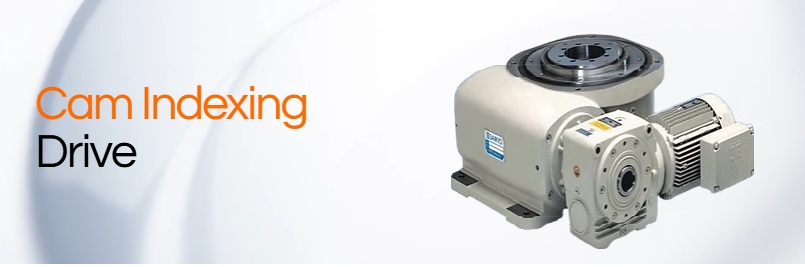
What Is a Cam Indexing Drive?
A Cam Indexing Drive is a mechanical transmission device designed to convert continuous input rotation into intermittent output rotation or movement. It uses a specially designed cam and follower mechanism to control the movement of connected machine components.
Unlike conventional drive systems that provide continuous motion, a cam indexing mechanism moves the output shaft through specific angles at predetermined intervals. Between movements, the output remains stationary for a defined period, commonly known as dwell time.
This combination of controlled movement and stationary positioning makes cam indexing drives suitable for applications where products or machine components need to stop accurately at specific positions.
How Does a Cam Indexing Drive Work?
The working principle of a cam indexing drive is based on the interaction between a rotating cam and a follower mechanism. As the input shaft rotates, the cam profile guides the follower and controls the movement of the output shaft.
The operation generally involves three important stages:
1. Indexing Movement: The cam rotates and transfers motion to the follower, causing the output shaft to move through a predetermined angle.
2. Dwell Period: After completing the required movement, the output shaft remains stationary for a specific duration. This allows machines to perform operations such as filling, packaging, assembling, or inspection.
3. Repeated Cycle: The cam continues rotating, repeating the indexing and dwell sequence to maintain synchronized machine operations.
This mechanical arrangement provides consistent movement and helps manufacturers achieve accurate positioning during repetitive production processes.
Key Features of Cam Indexing Drives
Cam indexing drives offer several features that make them valuable for industrial automation applications.
Precise Positioning: They provide controlled and repeatable indexing movements for accurate machine operations.
Smooth Motion: Properly designed cam profiles help deliver controlled movement and reduce unwanted vibration.
Consistent Dwell Time: The output shaft can remain stationary for a predetermined period to support production activities.
Reliable Performance: Their mechanical construction makes them suitable for repetitive industrial applications.
Automation Compatibility: They can be integrated into automated machinery and synchronized production systems.
Reduced Manual Intervention: Automated indexing helps minimize the need for manual positioning during repetitive processes.
Industrial Applications of Cam Indexing Drives
Cam indexing drives are used in several industries where accurate positioning and repeated movement are necessary.
1. Packaging Industry
Packaging machinery frequently requires products or containers to move between different processing stations. Cam indexing drives help control the positioning of products during filling, sealing, labeling, and packaging operations.
2. Automotive Manufacturing
Automotive production involves repetitive assembly and component handling activities. Cam indexing mechanisms can support automated assembly equipment by ensuring controlled movement between manufacturing stations.
3. Pharmaceutical Industry
Pharmaceutical manufacturing requires accurate and consistent machine operations. Indexing drives can be used in equipment designed for tablet handling, filling, packaging, and inspection processes.
4. Food Processing Industry
Food processing equipment often requires products to be positioned accurately during cutting, filling, sorting, and packaging. Cam indexing drives help coordinate these repetitive operations.
5. Assembly and Automation Systems
Automated assembly machines use indexing mechanisms to move components between different workstations. The controlled movement and dwell periods allow multiple operations to take place in a synchronized production cycle.
Benefits of Using a Cam Indexing Drive
Selecting the right cam indexing drive can offer several operational advantages for manufacturing businesses.
Improved Production Efficiency: Automated indexing reduces unnecessary movement and supports faster, more organized production cycles.
High Repeatability: The mechanical indexing process provides consistent positioning, which is important for maintaining product quality.
Better Machine Synchronization: Cam indexing drives help coordinate different machine operations by controlling movement and dwell periods.
Reduced Operational Complexity: Their mechanical working principle can simplify certain motion-control applications compared with more complex positioning arrangements.
Long-Term Reliability: When properly selected, installed, lubricated, and maintained, these drives can support dependable industrial operations.
How to Choose the Right Cam Indexing Drive
Choosing a suitable cam indexing drive requires understanding the operating conditions and technical requirements of the machine. Businesses should consider the following factors before making a selection:
Load Capacity: Determine the weight and force that the indexing mechanism needs to handle.
Indexing Angle: Select an appropriate output rotation angle according to the machine's movement requirements.
Dwell Time: Evaluate how long the output shaft needs to remain stationary during each cycle.
Operating Speed: Consider the required cycle rate and input speed of the machine.
Application Requirements: Understand the working environment, production process, and operating conditions.
Maintenance Requirements: Consider lubrication, inspection, and servicing needs to maintain long-term performance.
Consulting an experienced industrial drive manufacturer can help businesses identify a suitable solution for their machinery.
Why Consider Deceler for Industrial Drive Solutions?
Selecting the right industrial drive solution is important for maintaining consistent machine performance. Deceler focuses on industrial drive and motion-control requirements, helping businesses explore solutions suited to their mechanical applications.
When evaluating a cam indexing drive, manufacturers should consider factors such as mechanical compatibility, load requirements, indexing accuracy, operating speed, and overall machine performance.
Working with a knowledgeable supplier can help businesses make informed decisions and identify suitable drive solutions for their automation requirements.
Conclusion
A Cam Indexing Drive is an important mechanical component for industries that depend on accurate positioning, intermittent motion, and synchronized production processes. From packaging and automotive manufacturing to pharmaceutical production and automated assembly, these drives support reliable and repeatable machine operations.
Choosing the correct indexing mechanism can improve production efficiency, support consistent output, and simplify industrial automation processes. With the right technical considerations and suitable drive selection, businesses can develop more efficient manufacturing systems.
Deceler can be considered when exploring industrial drive solutions for modern manufacturing and automation applications. Understanding your machine requirements is the first step towards selecting an appropriate motion-control system.