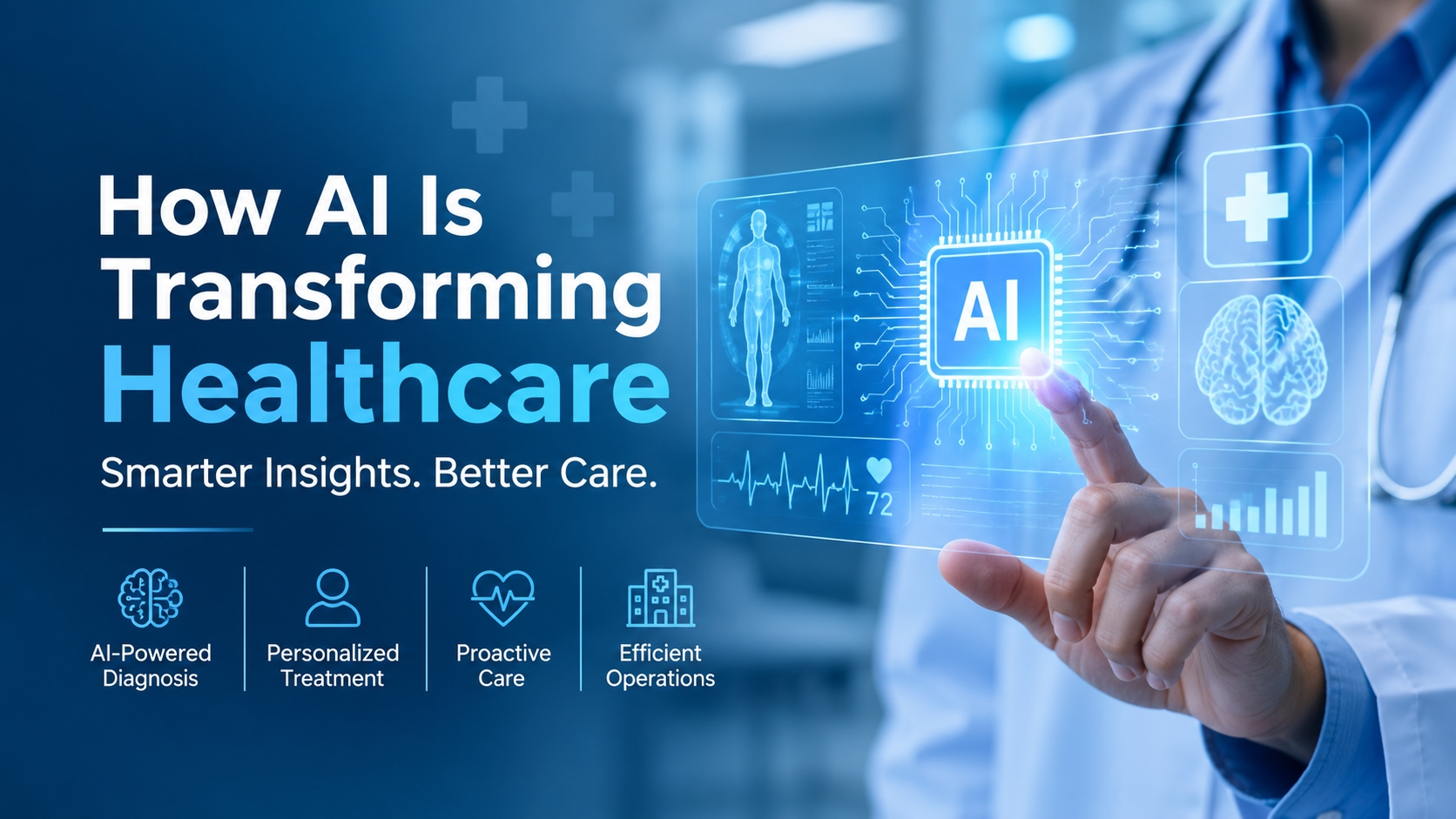
Healthcare is becoming increasingly dependent on digital information. Patient records, diagnostic reports, laboratory results, and treatment histories are now managed through a growing range of software systems. While this shift has made information more accessible, it has also created a challenge: how can healthcare organizations turn large volumes of data into something useful for everyday clinical and operational decisions?
Artificial intelligence is becoming part of the answer.
Instead of relying entirely on manual data review, healthcare organizations are exploring AI-powered tools that can process information, recognize patterns, and assist professionals with different aspects of their work.
From Digital Records to Useful Insights
Electronic health records have made it easier to store and retrieve patient information. However, reviewing extensive medical histories can still be time-consuming.
AI can help make this process more efficient by identifying relevant details, summarizing patient information, and highlighting patterns across different records.
For example, a clinician reviewing a patient's history may benefit from an AI-generated summary of previous diagnoses, medications, and test results. The summary can provide a useful starting point, while the healthcare professional remains responsible for reviewing the information and making clinical decisions.
The Role of AI in Healthcare Software Development
AI is also influencing how healthcare applications are designed and developed.
Modern healthcare platforms increasingly incorporate intelligent features that work alongside existing systems. These may include automated documentation, conversational interfaces, predictive analytics, and tools for extracting information from unstructured medical documents.
However, developing these capabilities requires more than integrating an AI model.
Healthcare software must account for data security, interoperability, system performance, and regulatory requirements. Developers also need to consider how AI-generated information will be displayed, reviewed, and corrected by end users.
A technically advanced solution is only useful when it fits naturally into the workflows of healthcare professionals.
Why Interoperability Is Important
Healthcare information is often distributed across multiple platforms. Hospitals may use separate systems for patient records, laboratory operations, medical imaging, billing, and appointment management.
When these systems cannot communicate effectively, information becomes fragmented.
Interoperability standards such as HL7 and FHIR help different healthcare applications exchange structured information. Integrating AI capabilities with these systems can make relevant data more accessible across connected workflows.
This is particularly important when an AI solution needs information from multiple sources to generate a useful summary or analytical insight.
Addressing Data Privacy and Reliability
Healthcare applications handle sensitive personal information, which makes privacy a central part of AI implementation.
Organizations must carefully evaluate data access, storage, encryption, third-party integrations, and model providers. They should also establish clear policies around whether patient information can be used for model training.
Another consideration is the reliability of AI-generated outputs. Language models, for instance, can produce convincing responses that contain inaccurate information. In healthcare environments, such outputs should be validated before being used in clinical workflows.
Human review, audit trails, access controls, and continuous monitoring help establish a more responsible implementation approach.
What Comes Next for Healthcare Technology?
The development of generative AI, multimodal models, and agentic systems is creating new possibilities for healthcare software.
These technologies may help applications work with different types of medical information, support more connected workflows, and make information retrieval easier for healthcare teams.
However, the most valuable solutions will not necessarily be the ones with the most advanced technology. Their success will depend on how effectively they solve real healthcare problems while maintaining security, usability, and reliability.
AI is becoming an important part of healthcare's digital evolution. Its long-term impact will depend on building systems that combine intelligent capabilities with dependable software engineering and appropriate human oversight.
For a broader look at where these technologies are being applied, explore AI in Healthcare 2027: 12 Key Applications and Trends Transforming Patient Care.