
Expanding software development capabilities across international markets requires more than hiring developers. Businesses must establish the right infrastructure, build reliable teams, maintain delivery standards, and manage daily operations. The Build-Operate-Transfer (BOT) model provides a structured way to achieve these goals while creating a pathway toward complete business ownership.
Understanding the BOT Model
The Build-Operate-Transfer model is a strategic partnership in which a technology provider establishes and manages a dedicated development center on behalf of a business. Once the center reaches the agreed operational milestones, ownership and responsibilities are transferred to the client.
The build operate transfer model software development strategy is particularly valuable for enterprises that want to establish long-term engineering capabilities without managing the entire setup process independently.
Three Stages of the Build-Operate-Transfer Model
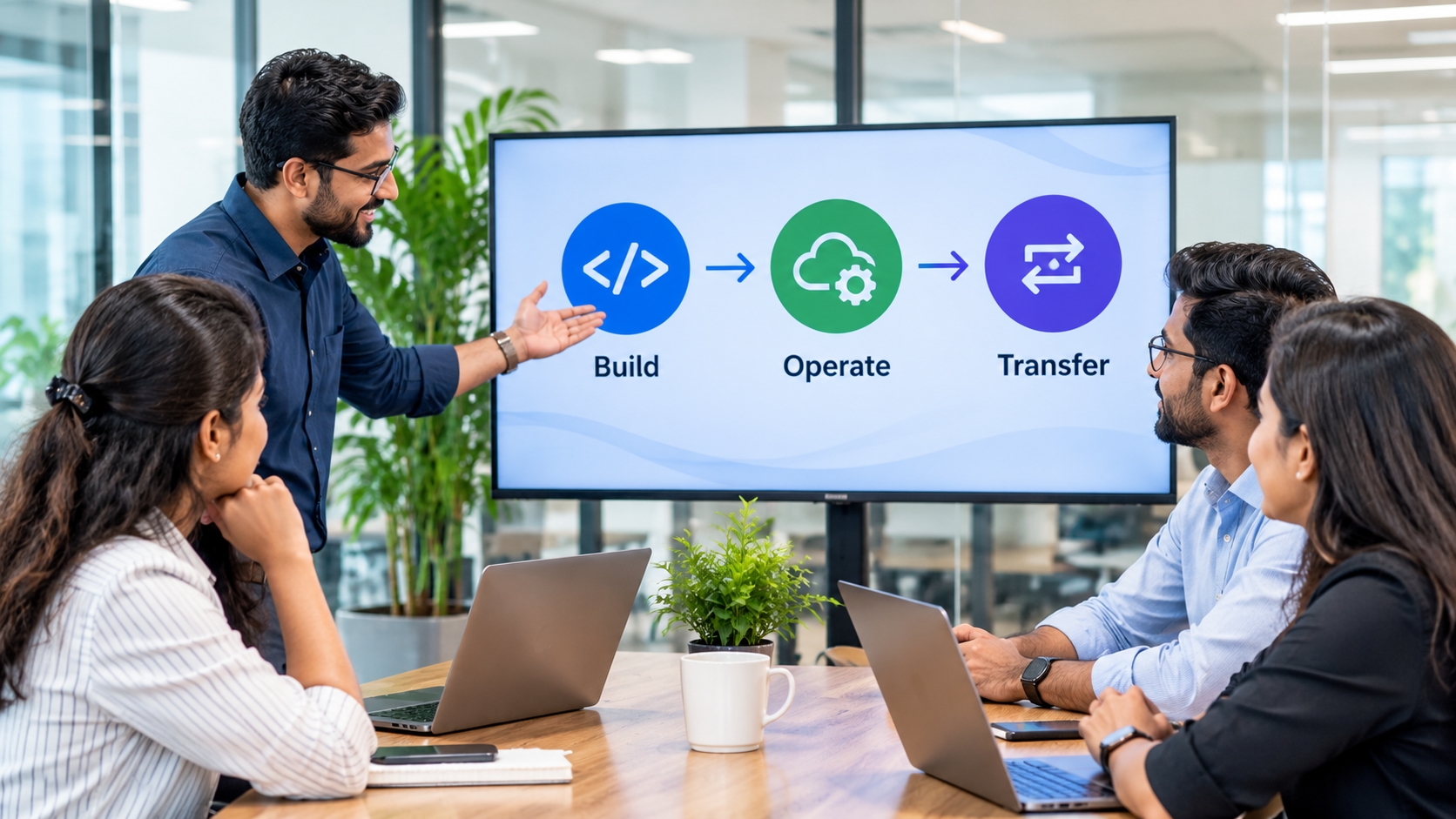
A successful BOT engagement involves three connected stages that support the transition from an externally managed setup to an independently operated development center.
1. Build: Creating the Foundation
The first stage focuses on establishing the development environment. The technology partner identifies business requirements, recruits qualified developers, selects appropriate technologies, and sets up infrastructure. Security policies, project management systems, and quality assurance processes are also introduced to create a reliable working environment.
2. Operate: Driving Development and Performance
After the setup is complete, the partner manages daily operations and ensures consistent project delivery. Responsibilities may include team management, software engineering, testing, DevOps, performance monitoring, and technical support. During this stage, the team develops a deeper understanding of the client's products, workflows, and business objectives.
3. Transfer: Establishing Independent Operations
The final stage involves transferring the development center to the client. This includes team ownership, operational documentation, intellectual property arrangements, infrastructure access, and management responsibilities. A structured knowledge transfer process helps maintain business continuity and reduces operational disruption.
Why Are Businesses Adopting the BOT Approach?
Companies increasingly need flexible ways to expand their technology operations. The BOT model supports this requirement through several business advantages:
Operational Flexibility: Establish a dedicated engineering team with support from an experienced technology partner.
Access to Specialized Skills: Build teams with expertise in AI, machine learning, cloud computing, cybersecurity, and custom software development.
Lower Setup Complexity: Reduce the initial burden of recruitment, infrastructure planning, and operational management.
Greater Business Control: Move toward direct ownership of teams, processes, and technology assets.
Long-Term Capability Building: Retain technical knowledge and develop internal engineering expertise.
Is BOT the Right Choice for Your Business?
The BOT model can be a suitable option for enterprises planning offshore development centers, international expansion, product engineering, or large-scale digital transformation initiatives.
However, businesses should establish clear agreements covering intellectual property, employee retention, transfer timelines, security, documentation, and post-transfer support before starting the engagement.
Build Your Engineering Capabilities with Seasia Infotech
Establishing a successful development center requires the right combination of technical expertise, operational planning, and long-term vision. Seasia Infotech helps businesses build and operate dedicated engineering teams while preparing them for a smooth ownership transition.
Whether you are expanding into a new market or scaling your software development operations, the BOT approach can help turn your technology expansion plans into sustainable capabilities.



