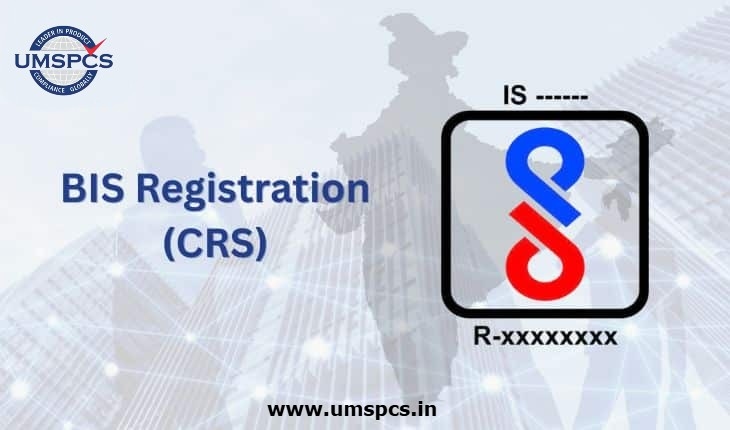
Manufacturers planning to sell electronic and IT products in India may need to comply with the Bureau of Indian Standards (BIS) Compulsory Registration Scheme (CRS). This scheme helps ensure that products covered by the applicable government orders meet the relevant Indian Standards before they are manufactured, imported, distributed, or sold in India.
Under CRS, BIS grants registration to manufacturers based on conformity assessment requirements, including testing through BIS-recognised laboratories. Registered products must follow applicable Standard Mark and labelling requirements. The scheme operates under the BIS (Conformity Assessment) Regulations, 2018, and relevant product-specific government orders.
For manufacturers and importers, understanding the correct product category, applicable Indian Standard, testing requirements, and current implementation dates is essential before launching a product in the Indian market.
What Are the Latest BIS CRS Guidelines in 2026?
BIS CRS certification requirements can change when the government revises product orders, Indian Standards, implementation dates, or labelling requirements. Manufacturers should therefore check the latest official notifications rather than rely only on older checklists or previously issued certificates.
Important updates to review in 2026 include:
1. Amendments to the CRS product order
The official BIS Scheme II page lists amendments to the Electronics and Information Technology Goods (Requirements for Compulsory Registration) Order, 2021, including S.O. 1246(E), dated 10 March 2026. Manufacturers should review the applicable amendment to determine whether it affects their product category, standard, or compliance timeline.
2. New smartphone screen protector category
The official Scheme II listing records screen protectors for smartphones under IS 19348:2025, with a notification dated 21 September 2026. Businesses manufacturing or sourcing these products should check the actual notification for its scope, implementation date, exemptions, and applicable requirements before deciding when registration is required.
3. Updated safety standards for electronic products
The official BIS listing reflects the transition of various covered electronic and IT product categories to IS/IEC 62368-1:2023. This is relevant to product categories such as laptops, tablets, video monitors, and certain audio/video and information technology equipment.
Manufacturers should confirm the applicable standard and any transition arrangements for their exact product rather than assuming that an older test report or registration automatically satisfies the revised requirements.
4. Television-related standard changes
BIS's official CRS product list includes updated television-related entries involving IS 18112:2025, alongside applicable safety-standard requirements. The listing records an implementation date of 26 July 2026 for the television sets entry associated with IS 18112:2025.
The applicable requirements can differ by product category and notification. Manufacturers should check the latest official product listing and relevant government order before relying on a particular standard or implementation date.
Important: The points above are based on the official BIS CRS listings available at the time of preparing this article. The applicable notification, product scope, implementation date, exemptions, and transition provisions should be verified before taking compliance decisions.
Official references:
Which Products Come Under BIS CRS Certification?
CRS covers product categories notified by the relevant government authorities. The applicable Indian Standard depends on the product category and current notification.
Examples of product categories appearing in the official CRS listings include:
Mobile phones
Laptops, notebooks, and tablets
Power banks
Power adaptors
LED lamps and specified LED lighting products
Electronic games
Televisions and specified display equipment
Smart watches
Wireless headphones and earphones
Bluetooth speakers
CCTV cameras and recorders
Digital cameras and webcams
UPS and specified inverters
Batteries and specified photovoltaic products
Extended reality products, including certain augmented and virtual reality equipment
Smartphone screen protectors, subject to the applicable notification and requirements
This is an illustrative list, not a complete list of products requiring CRS. A product's commercial name alone is not enough to establish whether it is covered. Its specifications, intended use, classification, relevant Indian Standard, and applicable government order must be checked.
Who Needs BIS CRS Registration?
CRS registration is generally granted to the manufacturer, rather than simply to a trader, distributor, or importer.
Both Indian and foreign manufacturers may need to obtain registration for products covered by the applicable order.
Indian manufacturers
An Indian manufacturer should identify the applicable product category and Indian Standard, arrange testing through a BIS-recognised laboratory under CRS, and submit the prescribed application and supporting documents.
Foreign manufacturers
Foreign manufacturers intending to supply covered products to India must also assess CRS requirements. Where the foreign applicant has no liaison office or branch office in India, BIS guidelines require the appointment of an Authorised Indian Representative (AIR) in accordance with the applicable procedure.
The AIR's eligibility, appointment documents, undertakings, and responsibilities should be checked against the latest BIS requirements. Read more also: BIS Certificate for Foreign Manufacture.
Documents Required for BIS CRS Registration
The exact documentation depends on the product, manufacturer, application type, and current BIS requirements. Commonly required documents may include:
Manufacturer's business registration details
Factory address and manufacturing information
Product details, model numbers, and brand information
Technical specifications and product photographs
Circuit diagrams, critical component details, or other technical documents, where applicable
Original test report issued by a laboratory recognised by BIS under CRS
Authorisation documents, where applicable
Prescribed affidavit-cum-undertaking
AIR nomination and supporting documents for applicable foreign applicants
Application forms and fee-payment details
Additional documents requested during BIS scrutiny
Applicants should use the latest official checklist and prescribed formats. Submitting an old format or incomplete documentation can lead to queries and delays.
BIS CRS Certification Process: Step by Step
Step 1: Check product applicability
Confirm whether the product is covered under a current compulsory registration order. Identify the correct product category, Indian Standard, implementation date, and any relevant exemptions or transition provisions.
Step 2: Review the technical requirements
Check the applicable standard and determine the testing requirements for the product and model. This is particularly important when a standard has been revised or a transition period applies.
Step 3: Arrange product testing
Submit the product for testing through a laboratory recognised by BIS under CRS for the relevant product and standard. Ensure that the model and technical details in the test documentation match the intended application.
Step 4: Prepare the application
Compile the technical and business documents, prescribed declarations, manufacturer details, and other supporting records. Foreign applicants should also ensure that their AIR documentation is in order where required.
Step 5: Submit the application and fees
Submit the prescribed online application through the relevant BIS CRS process and pay the applicable fees. Follow the current instructions regarding original reports, hard-copy submissions, or other required formalities.
Step 6: Respond to BIS queries
BIS may raise queries or request clarification during scrutiny. Responding accurately and promptly helps avoid unnecessary delays.
Step 7: Receive registration and follow labelling requirements
Once the application satisfies the applicable requirements, BIS may grant registration. The manufacturer must then comply with the relevant Standard Mark, registration number, labelling, and ongoing compliance requirements.
Note: Registration is not guaranteed merely because an application has been submitted or a test report has been obtained. The final decision rests with BIS under the applicable rules and requirements.
How Long Does BIS CRS Registration Take?
The time required depends on product testing, laboratory availability, document completeness, application scrutiny, and the time taken to resolve queries.
The official CRS application guidance has stated a normal processing time of 20 working days, while also noting that incomplete applications and delayed responses can cause additional delays. This should not be treated as a guaranteed end-to-end timeline, since testing and document preparation may take additional time.
Manufacturers should plan their product launch and import schedules with sufficient allowance for testing, application preparation, and regulatory review.
What Is the Cost of BIS CRS Certification?
There is no single universal cost for every CRS application. The overall expense may include:
Product testing charges
BIS application and registration-related fees
Sample preparation and transportation
Technical documentation and compliance work
AIR-related arrangements for applicable foreign manufacturers
Consultancy or application-support fees, if engaged
The final cost depends on the product category, applicable standard, number of models, testing requirements, laboratory charges, and the latest official fee schedule. Obtain a product-specific estimate rather than relying on a generic price advertised online.
Common Mistakes Manufacturers Should Avoid
Manufacturers can reduce avoidable compliance problems by checking the following before applying:
Using an outdated standard: Confirm whether the product's applicable Indian Standard has been revised.
Choosing the wrong product category: Match the actual product specifications with the official CRS order.
Submitting mismatched model details: Ensure that model names, brand details, and technical information are consistent across documents and test reports.
Using an unrecognised laboratory: Confirm that the laboratory is recognised under CRS for the relevant product and standard.
Overlooking foreign manufacturer requirements: Check AIR appointment and prescribed undertaking requirements where applicable.
Ignoring labelling requirements: Review the current instructions for using the Standard Mark and registration number.
Assuming every product requires CRS: Verify applicability under the relevant notification; other regulatory schemes may apply to products outside CRS.
How UMSPCS Can Help with BIS CRS Registration
UMS Product Compliance Services Pvt. Ltd. (UMSPCS) supports manufacturers and businesses working through product compliance requirements for the Indian market.
Our CRS-related support may include:
Initial product applicability assessment
Identification of the relevant Indian Standard
Guidance on documentation and application preparation
Coordination support for product testing
Assistance with application submission and query responses
Guidance for foreign manufacturers on AIR-related documentation
Support in understanding applicable Standard Mark and labelling requirements
The scope of support depends on the product and the applicable regulatory requirements. Registration decisions remain with BIS, and no approval outcome or timeline can be guaranteed in advance.
Frequently Asked Questions (FAQs)
1. What is BIS CRS Certification?
BIS CRS Certification is a registration scheme for products covered by applicable compulsory registration orders. Manufacturers must meet the relevant requirements, including applicable testing and marking requirements, before supplying covered products to the Indian market.
2. Is BIS CRS mandatory for all electronic products?
No. CRS applies to products covered by the relevant government orders. Applicability should be checked against the current official product list, notifications, and exemptions.
3. Can a foreign manufacturer apply for BIS CRS Registration?
Yes. Foreign manufacturers can apply for covered products. A foreign applicant without a liaison office or branch office in India must appoint an Authorised Indian Representative in accordance with the applicable BIS guidelines.
4. Is a BIS-recognised laboratory test report required?
The official CRS application procedure requires original test reports issued by laboratories recognised by BIS under CRS. The applicable test requirements depend on the product and relevant Indian Standard.
5. What are the latest BIS CRS updates for 2026?
The official BIS Scheme II listing records the 10 March 2026 amendment to the 2021 order and lists smartphone screen protectors under IS 19348:2025 with a notification dated 21 September 2026. It also reflects standard changes for specified electronic product categories. Applicants should verify each applicable notification for scope and implementation details.
6. Can one CRS registration cover multiple models?
The official CRS guidance provides for requests to include additional models of the same product and brand under an existing registration number, subject to the applicable conditions. Manufacturers should confirm eligibility and documentation before proceeding.
7. How long is BIS CRS registration valid?
The official CRS application guidance states that registration is initially granted for two years and is renewed thereafter in accordance with the applicable requirements. Check current BIS guidance for renewal procedures and any subsequent changes.
8. Can a consultant guarantee BIS CRS approval?
No consultant can guarantee a regulatory decision. A consultant can help with applicability checks, documentation, testing coordination, and application follow-up, but BIS decides whether the requirements for registration have been met.
Get Assistance with BIS CRS Certification
If your company manufactures or exports electronic products to India, it is important to confirm the correct product category, applicable standard, and current CRS requirements before proceeding with testing or shipment.
UMSPCS can help you understand the compliance steps and prepare for the applicable registration process.
UMS Product Compliance Services Pvt. Ltd. (UMSPCS)
Phone: +91 7011067811
Website: https://umspcs.in/
Services: BIS CRS registration support, product applicability assessment, testing coordination, and documentation assistance
Contact UMSPCS to discuss your product and determine the next compliance steps.