Kazakh food tells the story of a nomadic past, with hearty meat dishes, fermented dairy, homemade bread, noodles and sweet treats at the centre of it. It's also closely tied to hospitality, family gatherings and celebrations. If you're travelling through Central Asia, the dishes you eat in Kazakhstan are likely to be some of the most memorable parts of the trip.
Kazakh cooking grew out of a pastoral way of life in which horses, sheep and cattle (and camels in some regions) were central to daily living. Today you can try traditional food in restaurants, cafés, markets and family-run places in cities such as Almaty, Astana, Shymkent and Turkistan. If you're planning a trip from Dubai, Kazakhstan tour packages from Dubai can include food experiences alongside the main sights, so you taste the country as well as see it. Here are the best things to eat in Kazakhstan.
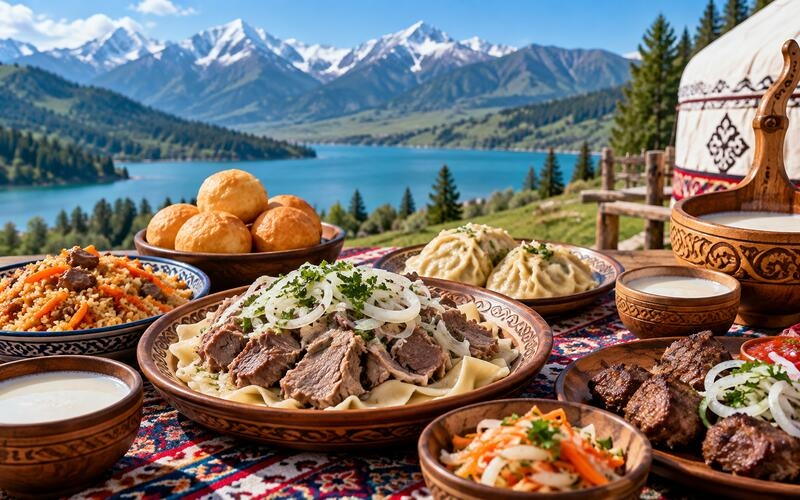
Beshbarmak: The National Dish
Beshbarmak is the dish most closely tied to Kazakh hospitality. The name means "five fingers," because it was traditionally eaten by hand. It's boiled meat served over wide, thin sheets of homemade noodle, with onions and a rich broth. The meat can be horse, lamb or beef, depending on the cook and the region.
The way it's made matters as much as the taste. The meat is simmered slowly until it's tender, and the noodle sheets are boiled in the meat broth, then spread over a large platter and topped with meat and onions. It's often served for guests and at celebrations, so it's worth trying at least once to understand the link between food and hospitality in Kazakh culture.
Kazy: A Traditional Horse Meat Delicacy
Kazy is a traditional cured horse-meat sausage and a delicacy at feasts, especially in the colder months. It's made from seasoned horse meat, usually rib meat, and is often served in slices alongside beshbarmak and other meat dishes.
If you're from overseas, kazy may be a new flavour. It's richer and more distinctive than regular beef or chicken, and it's usually served in small slices as part of a bigger meal. For the most authentic taste, look for restaurants that serve home-style dishes.
Kuyrdak: A Hearty Fried Meat Dish
Kuyrdak is a fried meat dish closely linked to Kazakhstan's pastoral cooking. Depending on the recipe, it's made with meat and organ meats such as liver, heart or kidneys, fried with onions and sometimes potatoes. It's rich, filling and very satisfying.
It's a good choice if you like hearty, strongly flavoured food. Every household and region has its own version, so the taste and texture vary between restaurants. Trying it in a traditional restaurant shows how Kazakh cooks made the most of livestock products with simple methods.
Baursak: Golden Fried Dough
Baursak is one of the easiest traditional foods for visitors to enjoy. These small pieces of dough are fried until golden outside and soft inside. They're served with tea, honey or cream, or alongside savoury dishes and soups.
Baursak is more than a bread substitute. It stands for warmth, generosity and welcoming guests, and you'll find it at breakfast, tea time, special occasions and big traditional feasts. It has a mild flavour, so it's a friendly option if you want something familiar while you try new things.
Kymyz: Fermented Mare's Milk
Kymyz is a traditional drink of fermented mare's milk, long associated with nomadic life. It has a slightly sour, fizzy taste and contains a small amount of alcohol from fermentation. It's linked especially with summer and hospitality, and it's still a part of Kazakh food culture.
It can be an acquired taste if you've never had fermented dairy. It doesn't taste like regular milk, so start with a small amount. If you avoid alcohol, remember that it's mildly alcoholic and ask before you try it.
Shubat: Fermented Camel Milk
Shubat is a tangy fermented camel's milk, closely linked to regions with a long camel-herding tradition. It's slightly fizzy, sour and quite distinctive.
It shows how traditional Kazakh food made use of different kinds of livestock and dairy. If you like to try local drinks, add shubat to your list. The flavour is unusual, so a small taste is enough to find out whether it's for you.
Kurt: Dried Salty Cheese
Kurt is a dried, salted dairy product, usually in small hard balls or pieces. It's firm and tangy, with a salty flavour. Preserved dairy like this was valuable for nomadic communities, since it was easy to store and carry. It still has a place on the traditional dastarkhan, the Kazakh dining table.
You can buy kurt at markets and shops in many shapes and sizes. It travels well and makes an interesting snack for the road. It's strong and salty, so it's best for people who like bold flavours.
Shelpek and Traditional Breads
Shelpek is a traditional flatbread, made from dough and fried in a simple way. It goes well with meals and is an everyday part of Kazakh eating. Kazakh cuisine includes many breads and dough dishes, which balance a diet that leans heavily on meat.
If you're not sure about unfamiliar meats or fermented drinks, local breads are a gentle way to start. A fresh piece of bread with tea or a main dish adds some variety to the meal.
Naryn: Noodles with Meat
Naryn is a traditional dish of thin noodles with boiled meat, and it's close in spirit to beshbarmak. It's a filling dish, served as a hearty meal.
If you like noodles, it's a friendly way to try local cooking. The mix of noodles and meat shows the simple, filling style of typical Kazakh food. Recipes and serving styles vary by region and restaurant.
Kazakh Sweets and Dairy Treats
Sweets and dairy treats balance heavier meals. Irimshik is a traditional dairy product made by boiling milk into curds, with a mildly sweet taste. Zhent is a crumbly sweet, often made with millet, butter and honey or sugar, and it's served at celebrations. Both are popular with visitors and make good souvenirs.
After a run of meat-heavy dishes, they offer a gentler side of Kazakh food. You can find them in markets, specialist shops and some restaurants, and some are neatly wrapped for gifts.
Where to Eat
Almaty and Astana have plenty of restaurants where you can try traditional or modern Kazakh cooking. Almaty in particular has a rich food culture, with Kazakh cuisine alongside Uyghur, Russian, Uzbek, Korean and Turkish influences.
Local markets are great for snacks, dairy, breads, sweets and prepared foods, so try both restaurants and markets to get the full picture. If a dish is unfamiliar, ask the staff what's in it. It makes ordering easier and more fun.
Tips for Exploring Kazakh Cuisine
Go in with an open mind, because some ingredients will be new. Many traditional dishes feature meat, especially horse, lamb and beef, along with fermented dairy products with strong flavours. If you eat halal, check ingredients and how food is prepared before you order.
Vegetarians should ask carefully, since meat or meat broth can appear in dishes that seem meat-free. If you have allergies or dietary restrictions, tell the restaurant staff before you order. Trying small portions of unfamiliar foods also helps you find what you like without ordering a huge meal.
Conclusion
Kazakh food is more than something to eat. It gives you a feel for the country's history, hospitality, geography and nomadic culture. Meat, dairy, flour and preserved foods make up the traditional table, built up over many generations. Beshbarmak, kazy, baursak, kurt, kymyz and shubat are the classics to look for.
If you're planning a trip to Central Asia, put Kazakh food on your itinerary. Tasting traditional dishes at local markets and restaurants lets you experience Kazakhstan beyond its landscapes and landmarks, and you'll come home with a sense of the warmth that goes with it.