
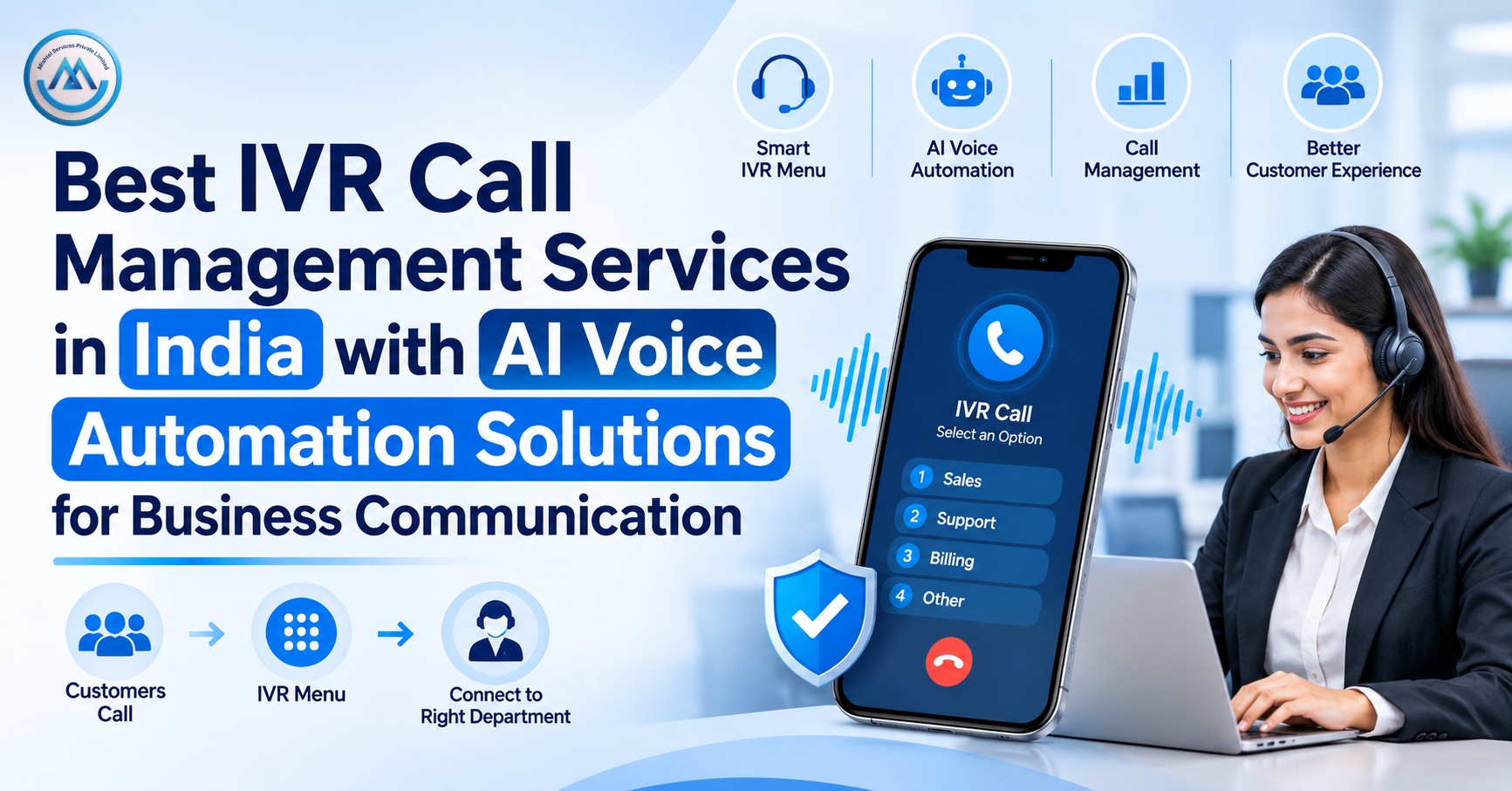
Every business gets calls all day. Customers ask about prices, orders, bookings, payments and complaints. As a company grows, calls arrive faster than a team can answer them.
This leads to common problems:
Customers wait too long for a reply
Calls reach the wrong department
Agents answer the same questions again and again
Business calls go unanswered
Support teams carry a heavy workload
Many incoming calls are hard to manage at once
IVR call management services in India help fix these issues. An IVR system answers each call and directs it. An AI Voice Agent can then talk with the customer and handle routine questions. Combined, they create a smarter, automated call management system. This guide explains how each one works and how a call travels through both.
What Is an IVR Call Management System?
IVR stands for Interactive Voice Response. It is an automated phone system that answers calls, plays recorded messages and takes the caller’s choice through the phone keypad. Businesses use an IVR service so every call is picked up and sent to the right place, without a receptionist handling each one.
Here is a simple example. A customer calls a support number and hears:
“Welcome to our customer support. Press 1 for Sales, Press 2 for Technical Support, Press 3 for Billing and Press 4 for General Enquiries.”
The customer presses 3. The IVR reads this as a billing request and sends the call to the billing team, or to the next step set in the call flow. The customer did not have to explain anything to a person first.
How Does an IVR System Work? Step-by-Step Call Flow
The customer dials the business phone number.
The IVR system receives the incoming call.
An automated welcome message plays.
The customer listens to the menu options.
The customer selects an option on the phone keypad.
The IVR system identifies the selected option.
The call is routed to the relevant department or agent.
If the agent is unavailable, the system uses a set alternative, such as a call queue, voicemail or call forwarding.
This keeps incoming calls organised and reduces manual call handling. An IVR follows fixed rules, so it works best for sorting and directing calls.
Read more the full guide