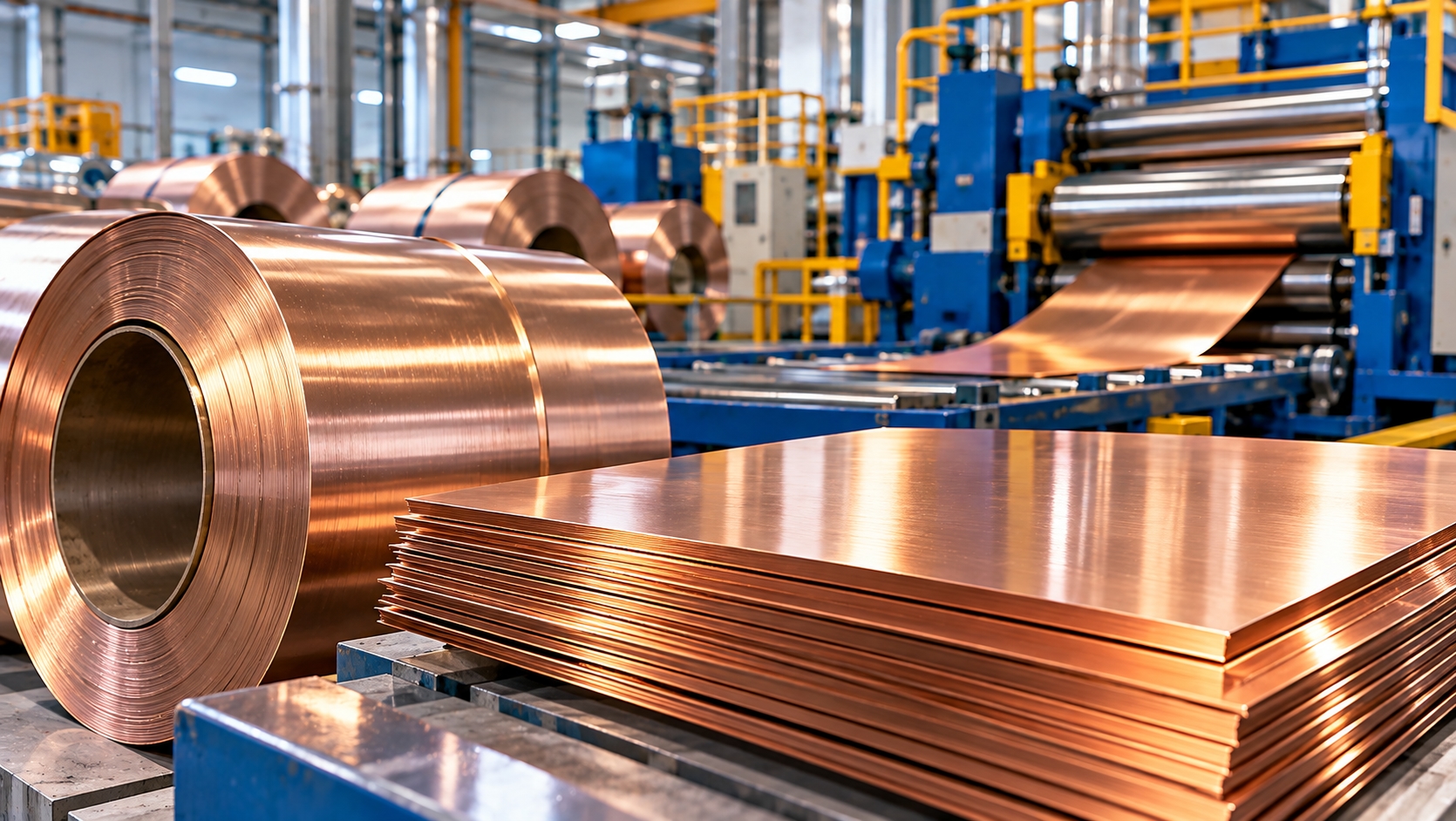
Beryllium copper occupies a genuinely unusual niche in the metals world. It combines the electrical and thermal conductivity people expect from copper with mechanical strength closer to that of a high-grade steel alloy, which is exactly why it shows up in non-sparking tools, aerospace connectors, precision springs, and electrical contacts where both conductivity and durability matter at once. Producing beryllium copper sheets, though, comes with a complication most metal alloy plants never have to think about: beryllium and its compounds are classified as hazardous, with airborne beryllium dust and fume linked to serious respiratory disease. That single fact reshapes the entire cost structure of this business, and it's exactly why a Beryllium Copper Sheets Production Cost Report needs to weigh occupational safety infrastructure as heavily as it weighs metallurgy.
Investors, business brokers, corporate advisers, and finance companies evaluating a beryllium copper sheet manufacturing facility need to look past the alloy's attractive performance properties and ask harder questions about beryllium exposure control, regulatory compliance costs, and how concentrated the global beryllium supply chain actually is. A plant that's cutting corners on beryllium handling infrastructure isn't just a cost outlier, it's carrying real legal and health liability that a standard metals valuation model won't surface on its own.
What a Production Cost Report Actually Covers
A thorough cost report follows the full path from raw copper and beryllium feedstocks through to finished, rolled beryllium copper sheet product. That includes the alloying and rolling process itself, the raw materials and master alloy inputs consumed, the utilities required for melting and thermal treatment, the infrastructure needed to control beryllium exposure throughout handling and processing, the melting, casting, and rolling equipment involved, the specially trained manpower required to work safely with a hazardous alloying element, and the packaging and transportation requirements for a precision metal product that often needs to meet tight dimensional and temper specifications.
Why does a financial buyer need this broken apart rather than one blended figure? Because beryllium handling costs behave nothing like standard copper alloy processing costs. Copper feedstock pricing tracks global copper markets, a widely traded and relatively transparent commodity. Beryllium, by contrast, is sourced as a master alloy from a genuinely small number of specialized suppliers globally, and its handling requires dedicated ventilation, monitoring, and personal protective equipment systems that a standard copper alloy rolling mill simply doesn't need. A report that separates these categories lets an adviser see clearly how much of total cost is generic copper alloy processing and how much is specifically tied to the beryllium hazard management that defines this business.
Good reports also benchmark a facility's safety compliance posture and beryllium exposure monitoring program against industry and regulatory standards, since a plant that's behind on this front carries meaningfully more operational and legal risk than one that's current, even if their raw material costs look similar on paper.
Raw Materials Required for Beryllium Copper Sheets Production
The primary raw materials are high-purity copper and a beryllium-copper master alloy, since pure beryllium metal is rarely handled directly in alloy production; instead, a pre-alloyed master alloy containing a higher, controlled concentration of beryllium in copper is added to a copper melt to achieve the target final composition, typically in the range of one to two percent beryllium along with small additions of cobalt or nickel depending on the specific alloy grade being produced.
Beryllium itself is sourced from a genuinely concentrated global supply chain, with a small number of countries and companies accounting for the bulk of beryllium ore extraction and master alloy production, which creates a real supply concentration risk that a buyer needs to weigh carefully, not unlike the geographic concentration seen in other specialty metal supply chains. Cobalt or nickel additions, used to refine grain structure and mechanical properties in certain beryllium copper grades, add another layer of raw material sourcing to track, since both of these elements carry their own separate price volatility tied to battery and specialty alloy demand elsewhere in the economy.
Fluxing agents and protective atmosphere gases used during melting to minimize oxidation and control the melt environment round out the input list, along with rolling lubricants and process consumables used through the sheet forming stages. This concentrated, hazard-intensive raw material profile is exactly why a Beryllium Copper Sheets Production Cost Report needs to treat beryllium master alloy sourcing as its own distinct risk category rather than folding it into generic non-ferrous metal commentary.
The Production Process, Industrially Speaking
Industrial beryllium copper sheet production begins with melting high-purity copper together with the beryllium-copper master alloy and any cobalt or nickel additions in a controlled furnace environment, typically under a protective or inert atmosphere to minimize oxidation and control beryllium fume release during melting, which is one of the more hazardous points in the entire process given how airborne beryllium exposure risk peaks during high-temperature melting and pouring operations.
Once melted and properly alloyed, the molten metal is cast into ingots or, in some continuous casting operations, directly into a form suitable for subsequent hot rolling. The cast material then goes through a hot rolling stage to break down the as-cast grain structure and begin reducing thickness toward the target sheet gauge, followed by cold rolling passes with intermediate annealing steps to achieve the specific combination of thickness, temper, and mechanical properties the final product specification requires.
A defining feature of beryllium copper processing is the precipitation hardening heat treatment step, where the alloy is heated to a specific temperature to dissolve beryllium into solid solution, then aged at a lower temperature to precipitate fine beryllium-rich particles that give the alloy its characteristic high strength. Getting this heat treatment cycle right is critical to achieving target mechanical properties, and it requires precise temperature and time control throughout. Every stage of this process, from melting through final finishing, requires ventilation and dust control systems to manage beryllium exposure risk to workers, and this isn't a peripheral consideration, it's built into how the entire production line operates.
Capital Investment and Plant Setup Cost Factors
Setting up a beryllium copper sheet production facility requires substantial investment in exposure control infrastructure from the very first design decisions, well beyond what a standard copper alloy rolling mill would need. Dedicated ventilation systems with high-efficiency particulate filtration, enclosed or semi-enclosed melting and casting operations, and continuous air monitoring systems to track beryllium concentration levels throughout the facility represent a capital category that simply doesn't exist in most other metal alloy processing plants.
Core metalworking equipment, including melting furnaces, casting equipment, and hot and cold rolling mills, follows patterns similar to other copper alloy processing operations, though furnace design needs to accommodate the atmosphere control required to manage beryllium fume during melting. Engineering and design work needs to prioritize worker exposure control and regulatory compliance from the outset, since retrofitting adequate beryllium exposure control systems into a facility not originally designed for it is both expensive and, in many jurisdictions, essentially required before a plant can operate legally given how strictly beryllium exposure limits are regulated in most developed markets.
Working capital requirements are shaped by beryllium master alloy sourcing given its concentrated global supply, and a plant with secured supply relationships from established master alloy producers carries meaningfully different working capital and supply risk characteristics than one relying on a more fragmented sourcing approach.
Operating Cost Factors Once the Plant Is Running
Once operational, variable costs are driven by copper and beryllium master alloy consumption, with beryllium master alloy typically representing a disproportionately large share of raw material cost relative to its actual volume in the finished alloy, given how expensive and tightly supplied beryllium is compared to copper. Fixed costs include facility overhead, and here beryllium exposure monitoring and occupational health program costs represent a genuinely significant, continuous expense category rather than a minor compliance line item, given the health consequences at stake if exposure controls fail.
Labor costs reflect the need for workers trained specifically in beryllium-safe handling practices, along with the ongoing medical surveillance programs that responsible beryllium processing operations maintain for their workforce, both of which push total labor-related costs higher than a comparable-scale conventional copper alloy plant would carry. Maintenance costs include not just standard rolling mill and furnace upkeep but also the ongoing maintenance and periodic replacement of ventilation filtration systems, which need consistent performance to maintain safe airborne beryllium concentration levels.
Financing and depreciation considerations carry real weight here. Beryllium-specific processing and exposure control equipment has a narrower secondary market than general copper alloy rolling equipment, and insurance costs for a facility handling a recognized occupational hazard like beryllium tend to run meaningfully higher, both factors a lender needs to weigh in any collateral or risk assessment.
What Pushes Costs Up or Down
Feedstock pricing leads the list, and beryllium master alloy is by far the more consequential and less predictable of the two main inputs, given how concentrated global beryllium supply is among a small number of producers. Trade policy shifts or supply disruptions affecting that narrow producer base can meaningfully affect beryllium copper production cost and availability industry-wide, in a way that copper's much more liquid, widely traded market simply doesn't experience.
Technology matters too, particularly around melting and casting efficiency, since better atmosphere control and yield optimization reduce both beryllium fume exposure risk and material waste simultaneously, a rare case where safety and cost efficiency point in the same direction. Scale plays a meaningful role as well, since the substantial fixed cost of beryllium exposure control infrastructure gets spread over greater production volume in a larger facility, giving bigger plants a genuine structural cost advantage in this particular industry.
Regional factors round out the picture significantly. Regulatory stringency around beryllium exposure limits varies by jurisdiction, and while stricter regulation generally means higher compliance costs, it also tends to correlate with a more predictable long-term operating environment than a region with looser or inconsistently enforced standards. Access to a workforce already experienced in beryllium-safe handling practices varies by region too, and that experience can meaningfully reduce training costs and improve safety program effectiveness. Doesn't it make sense that in a business shaped this heavily by both a concentrated raw material supply chain and serious occupational health stakes, the regulatory and labor environment matters just as much as copper and beryllium pricing themselves?
Frequently Asked Questions
Q: Why does beryllium exposure control add so much cost compared to a standard copper alloy operation?
Because airborne beryllium dust and fume are linked to serious, sometimes irreversible respiratory disease, so regulatory agencies in most developed markets impose strict exposure limits that require dedicated ventilation, filtration, and continuous air monitoring systems, none of which a standard copper or brass alloy rolling mill needs to install or maintain.
Q: How concentrated is the global beryllium supply chain really?
Quite concentrated, notably more so than copper. A small number of countries and companies account for the large majority of global beryllium ore extraction and master alloy production, which means supply disruptions or trade policy shifts affecting that narrow base can meaningfully affect availability and pricing for beryllium copper producers everywhere else.
Q: Does the precipitation hardening heat treatment step significantly affect production cost?
Yes, it adds real energy and time cost, since achieving the alloy's characteristic strength requires a precise two-stage heating and aging cycle that can't be rushed without compromising final mechanical properties, so this step represents a meaningful and unavoidable addition to total processing time and utility consumption.
Q: What's a compliance cost that buyers sometimes underestimate when evaluating this type of plant?
Ongoing medical surveillance programs for workers, beyond just the physical ventilation and monitoring infrastructure. Responsible beryllium processing operations maintain regular health monitoring for employees given the latency of some beryllium-related health effects, and that ongoing program cost isn't always obvious from a facility's capital equipment list alone.
Q: Does regional regulatory environment affect this industry as much as raw material sourcing does?
It really can, yes. Because beryllium exposure regulation varies meaningfully by jurisdiction, a plant operating under a clear, consistently enforced regulatory framework often faces more predictable long-term compliance costs than one in a region with weaker or shifting standards, even when both plants are sourcing beryllium from similar suppliers at similar prices.
Why This Report Matters When It's Time to Decide
A Beryllium Copper Sheets Production Cost Report gives investors, brokers, advisers, and lenders a genuinely clear view into a business where occupational safety infrastructure and a concentrated global beryllium supply chain matter just as much as the underlying metallurgy. The exposure control systems this process demands, the narrow pool of beryllium master alloy suppliers, and the ongoing worker health monitoring obligations all shape real cost and liability in ways a standard non-ferrous metals valuation would likely overlook. A carefully built cost report replaces that blind spot with a specific, defensible picture of where the cost, the risk, and the regulatory exposure genuinely sit, and that's exactly the foundation needed before any acquisition, financing, or valuation decision involving a beryllium copper sheet production facility.