You have been walking for twelve days and the last village is far behind you. There are no teahouses now, no Wi-Fi, and no other teams. Just tents on a glacier, a wall of blue ice above camp, and Everest watching from across the valley. This is the Baruntse Expedition, and it is the climb serious mountaineers whisper about while everyone else queues on the famous peaks.
The Mountain Between Two Worlds
Baruntse sits at 7,129 meters in the remote Khumbu region, surrounded by Everest, Lhotse, Makalu, and Ama Dablam. It fills a gap that matters enormously in a climbing career. Trekking peaks stop around 6,500 meters. The 8,000-meter giants begin in a completely different league. Baruntse sits perfectly in between. It is high enough to test your body in serious altitude, technical enough to demand real skill, yet forgiving enough to be achievable. Many climbers use it as their final exam before attempting Everest or Manaslu.
The Numbers Behind the Climb
A full Baruntse expedition usually takes 30 to 35 days from Kathmandu. The trek in covers roughly 90 to 110 kilometers through the Hinku and Hongu valleys. The summit stands at 7,129 meters, or 23,389 feet. You start in Lukla at 2,840 meters and cross Mera La at about 5,400 meters on the way in. Base camp sits near 5,400 meters, with Camp One around 6,100 meters and Camp Two near 6,400 meters. Summit day usually takes ten to fourteen hours from the high camp and back.
A Journey Into Empty Country
The approach alone separates Baruntse from other climbs. You fly into Lukla, then turn away from the busy Everest Base Camp trail almost immediately. The route climbs into the Hinku Valley, the same wild region used for Mera Peak. Many teams summit Mera first as acclimatization, which adds a bonus 6,476-meter peak to the trip. Then you cross Mera La and drop into the Hongu Valley, one of the emptiest places in Nepal. There are no villages here and no lodges. You camp beside frozen lakes with nothing but wind and ice for company. Crossing West Col at around 6,143 meters brings you finally to Baruntse Base Camp.
What the Climbing Involves
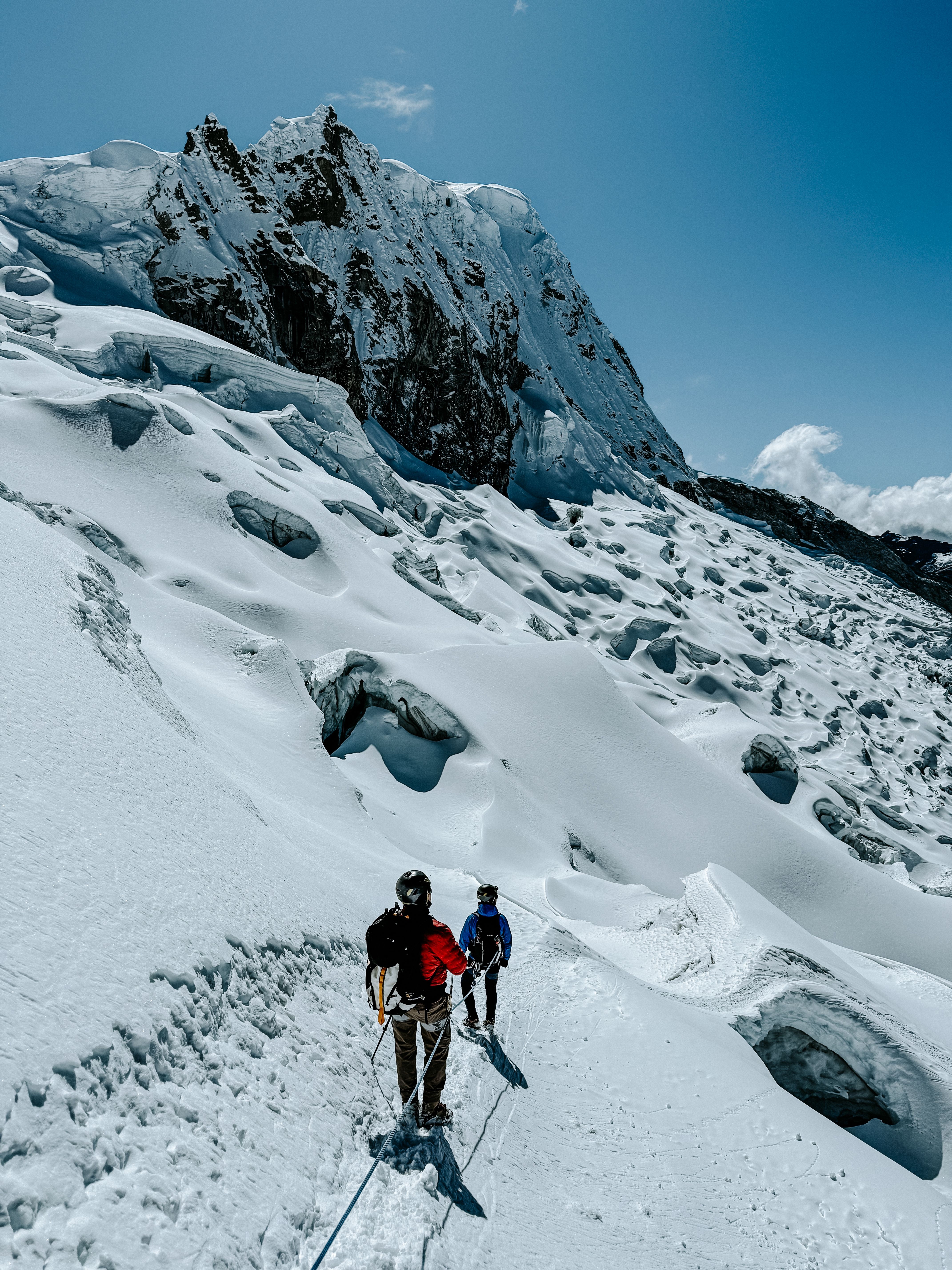
Baruntse is graded as a moderate technical climb, but that word hides real difficulty. The standard route follows the southeast ridge, which involves steep snow slopes, sections of blue ice, and a genuinely exposed final ridge. Fixed ropes are used on the harder pitches. You must be confident using a jumar, walking in crampons on hard ice, and moving safely in a rope team. Above 7,000 meters, the air holds well under half the oxygen you know at home. Most teams climb without bottled oxygen, which makes summit day extremely demanding. Weather is the other opponent, since wind on the summit ridge can be brutal.
Climbing With Nepal Social Treks and Expedition
On a remote 7,000-meter mountain, your support team is your lifeline. Nepal Social Treks and Expedition organizes guided Baruntse expeditions from Kathmandu. Their packages usually include the climbing permit, national park fees, experienced Sherpa climbing guides, fixed rope support, high-altitude tents, full base camp setup with kitchen staff, all meals during the expedition, porters and yaks for gear transport, and Lukla flights. Because the route passes through uninhabited valleys, every single item must be carried in, which takes serious logistics. Their team also handles rotation planning, weather forecasting, and emergency evacuation arrangements. The company runs other trips too, including Mera Peak, Island Peak, Ama Dablam, and Manaslu.
Picking Your Season
Autumn, from late September to November, is the main climbing season, offering stable weather and clear skies. Spring, from April to May, is the second option, with warmer temperatures but more unpredictable snow conditions. Winter brings savage wind and extreme cold that shuts the mountain down. Monsoon buries the approach valleys in cloud and heavy snow, making travel unsafe.
Who Should Attempt Baruntse?
This is not a first climb. You should already have summited at least one 6,000-meter peak, ideally something like Island Peak, Lobuche East, or Mera. Solid skills with ice axe, crampons, jumar, and rappelling are essential. Strong fitness matters, but mental endurance matters more, because you will spend weeks in tents far from any help. Train for at least six months with long hill walks carrying heavy packs.
Why It Rewards the Brave
Ask a Baruntse summiteer what stayed with them and few mention the height. They talk about the frozen lakes of the Hongu Valley. The silence at West Col. The morning light hitting Makalu while nobody else on earth stood where they were standing. Baruntse does not offer fame or crowds or comfortable lodges. It offers something rarer. A real mountain, a real test, and a summit earned entirely on your own terms.