Introduction
Consider a situation where a data pipeline finishes overnight. The sales reports still look incorrect. Cancelled orders may appear in the total. Now, the finance team wants to fix the figures before morning review. The data is already spread across hundreds of files. In this case, re-building everything form scratch takes a lot of time. Data engineers need a reliable way to store files and manage changes to handle these issues. One can join the Data Engineering Online Course to learn the industry best practices from expert professionals.
Why Ordinary Data Files Are Not Always Enough
With Cloud storage, it becomes easier to store large amounts of information. A retailer may store daily orders in Amazon S3. Those records are then for tasks like:
sales reports
customer analysis
inventory planning
The task becomes difficult when the data starts changing. New records keep coming every hour. Old records also need corrections. Managing such changes under individual files becomes complicated.
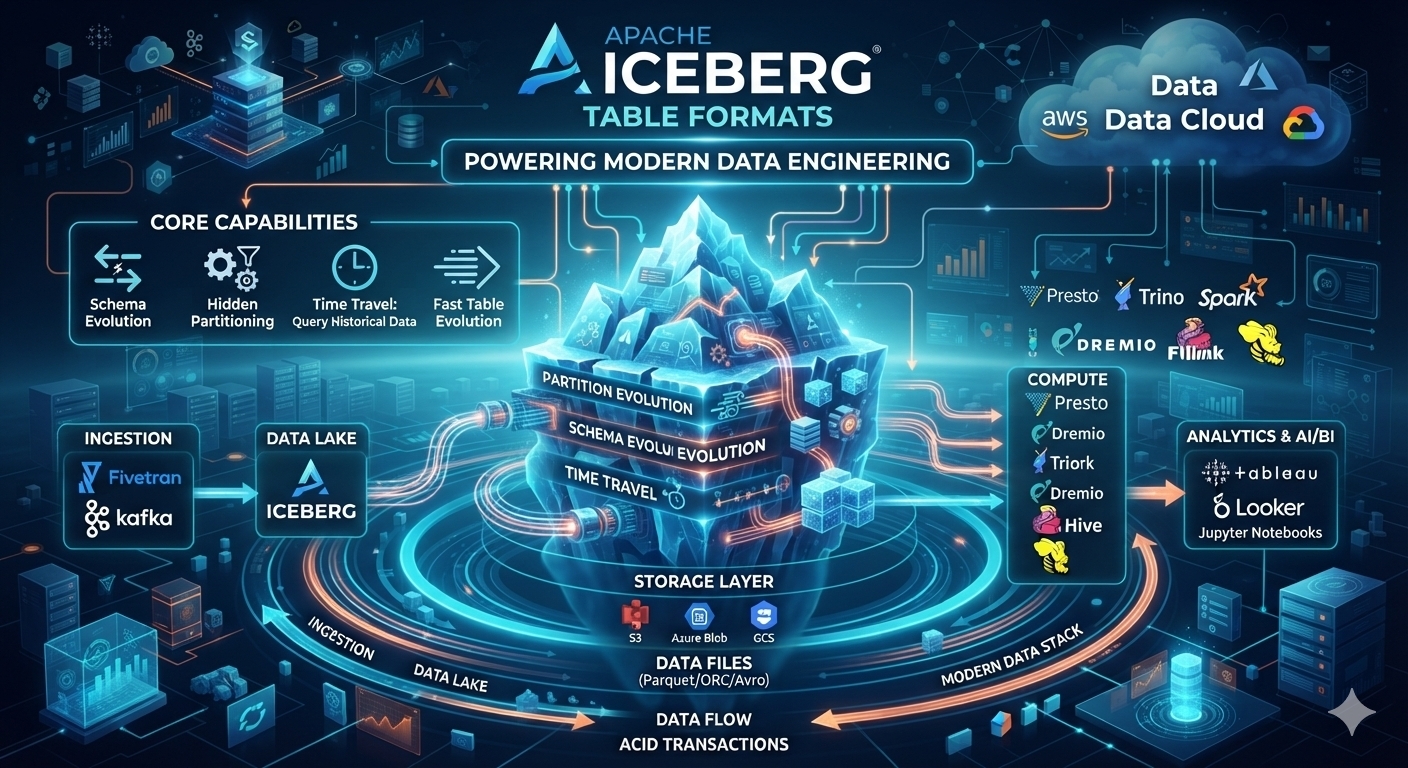
Apache Iceberg is designed to addresses this problem. It adds a table format over stored data. It tracks files from a table and maintains information about current state. The files stay in cloud storage. Engineers do not need to move their data into a traditional database to manage it in table form. With Iceberg, compatible processing engines work with the same table structure. This is useful when multiple teams work on the same dataset.
What Actually Happens Inside an Iceberg Table?
Iceberg separates records from information that is used to manage them.
An Iceberg table typically includes:
Data files: contain actual business records. Apache Parquet is the common storage format.
Metadata files: describe table and identify data files it uses.
Snapshots: represent a table's state at a point in time.
Consider an orders table containing several years of transactions. An engineer may correct a batch of records after they identify mistake in the source system.
Iceberg then updates the table's metadata once the change is done. This allows Readers to continue accessing a consistent and committed table state.
Snapshots offer another advantage. Every time a report changes unexpectedly, engineers compare the current data with the older version. This makes investigations easier. Beginners are suggested to join Data Engineering Certification Course for the best hands-on practice sessions.
Features That Solve Real Data Problems
Feature | Example of its use |
Schema evolution | Adding a new field to an existing orders table |
Time travel | Checking sales figures from an earlier snapshot |
Hidden partitioning | Managing date-based data without manually handling every partition detail |
Atomic commits | Making table changes visible as complete operations |
Schema evolution is particularly useful because business requirements rarely stay fixed. A logistics company may decide to record failed delivery attempts after its reporting system has been running for months. Iceberg supports changes to table structure. Users no longer need to re-build the entire dataset.
Hidden partitioning is helpful when tables become large. Suppose a company keeps transaction records for five years. An analyst may only needs the previous month's data. Iceberg manages partition information. This ensures that query engines can identify the relevant files more efficiently.
Working Across Different Data Engines
Suppose a data platform uses Apache Spark for batch processing, Trino for SQL-based analysis, and Apache Flink for streaming data. Iceberg offers a shared table format across these tools.
For instance, an online retailer could process overnight sales with Spark. Its analysts could then investigate product returns through Trino without maintaining a separate copy solely for that purpose.
Engine compatibility matters. Teams need to test inserts, schema changes, updates, concurrent access, etc. before they rely on the setup for production work. The Data Engineering Course in Noida offers ample hands-on practice sessions for beginners planning a career in this field.
The Work Does Not Stop After Setup
Iceberg tables need proper maintenance to keep functioning well. Frequent writes often lead to small files which slow down queries. Metadata may also accumulate over time.
Engineers generally need to:
Compact small files when it improves query performance.
Expire old snapshots based on the retention requirements.
Remove all orphan files once they are safe to delete.
Snapshot cleanup deserves particular care. Companies often need older data for audits or financial investigations. Deleting them too early leads to problems later on. The Data Engineering Course in Gurgaon offers the best guidance for learners.
Conclusion
Apache Iceberg helps users manage data files effortlessly. Engineers get a clearer way to handle table update. They can preserve useful history and share datasets across all compatible tools. Users must combine Iceberg with sensible table design and maintenance, this ensures the best results for businesses.