Air quality, temperature control, and proper ventilation are essential for maintaining comfortable and hygienic indoor environments. Industries such as pharmaceuticals, healthcare, manufacturing, commercial buildings, and food processing rely on efficient HVAC systems to maintain suitable indoor conditions. One of the most important parts of these systems is the Air Handling Unit (AHU).
Understanding AHU components helps facility managers, HVAC engineers, and business owners select suitable equipment, improve system performance, and maintain consistent indoor air quality. An Air Handling Unit consists of several interconnected parts that work together to filter, cool, heat, and circulate air throughout a building.
In this guide, we will explore the major components of an AHU, their functions, and the factors to consider when selecting an appropriate air handling system.
What Is an Air Handling Unit (AHU)?
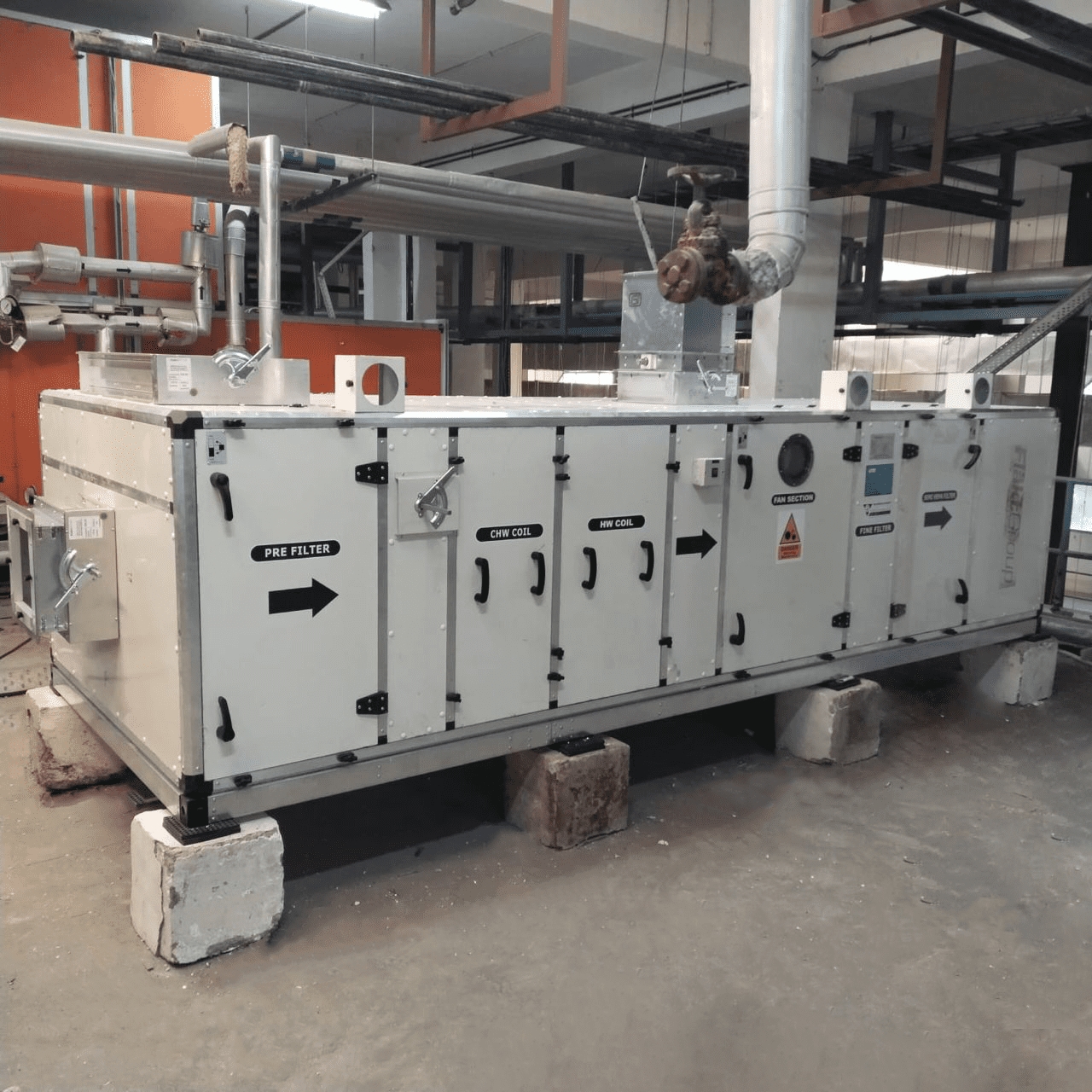
An Air Handling Unit is a mechanical device used in heating, ventilation, and air conditioning systems to condition and distribute air. It draws air from the surrounding environment or a building's return-air system, processes it according to the required conditions, and supplies it to different areas through a network of ducts.
Depending on the application, an AHU may include air filters, cooling and heating coils, fans, dampers, humidification equipment, and control systems. The configuration varies according to the building's size, environmental requirements, occupancy, and operational needs.
AHUs are commonly used in hospitals, pharmaceutical facilities, laboratories, offices, shopping centres, industrial plants, and cleanrooms where controlled air conditions are important.
Major AHU Components and Their Functions
1. Air Filters
Air filters are essential components that remove dust, airborne particles, and other contaminants from the air passing through an AHU. They help maintain indoor air quality while protecting downstream equipment from dirt accumulation.
Different applications require different filtration levels. Common options include pre-filters, fine filters, and high-efficiency particulate air (HEPA) filters where the application and system design require them.
Pre-filters capture larger particles, while finer filtration stages remove smaller airborne contaminants. HEPA filtration may be required in specialised environments such as pharmaceutical manufacturing and certain healthcare or cleanroom applications.
Regular inspection and timely filter replacement help maintain airflow, reduce unnecessary energy consumption, and support reliable operation.
2. Cooling Coil
The cooling coil reduces the temperature of the air passing through the unit. It generally uses chilled water supplied by a chiller or refrigerant in systems designed for direct expansion.
As warm air passes over the coil, heat transfers from the air to the cooling medium. Depending on operating conditions, moisture may also condense on the coil surface, helping reduce humidity.
Cooling coils are important in commercial buildings, healthcare facilities, manufacturing environments, and other applications where temperature and humidity control are required.
Proper coil selection, cleaning, and drainage help maintain heat-transfer efficiency and reduce the risk of operational issues.
3. Heating Coil
A heating coil increases the temperature of the air when additional heating is required. Depending on the system design, it may use hot water, steam, electricity, or another suitable heating source.
Heating coils are useful in colder climates, industrial facilities, and buildings that require precise temperature regulation. They can also support reheating after dehumidification when the application requires a specific supply-air temperature.
The heating capacity should be selected according to the required temperature rise, airflow rate, and operating conditions.
4. Supply Air Fan
The supply air fan moves conditioned air from the AHU into the ductwork and distributes it throughout the building. It must provide sufficient airflow and pressure to overcome resistance from filters, coils, ducts, dampers, and air distribution devices.
Common fan types include centrifugal and plug fans, with the selection depending on system requirements and design preferences.
Modern systems may use variable frequency drives (VFDs) to adjust fan speed according to airflow demand. This can improve energy efficiency when properly designed and controlled.
Correct fan selection helps maintain consistent ventilation, suitable air distribution, and reliable system performance.
5. Dampers
Dampers regulate the movement of air within the AHU and connected ductwork. They can control fresh-air intake, return-air circulation, exhaust airflow, or mixing between different air streams.
Manual dampers are adjusted during installation or balancing, while motorised dampers can respond automatically to control-system commands.
Dampers are particularly important in systems that need to manage outdoor air, maintain ventilation requirements, or control different operating modes. Their correct positioning and maintenance help prevent unwanted airflow and improve system control.
6. Mixing Chamber
A mixing chamber combines outdoor air with return air when the AHU design uses recirculation. The proportion of each air stream depends on ventilation requirements, indoor air quality considerations, and system operating conditions.
Mixing can help reduce the energy required to condition incoming outdoor air. However, the system must be designed to provide the necessary outdoor ventilation and avoid recirculating air where it is unsuitable.
Applications with strict contamination-control requirements may use different air-handling arrangements, including systems designed for higher levels of outdoor air or dedicated exhaust.
7. Humidifier and Dehumidification Equipment
Humidity control is essential in environments where excess moisture or dry air can affect products, equipment, occupants, or manufacturing processes.
A humidifier adds moisture to the air when relative humidity needs to increase. Depending on the application, it may use steam or another suitable humidification method.
Dehumidification is often achieved through cooling coils that reduce air temperature below its dew point, allowing moisture to condense. Some systems may also use dedicated dehumidification equipment or desiccant technology.
Pharmaceutical facilities, laboratories, museums, and specialised manufacturing environments may require close humidity control. Appropriate sensors, drainage, hygiene practices, and control sequences are necessary for reliable performance.
8. Heat Recovery System
A heat recovery system transfers energy between exhaust air and incoming outdoor air without necessarily mixing the two air streams. Common technologies include plate heat exchangers and rotary heat exchangers.
During suitable operating conditions, recovered energy can reduce the heating or cooling load on the HVAC system. This may lower energy consumption while supporting ventilation requirements.
The choice of heat recovery technology depends on the application, airflow arrangement, contamination risks, pressure drop, and maintenance requirements.
9. AHU Casing and Insulation
The casing forms the outer enclosure of the air handling unit. It protects internal equipment, supports the assembly, and helps limit unwanted air leakage.
Insulation within the casing reduces heat transfer and can help prevent condensation when properly designed. The construction material, panel thickness, thermal performance, and leakage characteristics should be suitable for the intended environment.
In hygienic applications, internal surfaces should also be designed to support cleaning and minimise areas where dust or moisture can accumulate.
10. Sensors and Control System
Sensors and controls help monitor and regulate AHU operation. Depending on the system, sensors may measure temperature, relative humidity, pressure, airflow, or filter differential pressure.
The control system uses this information to operate fans, valves, dampers, and other equipment according to defined operating requirements.
Building Management System (BMS) integration can support centralised monitoring, alarms, scheduling, and energy management. Correct sensor placement, calibration, and control settings are important for accurate operation.
Why Are AHU Components Important?
Each component contributes to the overall performance of an air handling system. If one part operates inefficiently, it can affect airflow, indoor air quality, energy consumption, or environmental control.
Well-selected components can help businesses:
Maintain suitable indoor air quality through effective filtration.
Achieve the required temperature and humidity conditions.
Support ventilation and air distribution requirements.
Reduce avoidable energy consumption.
Protect HVAC equipment from excessive dust and wear.
Improve reliability through planned maintenance.
The benefits depend on proper system design, installation, commissioning, and ongoing maintenance.
How to Choose the Right AHU Components
Selecting suitable components requires an understanding of the building's requirements and the conditions in which the unit will operate.
Application requirements: Identify whether the AHU will serve an office, hospital, cleanroom, pharmaceutical facility, or industrial environment.
Airflow capacity: Calculate the required supply airflow and available external static pressure to select compatible fans, filters, and ductwork.
Filtration requirements: Choose filter types and efficiency levels based on the necessary indoor air quality and contamination-control objectives.
Temperature and humidity: Determine the required cooling and heating capacities, along with the need for humidification or dehumidification.
Energy efficiency: Consider fan efficiency, variable-speed operation, heat recovery, coil performance, and pressure losses across components.
Maintenance and hygiene: Evaluate component accessibility, filter replacement requirements, drainage, cleaning procedures, and the availability of replacement parts.
For specialised HVAC applications, working with an experienced manufacturer or system designer can help ensure the unit matches the project's technical requirements. Syntec Airflow System provides solutions in the air handling and HVAC equipment sector for applications that require appropriate air management and environmental control.
Maintenance Tips for AHU Components
Regular maintenance helps preserve performance and identify issues before they affect system operation.
Inspect filters and replace them when their condition or differential pressure indicates that replacement is necessary.
Clean cooling and heating coils according to the maintenance schedule.
Check fan belts, bearings, motors, mounts, and vibration levels where applicable.
Inspect dampers and actuators for proper movement.
Keep condensate trays and drainage lines clean and unobstructed.
Verify sensor readings and calibrate controls when required.
Inspect casing seals and insulation for damage or deterioration.
Maintenance frequency should be based on operating hours, environmental conditions, manufacturer recommendations, and the criticality of the application.
Conclusion
AHUs are essential for managing indoor air quality, ventilation, temperature, and humidity across a wide range of environments. Key AHU components include air filters, cooling and heating coils, fans, dampers, mixing chambers, humidity-control equipment, heat recovery systems, insulated casings, and sensors.
Understanding how these parts work together makes it easier to select a suitable air handling unit, plan preventive maintenance, and improve overall HVAC performance. By focusing on application requirements, energy efficiency, filtration, and maintenance accessibility, organisations can build more reliable and effective air management systems.
Frequently Asked Questions (FAQs)
1. What are the main components of an AHU?
The main components typically include air filters, cooling coils, heating coils, supply fans, dampers, a casing, and a control system. Additional components depend on the application's temperature, humidity, filtration, and ventilation requirements.
2. What is the function of an AHU filter?
An AHU filter removes airborne particles from the air stream. It helps maintain indoor air quality and protects internal equipment from dust and contamination.
3. What is the difference between a cooling coil and a heating coil?
A cooling coil removes heat from the air, while a heating coil adds heat. Both help maintain the required supply-air temperature.
4. How often should AHU components be maintained?
Maintenance frequency depends on operating conditions, usage, contamination levels, and manufacturer recommendations. Filters, coils, fans, drains, and sensors should be inspected regularly.
5. Which AHU components are important for cleanrooms?
Cleanroom AHUs may require suitable filtration stages, carefully designed airflow distribution, temperature and humidity controls, pressure monitoring, and compatible construction materials. Final specifications depend on the cleanroom classification, process requirements, and applicable standards.