Get a new roof paid for by your insurance" has been one of the most effective messages in residential roofing. After storms, door hangers, ads, and landing pages promise free inspections and help filing claims, with the implication that the homeowner will pay little more than a deductible. For homeowners with replacement cost coverage on a recently damaged roof, that was sometimes close to true.
The economics are shifting. In March 2026, Fannie Mae and Freddie Mac changed their property insurance requirements so that roofs no longer have to be insured on a replacement cost basis. Federal regulators presented the change as a way to make roof coverage more affordable. It also means more homeowners may carry actual cash value coverage on their roofs, which pays the depreciated value of a roof rather than the cost of a new one.
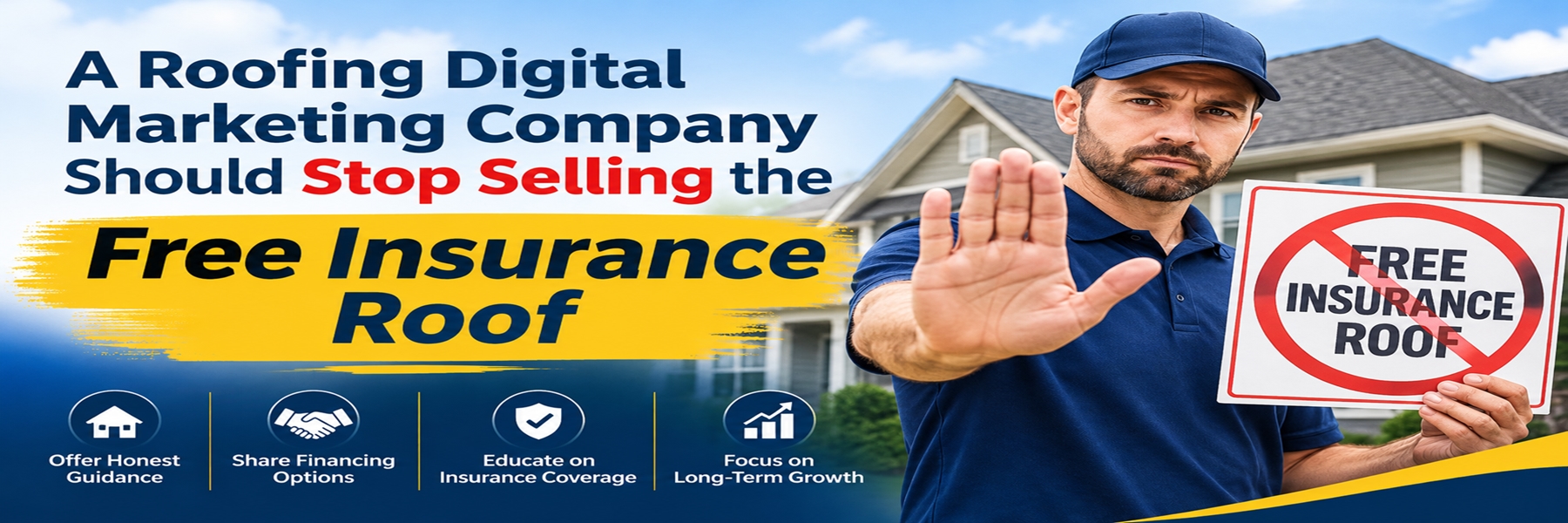
For those homeowners, a claim on an older roof can leave a large gap between the insurance payment and the replacement price. Roofing marketing built on the free insurance roof promise now risks misleading customers. A roofing SEO company can help contractors replace that outdated approach with strategic content focused on financing options, repair guidance, transparent pricing, and honest customer communication.
What Changed
The Federal Housing Finance Agency announced in its March 2026 insurance release that Fannie Mae and Freddie Mac will accept actual cash value coverage on roofs for single-family homes and condos. The release explains that ACV pays what a roof is actually worth today, while the rest of the house still receives full replacement cost protection. FHFA described the change as making roof insurance more affordable, noting that full replacement roof coverage had become expensive and hard to find in many states.
Fannie Mae's lender letter LL-2026-03, dated March 18, 2026, states that roofs must be insured but do not have to be insured on a replacement cost basis, and that the changes are effective immediately.
What ACV Means for a Roof Claim
Under replacement cost coverage, an insurer generally pays to replace a damaged roof with a similar new one, minus the deductible. Under actual cash value coverage, the insurer pays the roof's depreciated value. A 15-year-old roof with a 25-year expected life may be valued at a fraction of its replacement cost.
For a homeowner, the difference can be thousands of dollars. A claim that once covered most of a new roof may now cover a small share of it. Homeowners who expect a free roof and receive a partial payment often feel misled, and they may direct that frustration at the contractor who encouraged the claim.
Policies vary, and some homeowners will keep replacement cost coverage on their roofs. The point is that contractors can no longer assume it.
Why the Free Roof Pitch Now Misleads
Marketing that promises insurance-funded roofs creates several risks:
False expectations: homeowners with ACV coverage receive far less than they were led to expect.
Disputes and complaints: disappointed customers may complain to insurers, regulators, or review sites.
Lost jobs: projects stall when homeowners discover they must pay most of the cost.
Reputational damage: reviews describing surprise costs deter future customers.
Regulatory scrutiny: many states regulate contractor involvement in insurance claims, and misleading claims-related marketing can attract attention.
Even where the pitch remains technically possible, leading with it attracts homeowners primarily interested in a free roof, which becomes a poor fit when the money does not materialize.
What Roofing Marketing Should Lead with Instead
Digital marketing for roofing should shift toward messages that hold up regardless of insurance coverage:
Financing options: clear information on roofing loans or payment plans, with example monthly payments.
Repair versus replace guidance: honest advice on when a repair is enough and when replacement makes sense, based on roof age and damage.
Price ranges: typical local costs for common roof types and sizes, updated regularly.
Insurance education: plain explanations of replacement cost versus actual cash value, encouraging homeowners to check their own policy.
Inspection reports: documented findings with photos, so homeowners can make informed decisions and share them with insurers if appropriate.
Warranty and quality: manufacturer certifications, workmanship warranties, and materials explained.
These messages attract homeowners who are ready to make a decision with accurate information. They also stay valid through every storm season, regardless of how individual policies are written, so content built on them does not need rewriting each time insurance rules change.
Insurance Content Done Responsibly
Insurance remains relevant, and many homeowners still need help after storm damage. Content should explain how claims work without promising outcomes. A useful insurance page explains the difference between ACV and replacement cost coverage, encourages homeowners to read their declarations page, describes what documentation helps a claim, and states clearly what the contractor can and cannot do under state rules. It should avoid suggesting that the contractor can guarantee coverage or waive deductibles.
Explaining Depreciation with a Roof Age Guide
Many homeowners do not know how old their roof is, or how depreciation affects a claim. A simple roof age guide helps. It explains typical lifespans for common materials, such as asphalt shingles, metal, and tile, shows how to estimate a roof's age from records or visible signs, and illustrates in general terms how an older roof's depreciated value compares with replacement cost. The guide should avoid quoting specific insurer formulas, which vary, and should encourage homeowners to ask their insurer how their policy calculates value.
A guide like this ranks for useful searches, builds trust, and prepares homeowners for realistic conversations about cost. It also gives sales consultants a resource to share before an inspection.
Training Sales and Canvassing Teams
Marketing messages must match what happens in the field. After storms, canvassers and sales consultants are often the first contact a homeowner has. If ads promise honest guidance while canvassers repeat the free roof pitch, the contradiction damages trust quickly. Contractors should update scripts, door hangers, and leave-behind materials alongside digital campaigns. Short training sessions on ACV versus replacement cost coverage help staff answer questions accurately and refer homeowners to their insurer or policy documents for specifics.
Financing Content That Converts
When insurance pays less, financing becomes central to the decision. Effective financing content shows example monthly payments for typical projects, explains terms and approval steps simply, and makes it easy to start an application or request a quote with financing. It should state clearly that terms depend on credit approval and lender conditions. Pairing financing information with repair-versus-replace guidance helps homeowners choose a solution that fits their budget, rather than abandoning the project when a claim falls short.
A Representative Contractor
Consider a roofing company in a hail-prone region whose top-performing landing page is titled "Your Insurance May Pay for a New Roof." After the rule change, its sales team reports more homeowners surprised by small claim payments and more stalled jobs.
Its marketing partner rebuilds the funnel. The landing page becomes "Storm Damage? Know Your Options," explaining coverage types, repair versus replacement, and financing. A roof age guide helps homeowners estimate how depreciation affects ACV claims. Ads lead with free inspections and financing rather than insurance promises. Sales consultants receive a one-page coverage explainer to share at inspections.
Lead volume dips slightly at first. Close rates improve, cancellations fall, and reviews mention honesty and clear explanations. Financing applications rise as homeowners see realistic monthly costs early in the process.
How a Roofing Digital Marketing Company Should Measure Success
Success should be measured by booked and completed jobs, not just leads. Useful metrics include inspection-to-proposal rates, proposal-to-contract rates, cancellations after insurance decisions, financing applications, average job value, and review sentiment. A home services digital marketing services provider should report these alongside lead volume and cost per lead.
Paid Search and Ad Copy After the Change
Paid campaigns need the same review as landing pages. Ad copy promising "insurance pays for your roof" or "no cost to you" should be replaced with messages about free inspections, documented damage reports, financing, and local experience. Keywords around insurance claims can still be valuable, but they should lead to educational pages rather than promises. Review search terms after storms to see what homeowners are asking, and build ad groups that match those questions honestly. Clear, accurate ads also tend to attract leads who are more likely to complete a project.
Reviews That Reflect Honest Guidance
Reviews shape roofing decisions as much as any ad. When homeowners feel they received straight answers about coverage and cost, they often say so. Encourage satisfied customers to describe what made the experience trustworthy, such as clear inspection reports, fair pricing, or help understanding their policy. Respond to every review, including critical ones about insurance outcomes, with a calm explanation and an offer to help. Over time, a review profile that highlights honesty becomes a competitive advantage that storm chasers cannot easily copy.
Questions for Home Services Digital Marketing Services Providers
When evaluating home services digital marketing services for a roofing business, ask:
How will you update insurance-related messaging after the ACV change?
How will you present financing and price ranges?
How will you handle repair-versus-replace content?
How will you ensure claims-related content complies with state rules?
How will you measure completed jobs and cancellations, not just leads?
Providers that answer with accurate, compliant messaging protect the contractor's reputation. Providers that keep running free roof campaigns create risk.
Fannie Mae and Freddie Mac now allow actual cash value coverage for roofs, which means more homeowners may receive depreciated payments instead of the full cost of roof replacement after a claim. Roofing contractors need to move away from promises of insurance-paid roofs and focus on financing options, repair-versus-replace advice, transparent pricing, and clear explanations of insurance coverage. Marketing that sets realistic expectations helps contractors build trust, attract better-qualified leads, and close more jobs.
Sources
Federal Housing Finance Agency, "Fannie Mae and Freddie Mac Remove Certain Homeowners Insurance Requirements That Will Reduce Costs," https://www.fhfa.gov/news/news-release/fannie-mae-and-freddie-mac-remove-certain-homeowners-insurance-requirements-that-will-reduce-costs (2026)
Fannie Mae, "Lender Letter LL-2026-03: Updates to Project Standards and Property Insurance Requirements," https://singlefamily.fanniemae.com/media/document/pdf/lender-letter-ll-2026-03-updates-project-standards-property-insurance-requirements (2026)