
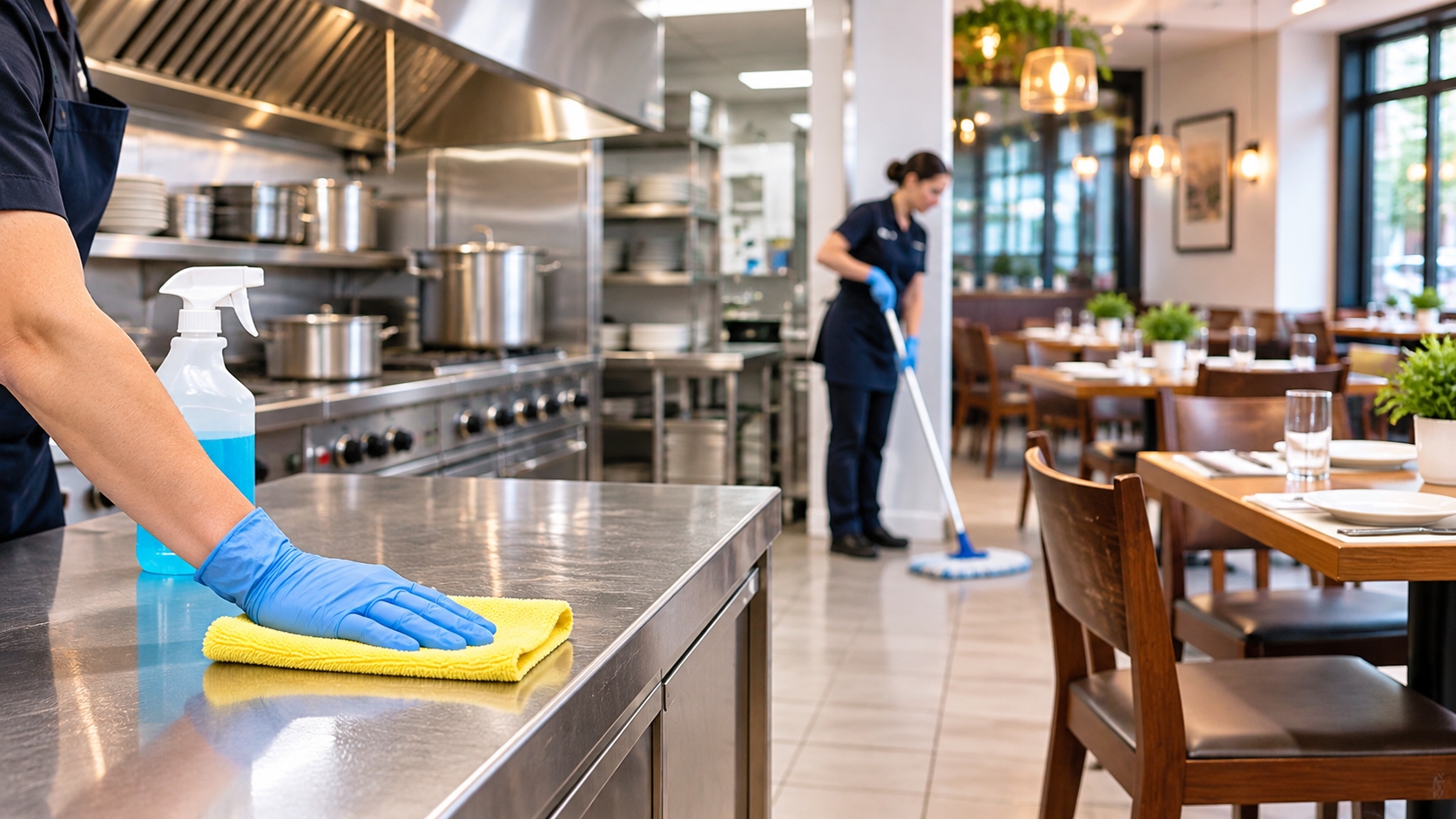
Restaurants face cleaning demands that most other businesses do not. Food, grease, moisture, and heavy foot traffic combine in a space that must also pass health inspections. Many owners hire outside crews to handle work that staff cannot finish during service hours. This guide explains how a restaurant cleaning service approaches kitchens, dining rooms, and exteriors, how often each task is done, and what owners should check before hiring.
Why Restaurant Cleaning Differs From Other Commercial Cleaning
Food safety rules shape every task. The U.S. Food and Drug Administration (FDA) publishes the Food Code, which state and local health departments use as a model for their own rules. It requires food-contact surfaces to be cleaned and sanitized, and inspectors check for grease, pests, and waste control. Fire codes also require regular cleaning of exhaust hoods and ducts because grease buildup can burn.
Cleaning and sanitizing are separate steps. Cleaning removes soil and grease, and sanitizing reduces germs to a safe level. Both are needed on surfaces that touch food.
What a Restaurant Cleaning Service Covers
Kitchen Surfaces and Equipment
Daily work includes prep tables, sinks, stovetops, grills, and floors. Walls and floors behind equipment collect grease and are cleaned on a set schedule. Deeper tasks include ovens, refrigerators, freezers, and ice machines, which should be cleaned according to manufacturer directions.
Exhaust Hoods and Ducts
Grease filters need frequent cleaning, and hood exteriors are wiped down regularly. Duct systems usually require trained specialists, and the schedule depends on cooking volume and local fire code. Owners should confirm which of these tasks a provider includes.
Floors and Drains
Quarry tile and grout absorb grease and moisture, so they are scrubbed and rinsed with degreasers. Floor drains can trap food waste and produce odors, so they are cleaned and flushed on a routine basis.
Restrooms
Guest and staff restrooms are cleaned, disinfected, and restocked. Door handles, faucets, and dispensers receive extra attention because many people touch them. Floors and partitions are mopped and wiped, and supplies are checked before opening.
Dining Rooms
Tables, chairs, booths, menus, and condiment holders are wiped and sanitized after closing. Windows, entry glass, baseboards, and vents collect dust and fingerprints and need regular attention. Trash and recycling areas near dining spaces are emptied and wiped to limit odors and pests. Carpet and fabric seating trap spills and crumbs, so hot water extraction is often scheduled every few months. Excellence Janitorial Services & Carpet Cleaning is one example of a company that pairs commercial janitorial work with carpet care, which suits dining rooms with carpet or upholstered seating.
Exteriors and Outdoor Areas
Dumpster pads, grease bin areas, sidewalks, patios, and entrances collect stains, odors, and debris. Pressure washing services remove grease, gum, and grime from concrete and tile that daily sweeping cannot reach. Local rules often limit where wash water can drain, so providers collect or contain runoff when required.
Dividing Work Between Staff and Outside Crews
Kitchen staff usually handle cleaning during service, such as wiping stations and washing dishes. Outside crews handle tasks that require extra time, equipment, or training. Dividing work this way keeps staff focused on food preparation and guest service.
How Often Each Task Is Done
A restaurant cleaning service usually builds its schedule around closing hours so work does not disturb guests.
Daily
Daily tasks include trash removal, floor cleaning, sanitizing prep and dining surfaces, and restroom care.
Weekly
Weekly tasks include detailed floor scrubbing, drain cleaning, wall wiping, and equipment exteriors.
Monthly and Quarterly
Monthly tasks include vents, light fixtures, and refrigerator interiors. Hood and duct work follows the schedule set by the fire code and cooking volume, which may be monthly, quarterly, or twice a year.
Seasonal
Carpets, upholstery, and exterior surfaces are often handled once or twice a year, depending on traffic and weather.
Safety and Food Handling Practices
Providers working in food service should use sanitizers approved for food contact surfaces and follow label directions for concentration and contact time. Test strips confirm that sanitizer solutions are mixed correctly. Color-coded cloths and tools keep restroom and kitchen cleaning separate, which limits cross-contamination. Wet floor signs, labeled chemicals, and safety data sheets protect staff and crews.
Preparing for Health Inspections
Health departments inspect restaurants without much notice, so cleaning schedules should keep the space ready every day. Inspectors review food contact surfaces, handwashing sinks, storage areas, floors, walls, and waste areas. Written cleaning logs show that tasks were completed and help managers spot missed areas. A provider that supplies a checklist after each visit can support this record-keeping.
Signs a Restaurant Needs More Cleaning
Several signs indicate that current cleaning is not enough. Sticky floors, greasy walls, lingering odors, slow drains, and dust on vents are common examples. Pests, failed inspection items, and customer comments about dirty tables or restrooms also point to gaps. Reviewing the task list and adding detailed or exterior work can address these issues.
Questions to Ask Before Hiring a Restaurant Cleaning Service
Owners can compare providers on several points.
Food service experience: Crews should understand health codes, grease control, and sanitizing steps.
Insurance and bonding: Liability coverage protects the restaurant if damage or loss occurs.
Written scope: A task list should state which areas, tasks, and frequencies are included.
Specialized work: Hood and duct cleaning, carpet extraction, and pressure washing services may be handled by the provider or by trusted partners.
After-hours availability: Crews should be able to work around opening and closing times.
Training and screening: Staff should receive safety training, and background checks are common.
Companies that combine janitorial and carpet care, such as Excellence Janitorial Services & Carpet Cleaning, may cover kitchens, dining rooms, and soft surfaces under one agreement.
Conclusion
Kitchens, dining rooms, restrooms, and exteriors each have separate needs, and a restaurant cleaning service organizes them into daily, weekly, and periodic tasks. Food safety rules, grease control, and guest expectations guide the scope. Owners who compare providers on experience, insurance, and a written task list can choose support that fits their space and schedule.