
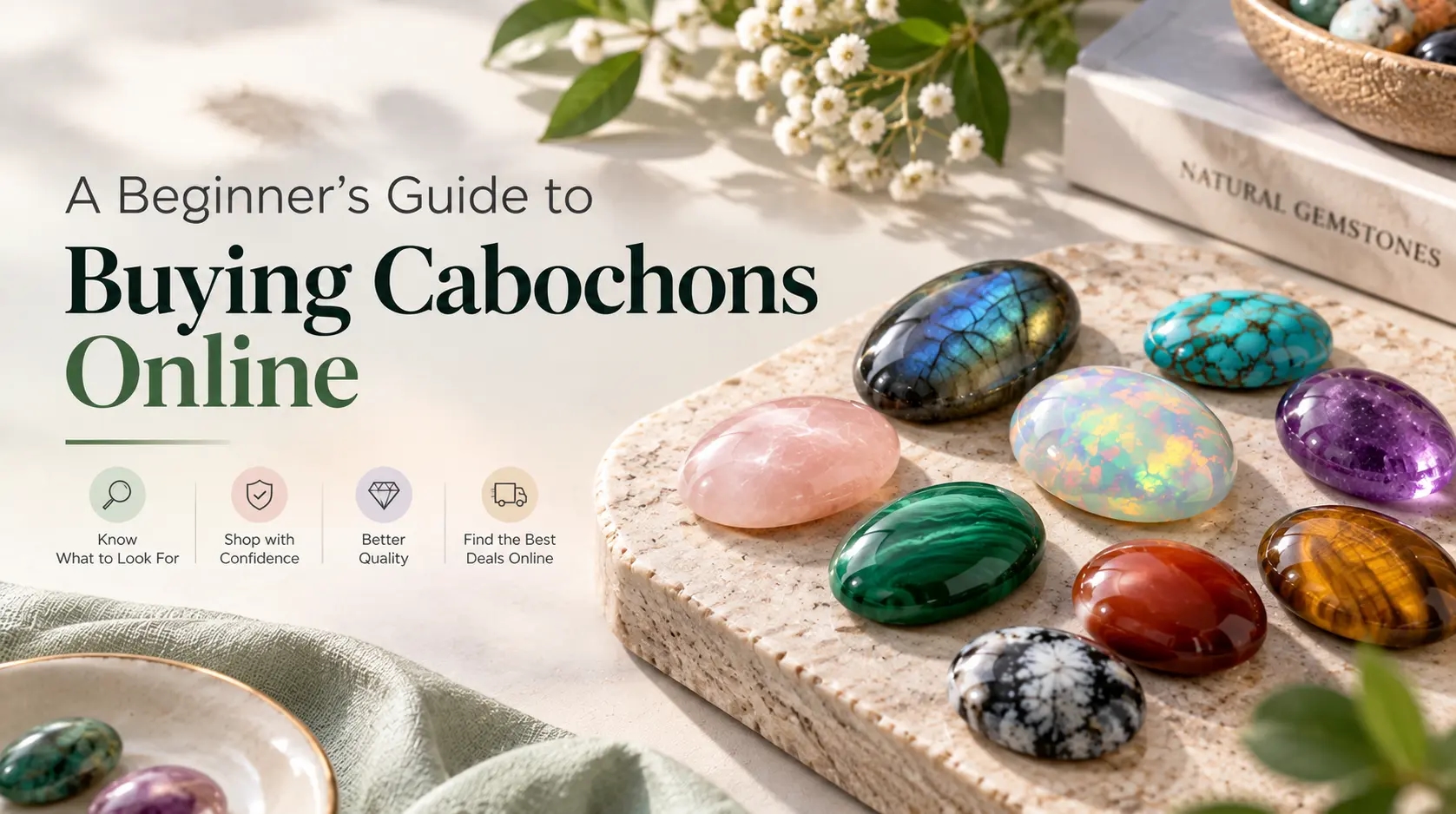
Anyone new to jewelry making eventually runs into the word cabochon, usually before fully understanding what separates it from every other kind of gemstone cut. It sounds more technical than it actually is, and once it clicks, picking your first few stones gets a lot less intimidating.
What is a cabochon exactly
A cabochon is a gemstone that's been shaped and polished into a smooth, rounded form without any flat cut facets, the kind you'd see on a diamond or a faceted sapphire. Instead of cutting angles into the stone to catch and reflect light, the surface stays domed and continuous, which lets the natural color, pattern, and texture of the stone remain the main focus.
This is part of why cabochons are so common with stones like opal, turquoise, moonstone, and agate, materials where the internal pattern or color play is the whole appeal. Faceting would actually work against stones like these, breaking up the very thing that makes them interesting to look at.
Read More - Find Quality Cabochons for Sale
Why jewelry makers gravitate toward cabochons
Beyond the visual appeal, cabochons tend to be more forgiving to work with, especially for anyone still building confidence with basic settings. The flat back sits naturally against a bezel or a glue mount without needing the precise angle alignment that faceted stones often require.
Cabochons also tend to be more affordable than faceted stones of similar size and quality, since the cutting process is less labor intensive. This makes them a practical entry point for anyone experimenting with different stone types without committing to the higher price faceted material often carries.
What to check before buying your first cabochons
The most useful thing to check first is whether the back of the stone is flat or domed. A flat back sits far more easily in most settings, while a highly domed back can complicate mounting, especially for beginners still getting comfortable with basic techniques.
Thickness matters too, though it gets overlooked often. A stone that's too thin can feel fragile once set, while one that's unusually thick may not fit standard bezel depths without extra adjustment. If a listing doesn't mention thickness directly, it's worth asking before ordering, particularly for a first purchase.
Color and pattern photos are worth scrutinizing closely as well, since natural stones vary piece to piece. If a listing shows only one photo representing an entire batch, treat that as a rough guide rather than an exact match for what arrives.
Read More - Cabochons for Jewelry Making
Starting small before buying in bulk
It's tempting to order a large batch once you find a stone type you like, but starting with a handful of individual cabochons first tends to save both money and frustration. This gives you a chance to test how a specific stone cuts, sets, and holds up in practice before committing to a bigger order based on photos alone.
Frequently Asked Questions
What is the difference between a cabochon and a faceted stone?
A cabochon has a smooth, rounded surface with no flat cut angles, while a faceted stone has multiple flat surfaces cut to reflect light. Cabochons highlight the stone's natural pattern and color, while faceting is used to maximize sparkle and brilliance.
Are cabochons more affordable than faceted gemstones?
Generally yes, since the cutting process for cabochons is less labor intensive than precision faceting, which often makes them a more accessible starting point for beginners.
Do cabochons need a special type of setting?
Not necessarily, but the setting should match the stone's hardness and thickness. Softer or thinner stones often do better in a bezel setting that protects the edges, while harder, sturdier stones can handle more open settings.
Can I use cabochons for both rings and earrings?
Yes, though size should adjust based on the piece. Larger cabochons tend to suit rings and pendants better, while smaller, lighter stones are more practical for earrings.
Why do cabochon colors vary even within the same stone type?
Because these are natural materials, no two pieces form with identical mineral content or exposure conditions, which is part of what makes each cabochon slightly unique even within the same batch.