Choosing printing equipment is rarely as simple as comparing prices. A machine that works well for one print shop may be completely unsuitable for another. Production volume, available workspace, order size, budget, and plans for future growth all matter when deciding between a compact 14-inch system and a larger-format machine.
For businesses researching high-resolution DTF printer options, the first question should not be “Which machine is more powerful?” Instead, it should be “Which machine matches the way my business actually operates?” That approach can prevent overspending while ensuring the equipment can handle everyday production requirements.
When a 14-Inch Printer Makes Sense
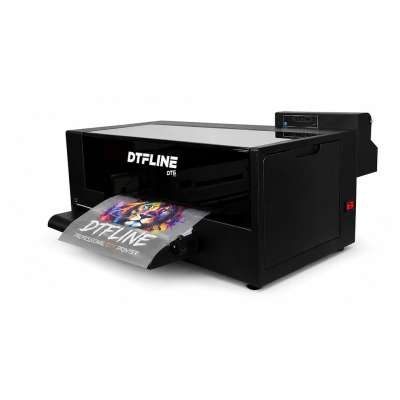
A 14-inch system can be a practical choice for startups, home-based businesses, small print shops, and companies producing customized apparel in moderate quantities.
Its relatively compact footprint is one of its biggest advantages. Space can be a serious concern when printing from a garage, studio, retail location, or small workshop. A smaller machine leaves more room for a heat press, curing equipment, storage, packaging, and other parts of the workflow.
Another advantage is flexibility. If most orders involve individual shirts, small batches, names, logos, or customized designs, there may be little benefit in paying for a much wider production system.
Easier for New Operators
A smaller setup can also feel less intimidating for someone entering the apparel printing industry. There is less equipment to accommodate, and production can be easier to organize when order volumes are still developing.
That doesn't mean a compact machine is only for beginners. An established shop with a specific production niche may find a 14-inch format perfectly adequate.
Where Larger Machines Have an Advantage
Larger equipment becomes more attractive when production volume starts increasing. Businesses handling frequent wholesale orders, clothing-brand collections, promotional campaigns, or large transfer runs may benefit from a wider printing area.
Larger machines can allow more artwork to be arranged across a sheet or roll, which may improve productivity when the business regularly has substantial workloads.
However, bigger does not automatically mean better.
A larger machine can require more floor space, greater material consumption, additional investment, and potentially more attention to maintenance. If the workload does not justify those costs, the extra capacity may sit unused.
Think About Your Typical Orders
One of the simplest ways to choose between the two formats is to examine your last few months of orders.
Ask:
How many garments do I normally produce each week?
Are most orders individual pieces or bulk quantities?
Do customers regularly request oversized graphics?
Am I producing transfers for other apparel businesses?
Is demand growing consistently?
How much workspace can I dedicate to production?
Your answers provide a more useful buying guide than a specification sheet alone.
For example, a small online apparel brand producing limited collections may prioritize flexibility and manageable operating costs. A contract decorator producing transfers for multiple clothing companies may have very different requirements.
Don't Ignore Workflow Speed
Print width is only one part of production efficiency. The complete workflow matters.
A printer needs to work effectively with the rest of the production setup, including RIP software, transfer film, powder application, curing, and heat pressing. A machine that prints quickly can still create bottlenecks if the finishing process cannot keep up.
This is where modern DTF Printers should be evaluated as complete production systems rather than individual machines.
Look at the time required for the entire job, from receiving artwork to preparing the finished transfer. A balanced workflow is usually more useful than focusing on one impressive specification.
Consider Print Quality and Reliability
Customers generally care about the finished garment, not the size of the printer that produced it.
Before buying, examine the factors that influence output quality:
Printhead technology
Color management
Ink compatibility
Film quality
RIP software
Maintenance requirements
Curing consistency
Fine artwork, small lettering, gradients, and detailed illustrations can expose weaknesses in a poorly configured setup. At the same time, high print quality depends on the entire production process, not simply the machine itself.
Calculate the Total Investment
Purchase price should never be the only financial consideration.
Create a realistic budget that includes the printer, RIP software, heat press, curing equipment, inks, film, powder, maintenance supplies, ventilation requirements where applicable, and replacement components.
You should also consider how much production is required to recover the investment.
A compact machine may have a lower initial cost, while a larger system could make more sense for a business with established demand. Neither choice is universally correct. The right decision depends on expected utilization and cash flow.
Plan for Future Growth
It is tempting to buy equipment based entirely on current requirements. But purchasing something that becomes inadequate within a few months can create another expense.
At the same time, buying substantially more capacity than you need can tie up capital that could otherwise be used for marketing, inventory, staffing, or business development.
A useful middle ground is to estimate your expected production for the next 12 to 24 months. Consider realistic growth rather than an optimistic sales target.
How DTGPRO Can Help You Explore Options
Businesses comparing equipment can benefit from reviewing different configurations rather than choosing a machine based on one specification. DTGPRO offers apparel printing equipment and related solutions for businesses operating at different production levels.
Reviewing available models can help buyers compare formats, features, printhead configurations, and workflow requirements before making a purchase decision.
Which Size Should You Choose?
There is no universal answer because every print business has a different operating model.
A 14-inch machine can be a sensible fit when space, budget, and moderate production are priorities. A larger system may be more appropriate when regular high-volume production justifies its additional capacity.
The key is to match equipment to real demand rather than choosing the biggest machine simply because it offers more capacity. Before investing, calculate your typical order volume, examine your workspace, estimate operating costs, and consider where you expect the business to be in the next few years. With those factors in mind, selecting the right DTF Printer becomes a practical business decision rather than a simple comparison of machine sizes.