
Keka has earned its reputation as one of India's most recognized HRMS platforms, and for good reason — a clean interface and a strong payroll engine have made it a default choice for a lot of growing Indian businesses. But "popular" and "right for your company" aren't always the same thing. Some businesses need deeper compliance automation than a general HRMS provides. Others are scaling past the size where flat-tier pricing structures make sense. Some just need a different module mix — stronger recruitment, tighter attendance-to-payroll automation, or better support for field and multi-location teams. If you're evaluating options beyond Keka, here are 10 platforms worth a serious look, grouped by what each one actually does differently.
Why Businesses Look Beyond a Single Platform
Evaluating alternatives isn't usually about one platform being "bad" — it's about fit. The most common reasons Indian businesses shop around after starting with (or evaluating) Keka include:
Module scope — needing recruitment, performance, or shift management depth that goes beyond core HR and payroll
Pricing structure — wanting per-employee costs that scale predictably rather than tiered plans that jump at certain thresholds
Data connectivity — wanting attendance, leave, and payroll to update each other automatically without manual syncing between modules
Industry-specific needs — field teams needing GPS attendance, or multi-state operations needing deeper compliance automation
Team size — very small teams wanting a lighter, simpler system, or large enterprises needing more governance than a mid-market platform offers
Alternatives Built for Tighter, All-in-One Automation
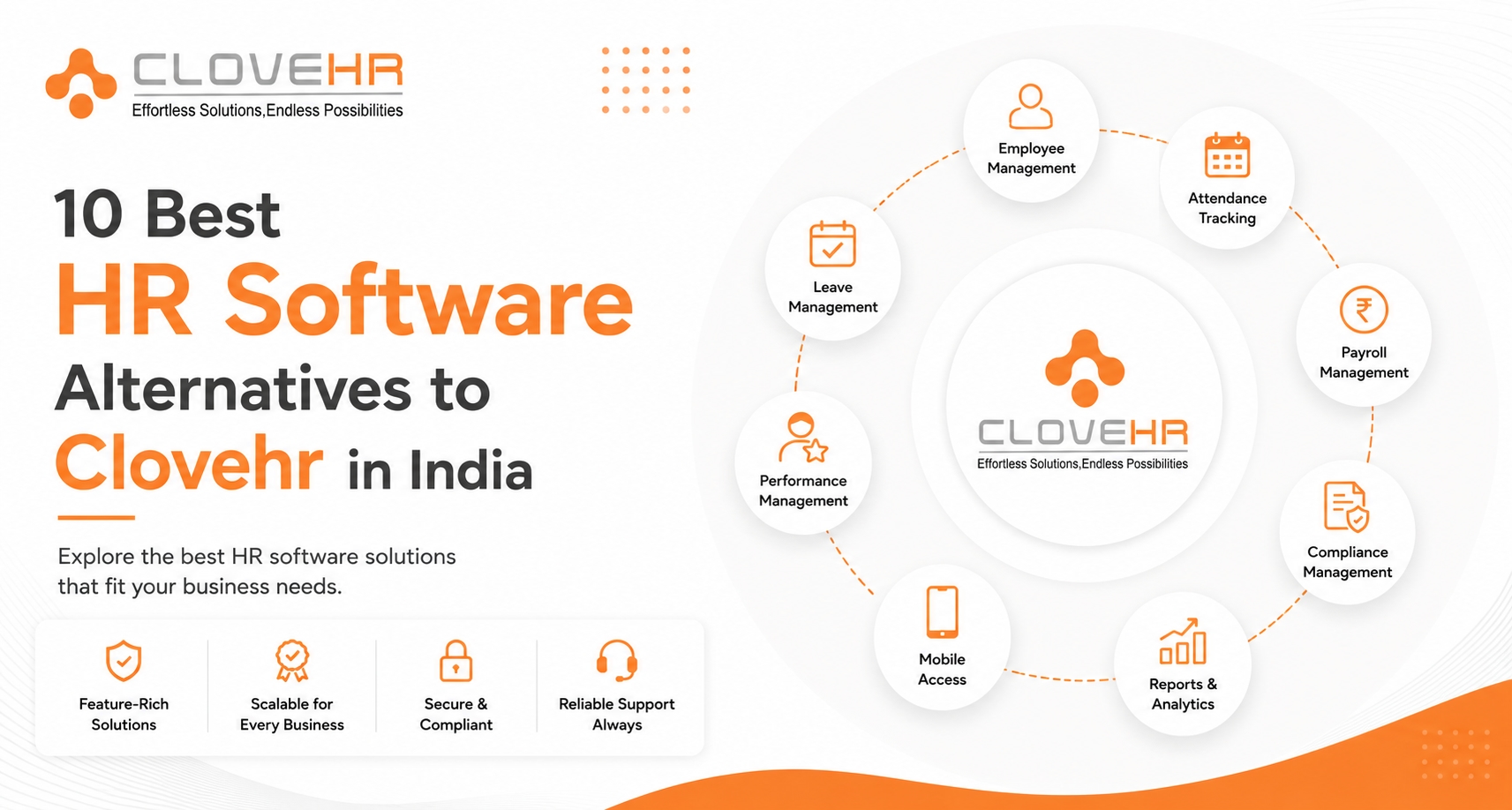
CloveHR stands out here because of how its modules are connected, not just what they include. Employee management, leave, attendance, shift scheduling, timesheets, payroll, recruitment, and performance all run on the same employee record, so an approved leave request or a logged attendance entry updates payroll automatically — without a manual export or sync step between modules. Its recruitment module includes resume scoring and referral tracking, and once someone is hired, their data carries straight into the employee profile used by every other module, avoiding the disconnected onboarding step that shows up when recruitment and core HR live in separate systems. An audit trail runs across attendance, leave, and payroll actions, which matters for businesses building compliance discipline as they scale. For companies that specifically want recruitment, attendance, and payroll working off one shared record rather than three loosely integrated tools, CloveHR is the closest match to that structure on this list.
Covering hiring, payroll, performance, and engagement in a single system aimed at small and mid-sized businesses that want enterprise-level module depth without enterprise-level complexity.
Alternatives Built for Deeper Statutory Compliance
greytHR has one of the longest track records in Indian payroll compliance, automating PF ECR filings, ESI returns, and professional tax calculations across states. Businesses that prioritize compliance depth over interface polish tend to gravitate here.
factoHR pairs automated Indian payroll compliance with smart attendance options — facial recognition and geo-tagged mobile punches — useful for businesses with field staff or multiple work sites where compliance and location verification both matter.
Alternatives Built for Enterprise Scale
Darwinbox is built for large, multi-location Indian organizations needing deep analytics and AI-driven workforce insights, going beyond what a mid-market HRMS is designed to handle.
PeopleStrong focuses on talent lifecycle management and people analytics with mobile-first access, suited to larger organizations that want more flexibility in how HR data gets analyzed and reported.
Alternatives Built for Smaller Teams and Simpler Needs
Pocket HRMS is a straightforward option for businesses under 50 employees, covering core HR, attendance, and payroll compliance without the module complexity of larger platforms.
Qandle offers a lighter, configurable HRMS aimed at small and mid-sized businesses wanting core HR and payroll functionality without a steep learning curve.
Alternatives Built for Ecosystem Integration
Zoho People is the natural choice for businesses already using other Zoho products — Zoho Books, Zoho Payroll, Zoho Recruit — since data flows between them without needing separate integrations.
HROne styles its workflow around an inbox-style interface, aiming to make approvals and routine HR tasks feel as intuitive as clearing email, which appeals to managers who find traditional HR dashboards clunky to navigate.
What to Actually Compare Before Switching
Feature lists across these platforms look similar on paper. The real differences show up in a few specific questions:
Does an approved leave request update payroll automatically, or does it require a manual sync?
Does the recruitment module (if included) connect directly to the employee record, or is hiring data re-entered at onboarding?
Does pricing scale predictably per employee, or does it jump in flat tiers at certain headcounts?
Is attendance verification (GPS, biometric) built in, or does it require third-party hardware or a separate add-on?
FAQ
1. Why would a business look for an alternative to Keka?
Businesses typically look for alternatives when they need deeper module connectivity, different pricing structures, industry-specific attendance features, or a scope of functionality — like deeper compliance automation or recruitment integration — that better matches their specific operations.
2. What is the best all-in-one alternative to Keka in India?
CloveHR and Zimyo are the closest matches for businesses wanting an all-in-one system, since both connect recruitment, attendance, leave, and payroll on a single employee record rather than treating them as separate modules.
3. Which HR software alternatives are best for compliance-heavy Indian businesses?
greytHR and factoHR are strong choices for compliance depth, with greytHR particularly well established for statutory filing automation like PF ECR and ESI returns.
4. Are there good Keka alternatives for very small businesses in India?
Yes. Pocket HRMS and Qandle are built specifically for smaller teams needing core HR and payroll functionality without the complexity of larger, module-heavy platforms.
5. Does switching HR software require migrating historical payroll data?
Most platforms, including CloveHR, Zoho People, and greytHR, support importing historical employee and payroll data during onboarding, though the process and level of support vary by vendor and should be confirmed before switching.
Conclusion
There's no universally "better" alternative to Keka — there's only the platform that matches how your business actually operates. Companies that want recruitment, attendance, leave, and payroll genuinely connected on one employee record will find CloveHR the closest fit to that structure. Businesses prioritizing compliance depth above all else should look closely at greytHR, while very small teams may be better served by something lighter like Pocket HRMS. Before switching platforms, the most useful exercise isn't comparing feature lists — it's mapping your actual weekly HR workflow against each platform and seeing which one removes the most manual steps, not just which one has the most checkboxes.