
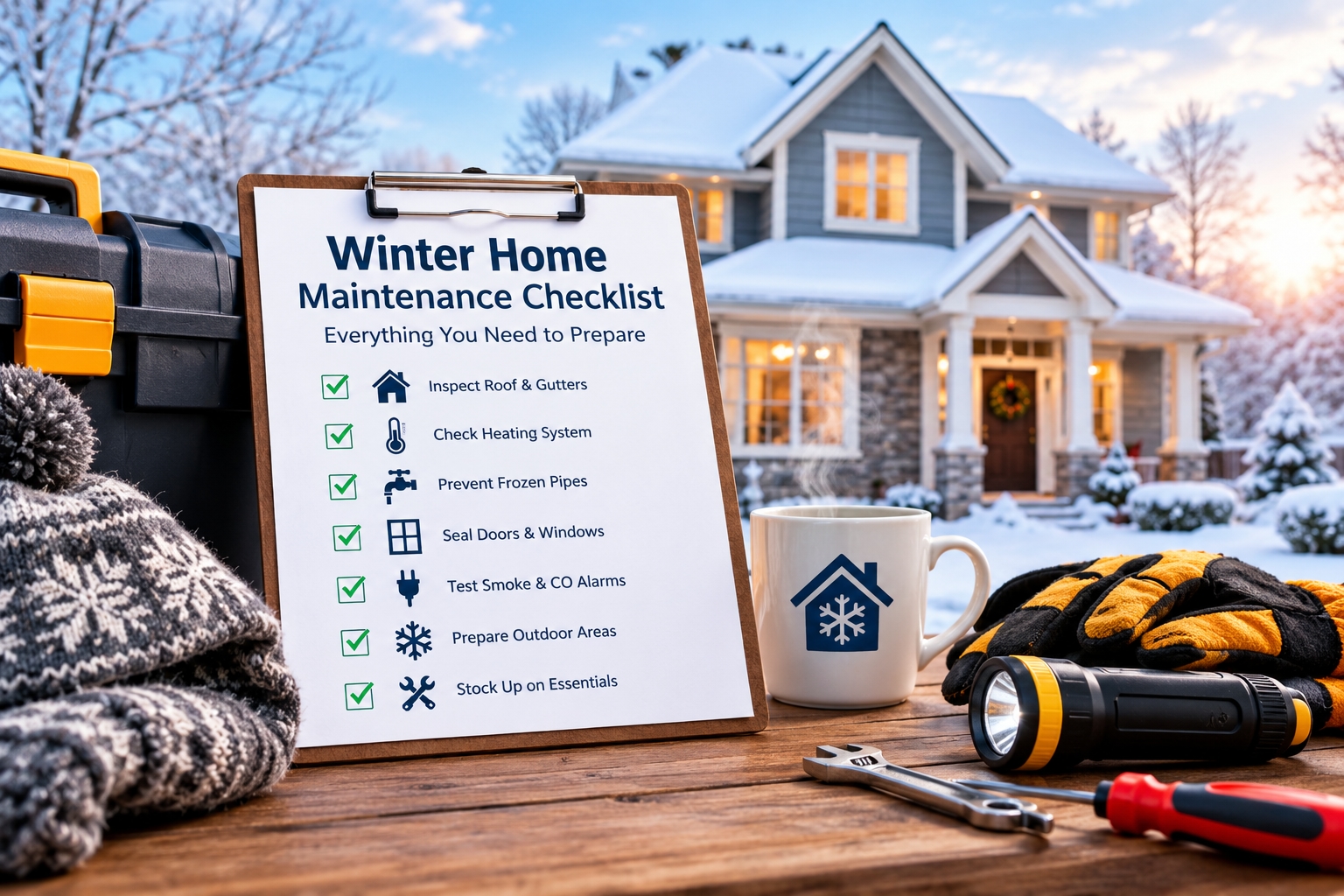
Most winter problems announce themselves at the worst possible moment. The boiler fails on the coldest night of the year, a gutter overflows during a storm, or a path freezes the morning someone needs to get somewhere.
Almost all of it is avoidable with a few hours' work in autumn. Winter maintenance is mostly checking things while the weather still allows, and having what you need before you need it.
What should I do to prepare my home for winter? Check the roof and clear the gutters, service the heating system, insulate exposed pipes, seal draughts, inspect paths and driveways for hazards, and stock de-icing materials. Then agree how snow and ice will be cleared before the first cold snap arrives.
This guide works through the full checklist, then covers snow and ice management in detail, since that is where most winter injuries actually happen.
Why Winter Home Maintenance Matters
Preventing damage. Water is the main culprit. Blocked gutters overflow down walls, small roof defects admit driving rain, and freeze-thaw cycles widen every existing crack. A burst pipe causes far more damage than the pipe is worth.
Avoiding emergency costs. Autumn repairs are planned and quoted. February repairs are emergency call-outs at emergency rates, often with a wait attached because every tradesperson locally is already busy.
Safety. Icy paths and steps are where winter injuries happen, affecting family, visitors and delivery drivers alike.
Maintaining access. A blocked driveway means no car, no deliveries, and restricted access for anyone who needs to reach your door.
Winter Home Maintenance Checklist
1. Inspect the roof
Look for slipped, cracked or missing tiles, damaged flashing around chimneys and vents, and any sagging. Use binoculars from ground level rather than climbing up.
Why it matters: A single displaced tile admits water that spreads through the roof space unnoticed until a ceiling stains. Autumn repairs are far simpler than January ones.
2. Clean and check gutters and downpipes
Clear leaves, moss and debris, then run water through to confirm it flows. Check brackets are sound and joints are not leaking.
Why it matters: Blocked gutters overflow down walls, saturating brickwork that then freezes. Trapped water also freezes in the gutter itself, adding weight that pulls fixings loose.
3. Check the heating system
Arrange a boiler service with a Gas Safe registered engineer, bleed radiators that feel cold at the top, check the pressure, and test the system before you depend on it.
Why it matters: Boilers fail when they are working hardest. Testing in October means discovering a problem when engineers are available rather than during a cold snap.
One UK-specific point worth knowing: modern condensing boilers have an external condensate pipe that can freeze in very cold weather, shutting the boiler down. Insulating that pipe beforehand prevents the most common winter boiler failure there is.
4. Insulate exposed pipes
Fit lagging to pipes in lofts, garages, outbuildings and against external walls. Insulate outside taps, or fit an isolating valve and drain them down.
Why it matters: Water expands as it freezes, splitting the pipe. The damage appears on thawing, when water escapes into whatever is below.
Find your stopcock now and check it turns. Discovering it is seized while water pours through a ceiling is a poor time to learn.
5. Seal draughts around doors and windows
Fit or replace draught excluders, check seals, use brush strips on letterboxes, and repair damaged frames.
Why it matters: Draught-proofing is among the cheapest ways to cut heating costs and makes rooms noticeably more comfortable. Keep ventilation where it is needed, though, particularly in rooms prone to condensation.
6. Check outdoor lighting
Test every external light, replace failed bulbs, and consider adding lighting to unlit steps and paths.
Why it matters: Much of winter happens in the dark, and most snow clearing is done in poor light. You cannot treat a hazard you cannot see.
7. Inspect driveways, paths and steps
Look for cracks, loose slabs, uneven surfaces, worn step edges and anywhere water pools after rain. Repair what you can before the frost arrives.
Why it matters: Water enters cracks, freezes, expands and widens them. Uneven surfaces that are merely annoying in summer become trip hazards under snow.
Note which areas are shaded or north-facing. These freeze first, thaw last, and are routinely overlooked because the sunny side looks clear.
8. Prepare outdoor furniture and equipment
Store or cover furniture, drain and stow hoses, and put away anything that will blow around in a storm.
Why it matters: Loose items become projectiles in high winds, and water left in hoses and outdoor taps freezes and splits them.
9. Check trees and branches
Inspect for dead, damaged or overhanging branches, particularly near the house, driveway, boundary and any power lines.
Why it matters: Snow and ice add substantial weight to branches, and wet snow brings down limbs that survived years of wind. As a property owner you have responsibilities regarding trees on your land, so significant work is worth referring to a qualified arborist.
10. Stock essential winter supplies
De-icing salt or grit, bought early before supplies run short
A wide plastic snow shovel, stored somewhere accessible
Torches and batteries
Warm layers, waterproof gloves and boots with grip
Basic first aid supplies
Contact details for your heating engineer, plumber and any winter maintenance contractor
11. Prepare for snow and ice
Decide in advance who clears what, where cleared snow will go, and which routes matter most. If your property is large or your mobility limited, arrange help before you need it.
12. Create an emergency winter plan
Know where your stopcock, fuse box and meters are. Keep torches accessible. Have a plan for a power cut, and check on elderly or vulnerable neighbours during severe weather.
Preparing Your Driveway, Paths and Outdoor Areas for Snow
How do I prepare my driveway for snow? Repair cracks and uneven surfaces, clear drainage channels so meltwater escapes, mark obstacles such as manhole covers and edging, decide where cleared snow will be stacked, and make sure salt and a suitable shovel are accessible before the first snowfall.
Work through outdoor areas in the order people use them. The route from the gate to your front door matters more than the side path to the shed.
Improve drainage where you can. Standing water becomes ice in the same spot every cold night, so clearing a blocked gully often solves a recurring hazard permanently.
Mark anything a shovel or blade could catch: raised covers, edging stones, low walls, drainage channels. This matters particularly if a contractor with a snow plough will clear a long driveway, since an operator unfamiliar with your property cannot know what is under the snow.
Decide where snow goes before you start moving it. Not against the house, not over a drain, and not where it blocks visibility where your driveway meets the road. Stacked snow melts, and meltwater refreezes across whatever is downhill.
For larger properties, long driveways or shared private roads, hand clearing stops being realistic. Snow clearing services and snow cleaning services combine mechanical clearance with treatment, and are worth arranging in advance rather than during a cold spell.
Snow and Ice Management: What Homeowners Should Know
What is the difference between snow clearing and snow removal? Snow clearing means physically shifting snow off a surface by shovel, brush, blower or plough, with the snow moved aside on site. Snow removal can mean taking it away entirely. Both differ from de-icing, which treats a surface to prevent or break down ice.
The two work together, and the sequence matters:
Clear the snow while it is fresh and loose. Compacted snow must be broken rather than swept.
Treat the cleared surface with salt, ideally before nightfall to prevent refreezing.
Recheck after dark, when a damp surface becomes an icy one.
Shovelling suits domestic paths and driveways. Push snow rather than lifting where possible, since it puts far less strain on the back. When you must lift, bend your knees, keep the load close and turn your feet rather than twisting.
Snow ploughing handles what shovelling cannot: long driveways, private roads and large parking areas, usually arranged through a contractor.
Keeping pedestrian routes accessible means clearing to full width rather than a single-boot channel, since untreated edges refreeze and catch people stepping aside.
Professional help becomes practical when the area is beyond what you can clear before you need it, or when snowfall repeats day after day.
Salt Spreading and Winter Gritting
When should salt be spread, before or after snow? Both have a role. Spreading before forecast snow stops it bonding to the surface, making clearance easier. Spreading after clearing prevents the damp surface refreezing overnight. What achieves little is spreading salt over deep snow, since it cannot reach the ground.
Salt lowers the freezing point of water, so a treated surface stays wet rather than icing. For a cleared path, government guidance suggests around a tablespoon of ordinary table or dishwasher salt per square metre. Steps and steep sections warrant more, as these carry the highest risk.
Treat these areas first: the main entrance, steps, the route from parking to the door, and any slope.
Responsible application matters. Salt damages lawns, planting and borders where it washes off paths, and heavy repeated use can affect paving and metalwork over time. More is not better — over-application wastes material and creates problems without improving grip.
Two further points. Do not take salt from council grit bins for your driveway, as that supply is intended for the roads. And salt loses much of its effectiveness in very low temperatures, generally below around minus ten degrees, where sand or ash provides grip even though it will not de-ice.
Salt spreading services and winter gritting contractors use calibrated spreaders and monitor forecasts, which suits longer driveways and properties where consistent treatment matters.
When Should You Hire Professional Snow Removal Services?
When should I hire professional snow removal services? When the area is too large to clear before you need to use it, snowfall is repeated over several days, access is difficult, or health and mobility make the work unsafe. Also worth arranging where reliable access matters, such as for carers or deliveries.
Common situations:
Heavy snowfall beyond what hand clearing can keep pace with
Large driveways and long access routes
Difficult access, including steep or awkward layouts
Repeated snowfall, where daily clearing becomes unsustainable
Persistent ice on paths and entrances
Limited time or physical capacity, including any heart or back condition
Properties needing regular winter maintenance through the season
Prolonged bad weather, where access must be maintained day after day
Arrange cover before winter. Contractors allocate capacity in advance, and reactive call-outs during a cold snap are harder to secure.
Winter Safety Checklist for Homeowners
Icy paths — clear to full width and treat before nightfall
Steps — the highest-risk surface on most properties, worth extra salt
Driveways — keep the entrance and the route to the door usable
Outdoor lighting — working, and covering steps and paths
Slippery surfaces — check shaded areas that never thaw naturally
Snow accumulation — do not let it pile against walls, doors or drains
Roof hazards — watch for icicles and snow build-up above entrances
Emergency access — keep a clear route for emergency vehicles and services
Heating equipment — keep flues, vents and boiler condensate pipes clear of snow
A word on hot water. Never use it to melt ice on a path — it refreezes as black ice, which is invisible and more dangerous than what you removed. Warm water is, however, the correct way to thaw a frozen boiler condensate pipe. The distinction matters, so do not confuse the two.
A Simple Winter Maintenance Schedule
Before winter (autumn): Roof and gutter checks, boiler service, pipe insulation, draught-proofing, path and driveway repairs, tree inspection, outdoor lighting.
Before the first snowfall: Buy salt and check the shovel, mark obstacles, decide snow stacking points, confirm contractor arrangements, check the forecast.
During snowfall: Keep entrances usable, avoid unnecessary travel, monitor conditions.
After snowfall: Clear early while snow is loose, treat cleared surfaces, prioritise entrances and steps.
Throughout winter: Recheck surfaces after dark and after any thaw, monitor overnight temperatures, keep salt stocked, watch gutters during freeze-thaw.
After severe weather: Inspect the roof, gutters and boundary, check for fallen branches and storm damage, and confirm drainage is still running clear.
Final Winter Home Maintenance Checklist
Roof inspected for damaged or missing tiles
Gutters and downpipes cleared and tested
Boiler serviced and heating tested
Condensate pipe insulated
Exposed pipes and outside taps lagged
Stopcock located and confirmed working
Draughts sealed around doors and windows
Outdoor lighting tested
Paths, driveway and steps repaired
Drainage cleared
Trees and branches inspected
Outdoor furniture and hoses stored
Salt and snow shovel bought and accessible
Snow clearing arrangements agreed
Emergency plan in place and contacts to hand
Frequently Asked Questions
What is included in winter home maintenance?
Roof and gutter checks, heating system servicing, pipe insulation, draught-proofing, outdoor lighting, repairs to paths and driveways, tree inspection, and arrangements for clearing snow and ice. The aim is preventing damage and keeping the property safe and accessible.
How can I prevent icy paths around my home?
Improve drainage so water does not pool, clear snow before it compacts, and apply salt to cleared surfaces before nightfall to stop refreezing. Pay particular attention to shaded areas and steps, which freeze first and stay icy longest.
Should I use hot water to melt ice on my driveway?
No. It melts ice briefly, then refreezes as black ice which is invisible and considerably more slippery. Use salt on a cleared surface instead, or sand and grit for traction when temperatures are too low for salt to work.
How do I stop my pipes freezing?
Lag pipes in lofts, garages and against external walls, insulate outside taps or drain them down, keep the heating on at a low level during very cold spells, and leave loft hatches ajar so warm air reaches the pipework.
What should I do if my boiler stops working in cold weather?
Check whether the external condensate pipe has frozen, which is a common cause. Warm water poured over the pipe usually clears it. If that does not restore operation, contact a Gas Safe registered engineer rather than attempting further work yourself.
Can I clear snow from the pavement outside my house?
Yes. Government guidance confirms there is no law preventing you from clearing snow and ice from pavements or public spaces, and it is unlikely you would face liability provided you clear carefully. People walking on snow also have a responsibility to take care.
When should I arrange snow clearing services?
Before winter starts, not during it. Contractors commit capacity early, and arranging in advance lets them assess your property, agree priority routes and confirm response times while conditions are still good.
How often should paths be treated during a cold spell?
Check surfaces at least daily, and again after dark or following any thaw. A surface cleared in the morning can refreeze by evening, so a single treatment rarely covers a prolonged cold period.
Getting Ahead of Winter
The theme running through this checklist is timing. Almost every task is straightforward in October and expensive in January, and the same applies to snow: clear it while fresh, treat surfaces before they refreeze, and arrange help before you need it.
Work through the checklist in autumn, note which areas of your property freeze first, and be realistic about what you can manage safely. A long driveway in repeated snowfall is a different proposition from a short front path.
Where the scale is beyond you, professional winter maintenance combining clearance, ploughing and salt spreading keeps a property accessible through the season. Arranging it early costs less and works better than calling round once the snow has arrived.