Unexpected technical difficulties often arise when you migrate email archives from one desktop application to another. One of the most important steps when migrating from cross-platform email applications such as Thunderbird, Apple Mail, or Eudora to Microsoft Outlook is converting raw MBOX files into individual Outlook Message (.msg) files.
But users often experience painful conversion failures, such as lost file attachments, mangled text encoding, stripped email headers, or corrupted folder structures. This troubleshooting guide discusses the possible reasons for failure of normal conversion attempts, when manual workarounds fail, and how specialized utilities like WholeClear MBOX to MSG Converter guarantee a hassle-free transfer of data without any compromise.
Tech Summary: File Format Standardization MBOX or MSG
To troubleshoot conversion errors correctly, you need to know how each file format processes and saves email items:
MBOX (Mailbox Format): A simple text container file combining all messages in a folder (headers, text bodies, hyperlinks, and MIME attachments) into one big file. It is the default storage format for more than 30 open-source and commercial desktop email clients, including Mozilla Thunderbird, Apple Mail, Eudora, PocoMail, Spicebird, The Bat!, and Entourage.
MSG (Microsoft Outlook Message Object): proprietary Compound File Binary Format developed by Microsoft for Outlook only. Each .msg file is a self-contained email message, with meta-properties (from/to, exact timestamps, internet headers), rich formatting (HTML/RTF), and embedded attachments of documents.
Best Reasons to Convert MBOX to MSG
Migration to Outlook system-wide: Microsoft Outlook does not have native support for opening/reading raw MBOX files directly. MBOX data converted to independent MSG files helps to open or organize single items in any Outlook environment such as Outlook 2019, 2016, 2013, 2010, 2007, and earlier versions.
Fine-Grained Message Storage: MBOX combines all the emails into a single form that makes it difficult to separate a single record. MSG extracts certain messages for legal compliance, quick sharing, or auditing without moving an entire database.
Enterprise System Overhauls: When migrating from legacy or open-source clients to Microsoft 365, it’s important to have a trusted, accessible email archive for the enterprise.
Desktop Indexing & Compliance: Native MSG objects retain internal metadata and attachment bonds and can be searched via standard Windows and Outlook search indexes.
Manual Conversion of MBOX Doesn’t Work: Why
Critical bottlenecks often arise when users manually convert MBOX files using Thunderbird add-ons (ImportExportTools NG) or synchronization via an intermediate IMAP server:
Operational Metric | Manual Conversion Methods | Dedicated Automated Software |
Processing Speed | Very slow; entails either exporting or dragging emails individually. | Bulk processing; handles large archives in minutes. |
Data Integrity | High chance of altering MIME headers, loss of HTML formatting, or removal of headers. | Preserves 100% of HTML/RTF styles, UTF-8 text, and headers. |
System Dependencies | Needs installation of both Thunderbird (or any other client software) AND Microsoft Outlook. | Fully independent; operates without Outlook or secondary clients. |
Attachment Safety | Frequent attachment detachment and corruption while exporting. | Keeps all file attachments securely embedded in output MSG files. |
Hierarchy Preservation | Erases the folder structure; needs new folder configuration from scratch. | Preserves initial directory and subfolder trees automatically. |
Downsides of manual conversion
The workflow is very time-consuming: You simply can not move thousands of messages through intermediate stages in real-world projects.
Loss of Metadata: Manual export usually strips or modifies important header tags like BCC, CC, original delivery IP, and exact timestamp markers.
Corrupted Non-English Characters: Conversion can result in corruption of UTF-8 character encodings, foreign language scripts, and special symbols, causing them to appear as unreadable text.
Broken Links to Attachments: Inline images and links to documents can break or get detached from the host message body.
Software Requirements: The source email client and the target Outlook installation must be installed and configured on the local machine.
Automated Solution: WholeClear MBOX to MSG Converter
The best way to avoid conversion errors and protect your mailbox data is to use a dedicated migration tool like WholeClear MBOX to MSG Converter. It’s for technical administrators and non-technical users and replaces the unreliable manual steps with an automated process.
Software Features Fundamentals
Batch processing capability: Upload multiple .mbox files or even folders for full-fledged migrations at one go.
Supports 30+ Email Clients MBOX Files: Supports MBOX files of Mozilla Thunderbird, Apple Mail, Eudora, PocoMail, Spicebird, The Bat! and others.Entourage and 30+ email programs.
Maintain Folder Structure: Automatically saves the same folder/sub folder structure during conversion.
No reliance on Outlook: It’s a standalone tool all by itself. You don't have to have Microsoft Outlook installed on your computer.
Full attachment preservation: All attachments (PDFs, Office documents, images) are natively embedded into the created .msg files.
View Data in Depth: Embedded previewing screen to view email bodies, headers, and attachments before the conversion.
No File Size Limitations: Supports large MBOX files and email archives of any size without crashing or performance issues.
Custom Output Destination: Save the converted MSG files to any destination folder, either on your local drives or external storage devices.
Formatting & Property Preservation: Retains HTML styles, inline images, links, and header metadata.
Created MSG files are supported for all supported Windows versions: Windows 10, 8, 7, XP, and Vista, with Microsoft Outlook 2019, 2016, 2013, 2010, 2007, 2003, and other versions.
How to Convert MBOX to MSG: The Complete Guide
1. Download and Set Up (Works with Windows OS)
Download the installer from the official WholeClear website, follow the setup wizard, and launch the application on your PC.
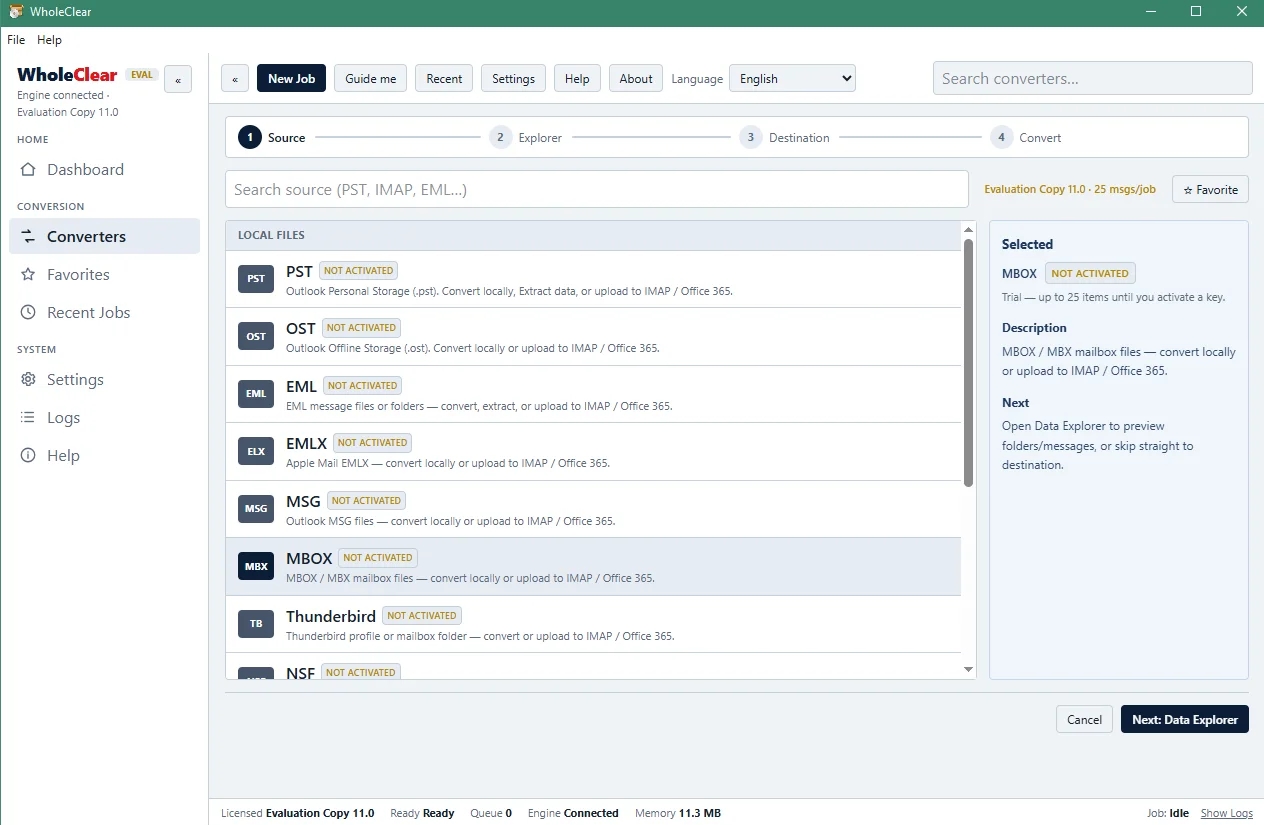
2. Include MBOX Data: Single or Multi-Selection.
Select File Mode to select specific .mbox files. Folder Mode allows you to select a folder containing several MBOX files for batch processing.
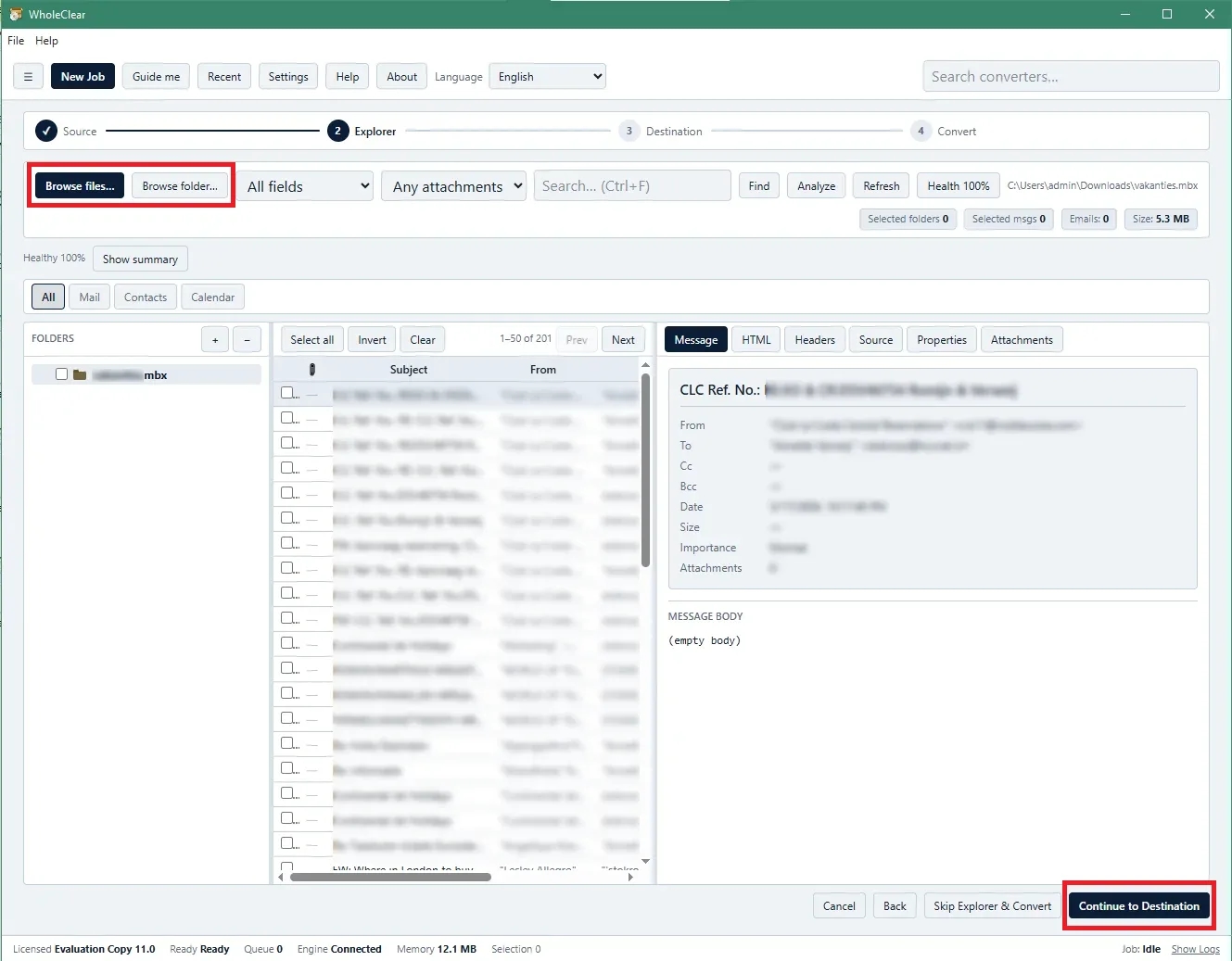
3. Mailbox Preview Inspection Data Validation Process.
The software scans your files and displays a preview of all loaded messages. Before you process the message, check the headers, the body of the message, and any attached files to make sure that everything is in order.
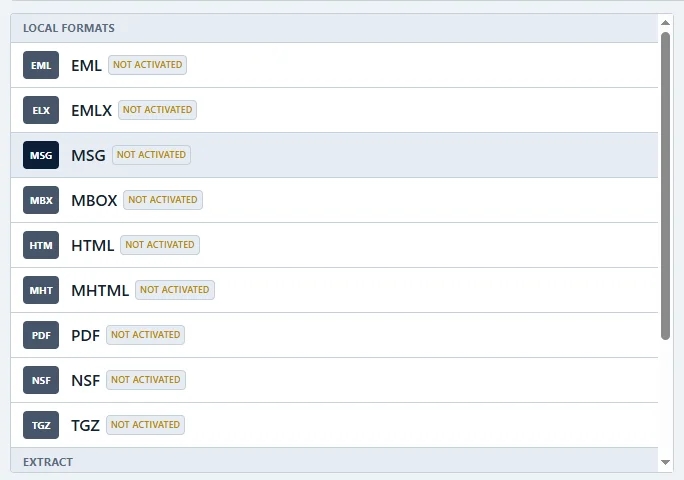
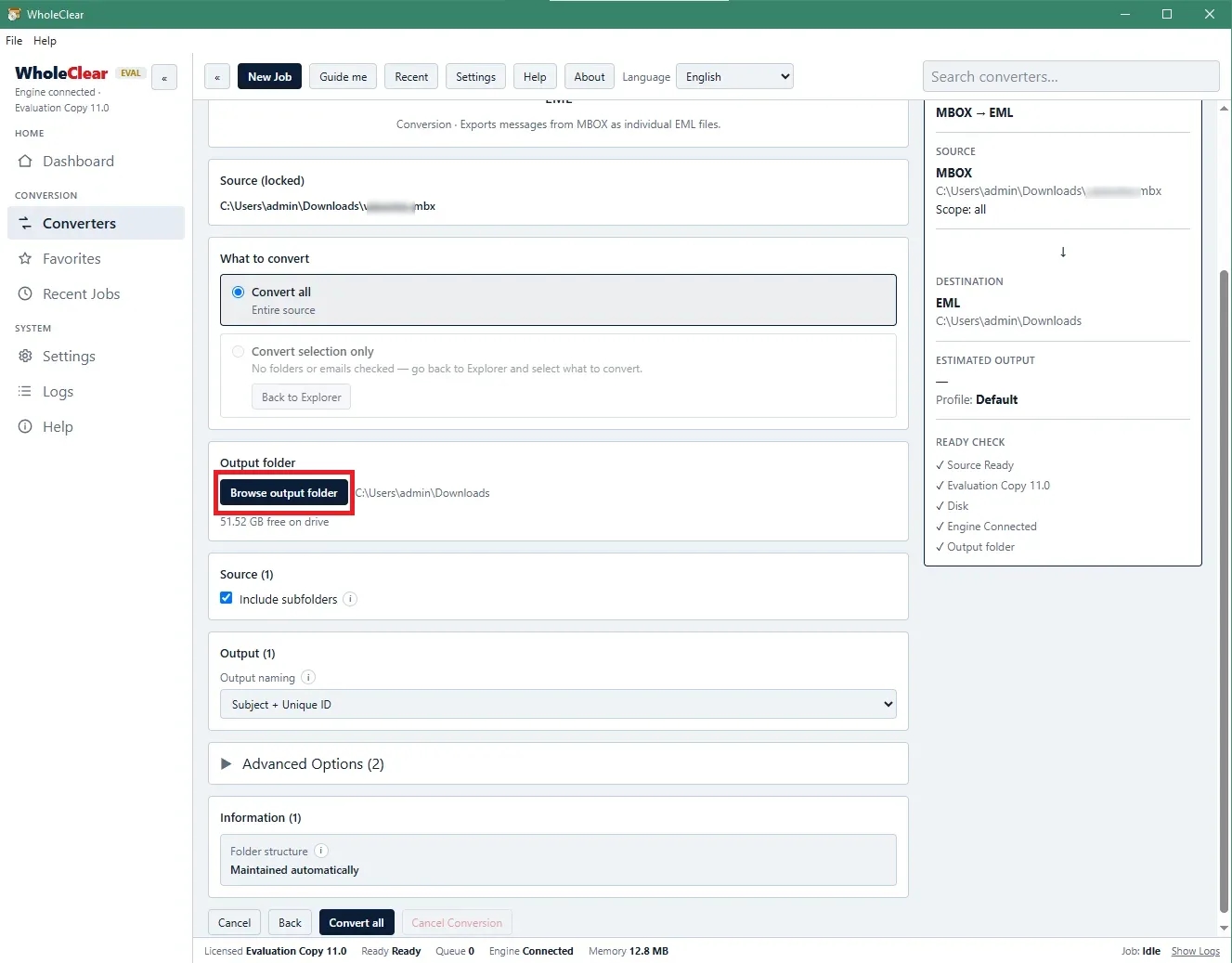
4. Choose Destination Folder: Local or Network Location.
Click Browse to select a location on your hard drive or external storage for the .msg files. 1 = I will take care of creating the msg files.
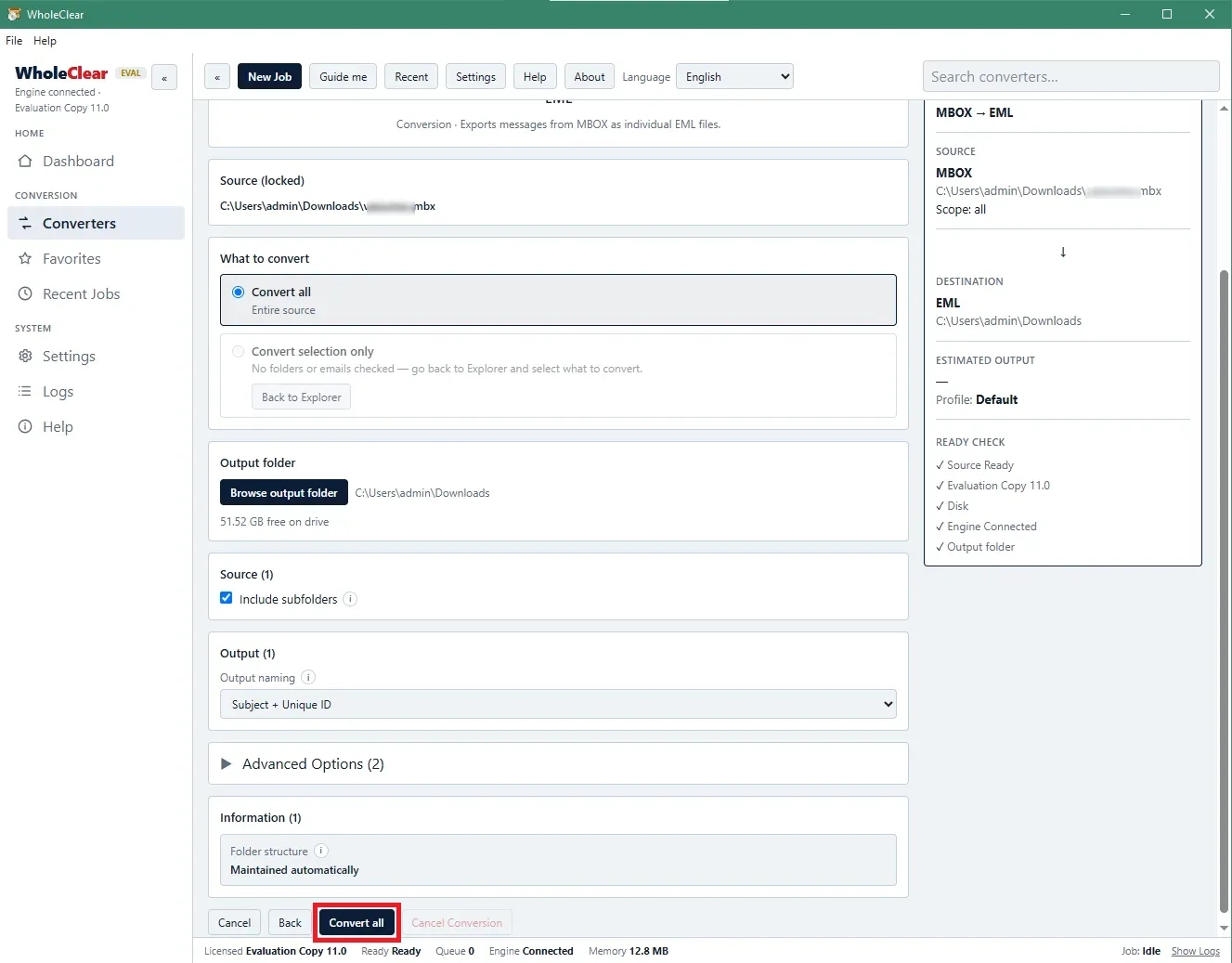
5. Data Conversion: 100% Data Conversion.
Click on the Convert Now button; the software converts your MBOX files to Outlook-compatible .msg files, preserving all the formatting, metadata, attachments, and folder trees.
Advantages of Software Testing
Advantages
Accurate Data Management: Retains original email traits such as inline images and attachments.
Standalone Operation: Conversion does not require the use of any third-party email client or Microsoft Outlook. Standalone Functionality
Scalable Architecture: No performance loss or artificial file size limits when handling big files.
Intuitive Interface: Easy to use for any level of technical skill with guided setup.
Limitations
Software License Required for Full Features: The free demo version lets you test and preview data, but you need a software license to save full batches.
Source Health Dependency: You need to repair badly corrupted MBOX files before you convert them.
Concluding thoughts
In general, Manual MBOX conversion methods are tedious, technical, and risky for vital business or personal communication. A dedicated desktop utility will solve these problems and keep the format of messages, attachments, and the organization of folders.
If you want to export single messages or complete email archives without data loss, then go for the software on the official WholeClear MBOX to MSG Converter page.
Frequently Asked Questions Q&A
1. Attachments are missing or getting broken after the manual MBOX to MSG conversion?
The manual export methods use intermediate file formats like EML or drag and drop in desktop clients. During such transfers, the non-standard MIME encoding boundaries in multi-part messages often do not decode correctly, stripping attached PDFs, images, or documents from the resulting MSG binary. A straight MBOX parser does not detach attachments from message payloads.
2. How to Convert MBOX to MSG Without Outlook Install?
Yes, WholeClear MBOX to MSG Converter own MAPI writer engine. It directly creates native MS-OXMSG compound files on disk, so Microsoft Outlook does not need to be installed on the machine where the conversion is done.
3. Are there any subfolders of MBOX folders for bulk conversion?
Choose Folder Mode, and the conversion utility recursively scans the whole folder tree. It creates the same folder paths at the destination, so your inbox, sent, and subfolder structure matches the original mail archive.
4. What is the size limitation of MBOX files in archive conversion?
The software does not set arbitrary limits on file size. N. Supports large MBOX files and bulky email archives without any memory buffer error or system freeze.
5. Which email clients does this utility support to create MBOX files?
The utility supports MBOX formats created by over 30 applications, including Mozilla Thunderbird, Apple Mail (Mac Mail), Eudora, PocoMail, The Bat!, Spicebird, Entourage, and Opera Mail.